Capital structure: Big Pharma’s competitive edge
With more than USD400bn in sales approaching patent expiry by 2031, the winners will be those turning R&D, pipelines and M&A into the next wave of growth.

Within the global pharmaceutical industry, valuation is increasingly being determined by one factor: visible near-term revenue growth. Companies that can deliver clear and credible growth trajectories are best positioned to capitalise on investor demand, while those facing uncertainty are seeing increasing divergence in performance.
This divergence is occurring against a more challenging backdrop. A significant patent cliff is approaching (with USD400 billion+ of revenue at risk between 2026 and 2031) as policy and pricing pressures are also intensifying, which could weigh on margins and reduce revenue visibility over the medium term.
Growth is becoming more concentrated in a narrower set of therapeutic areas, increasing competition and raising the bar for successful execution.
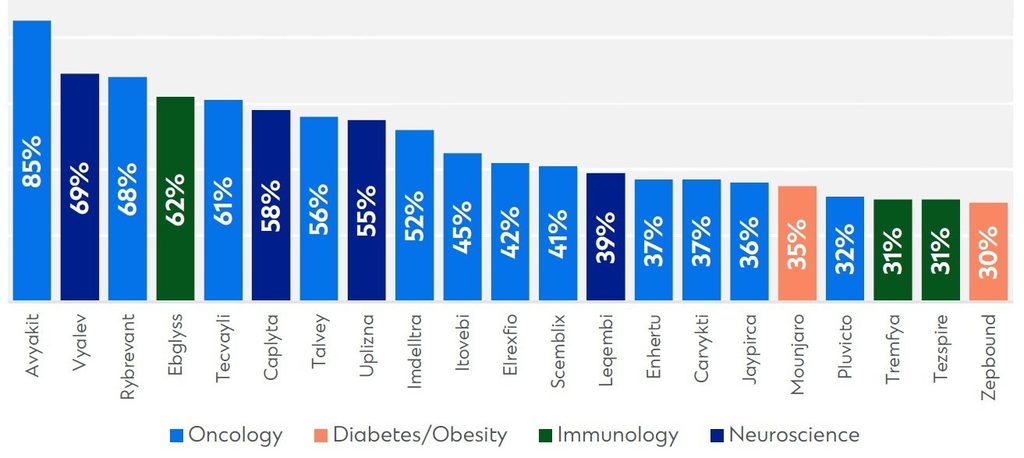
In response, companies are investing more, and more selectively. Continued scaling of R&D, pipeline development and new product launches is critical to sustaining growth, while targeted M&A plays an important role in accelerating growth and replenishing portfolios. The emphasis is increasingly on precision rather than scale, with a focus on smaller tuck-in transactions.
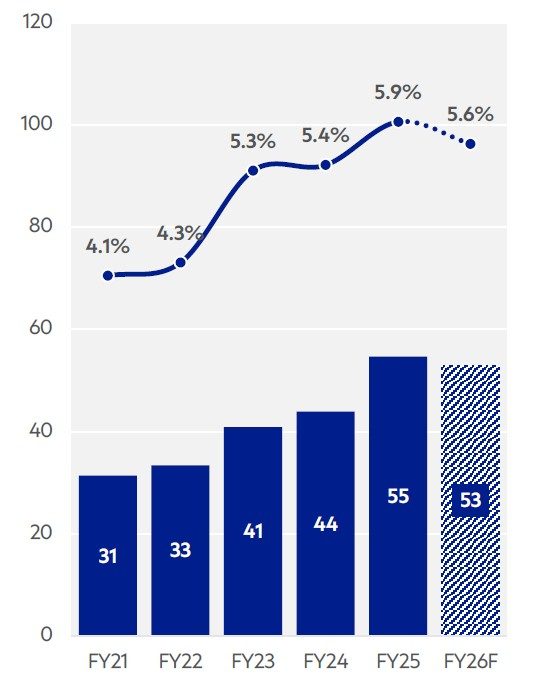
Aggregate spending on capex (USD billion) and average capex as per cent of sales*
Aggregate spending on R&D (USD billion) and average R&D as per cent of sales*
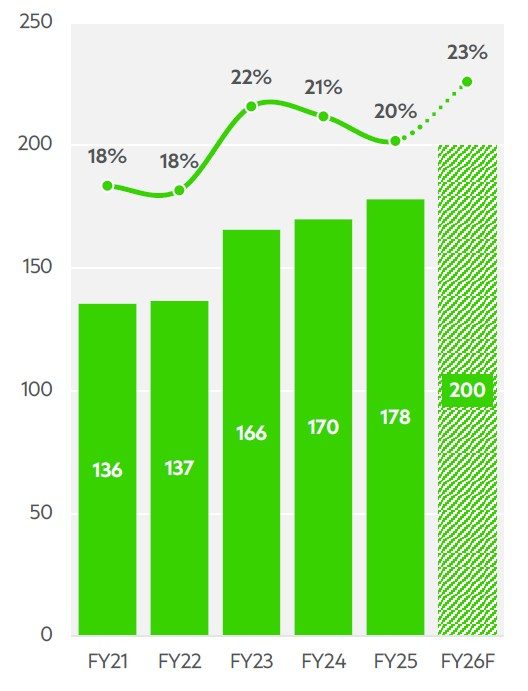
*Aggregate spending of 18 global pharmaceutical companies; FY26F based on broker consensus
Importantly, the sector retains the financial flexibility to support these priorities. Balance sheets remain strong across investment-grade pharma, providing capacity to fund both organic and inorganic growth, with meaningful headroom remaining at current ratings.
In a sector with ample financial flexibility, the winners are increasingly those that can turn investment into growth, growth into value, and value into shareholder returns.
Related insights
Turbulence ahead: Fuel shock deepens the returns challenge
A six-month stress test shows most airlines remain liquid, but weaker earnings and higher leverage may further s…