

Lunar New Year Forum insights
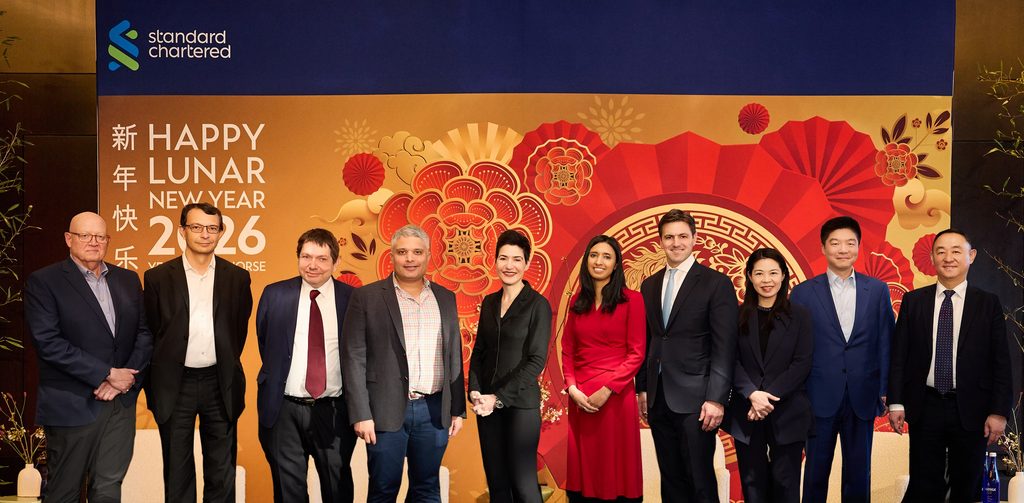
Standard Chartered US hosted its flagship Lunar New Year forum and celebration in February at the Mandarin Oriental in New York, welcoming industry leaders, clients and colleagues to mark the coming year.
Discussions centered on three themes that have been dominating markets and headlines: how artificial intelligence (AI) will reshape productivity and the nature of work; what’s driving gold and will the momentum continue; and the shifting geopolitical landscape – how many “spheres” or “poles” will define the new global reality?
Forces shaping markets in 2026 and beyond
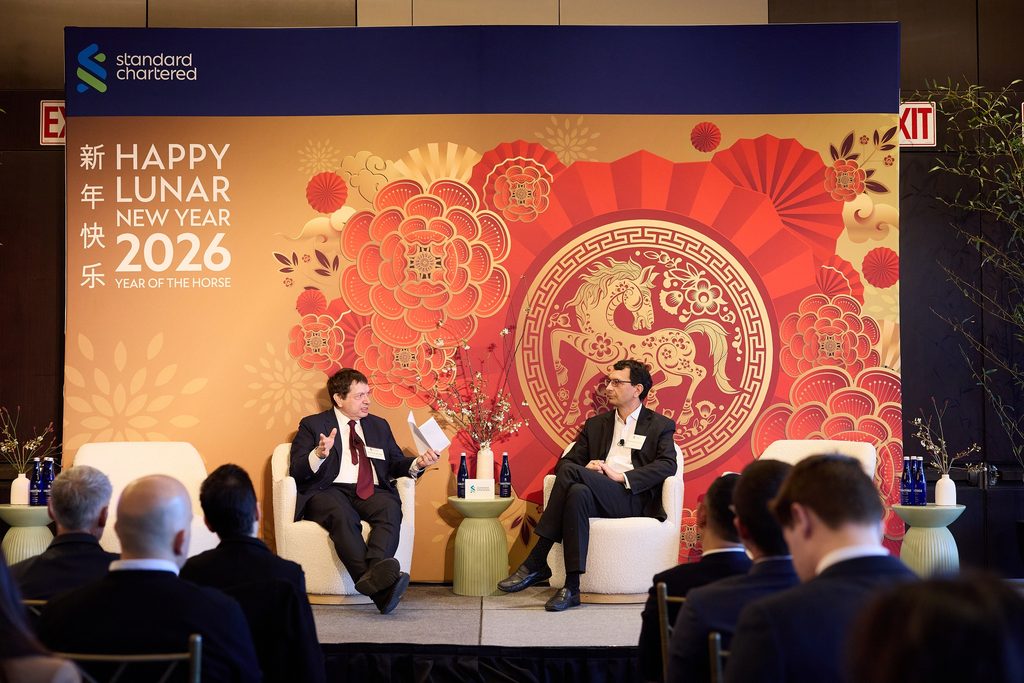
AI’s impacts across the economy
Artificial intelligence has dominated asset markets in recent months. Unlike earlier technology waves, today’s AI companies are profitable at a much earlier stage, and penetration remains relatively shallow which suggests significant runway ahead.
The US, and Silicon Valley in particular, holds a structural advantage with deep financing, a favorable regulatory environment and a large talent pool of experienced operators. Trump 2.0 deregulation is expected to further accelerate AI investment, while Europe’s regulatory posture presents a growing competitive risk for them.
Second-order effects are harder to forecast, but potentially more sweeping than the initial impact. Automation could reshape cities, commutes, and workplaces. Driverless vehicles alone stand to disrupt industries from logistics to insurance and auto repair.
The scale of AI ambition has also raised capital discipline concerns. Companies are roughly doubling AI-related capex heading into 2026, stoking fears of overcapacity. Take-or-pay contracts offer some protection to infrastructure builders, but project-finance creditors remain exposed.
Whether the buildout proves visionary or premature may be the defining investment question of the decade.
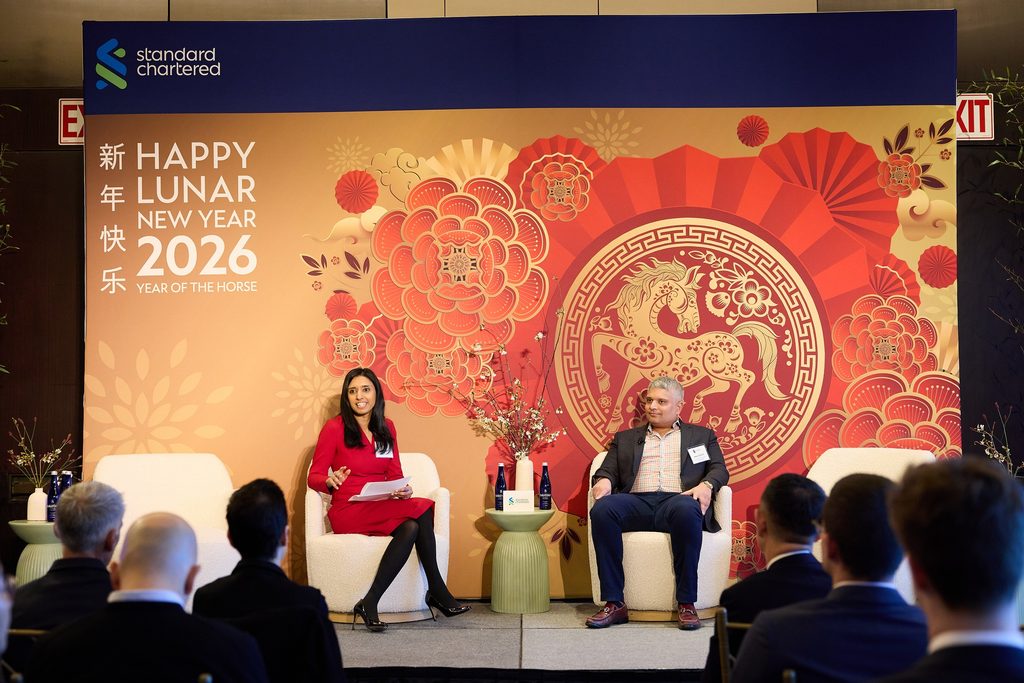
What’s driving gold?
Gold increasingly is considered a strategic asset. Its historic momentum has been driven by high government debt around the world, low correlations, and trade concerns, as investors look to hedge the risk of government defaults, currency debasement, and other disruptive left-tail events.
Central bank buying has been a major driver of gold since 2022 following Russia’s invasion of Ukraine and the freezing of assets, as countries have sought to take steps toward diversification. In addition to China, central bank buyers include India, Brazil, Poland, Hungary, and other developing economies, which tend to view gold as a reserve asset that offers diversification with no credit risk.
Inflows in 2026 are likely to rival those of the past year. A strategic allocation might target 5 percent or more of a portfolio, but gold ETF and fund holdings made up less than 1 percent of total mutual fund and ETF assets in 2025. The discrepancy could help drive growing participation by family offices and investment advisors, potentially pushing gold’s price to $6,000 an ounce. Meanwhile, China consumers are using gold to diversify assets and a safe haven.
The bear case scenario for gold is less clear in the immediate near term, but three risks could upend its rally: a rebound in the U.S. dollar, weaker China retail buying, and selling by central banks, which have been supporting the metal’s price floor.
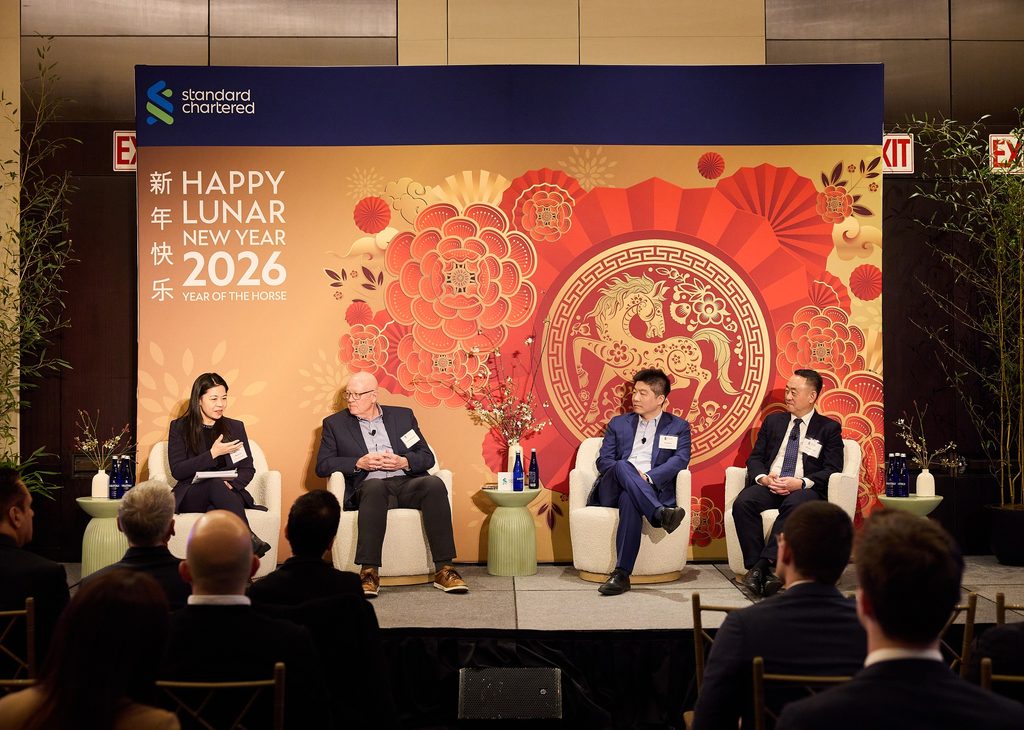
China is on the rise, but government policies will be key
The global economic system is undergoing a fundamental reorganization, with both the United States and China navigating significant opportunities and challenges as they compete for influence in an increasingly multipolar world.
China brings clear strengths to this moment – a large manufacturing base, growing innovation capacity, and expanding ties to the Global South. However, political unpredictability remains a concern for foreign investors, and sustaining long-term global influence will require a more consistent approach to foreign relations, stronger domestic consumer demand, and greater openness to international capital.
The United States retains formidable advantages: deep capital markets, world-class research institutions, and an unmatched innovation ecosystem. However, recent domestic policy moves, including cuts to research funding at top universities and stricter policies on immigration, raises the risk that some of the international talent base that historically flocked to the US may go elsewhere.
Ultimately, policy choices on both sides will matter as much as economic fundamentals in determining how capital flows and where businesses invest.
As the new year begins, the forum’s central message was clear: the next phase of global growth will reward speed and adaptability. AI is transforming productivity and the nature of work, while a shifting policy landscape is forcing businesses and investors to plan with greater flexibility and resilience.
We thank our clients, partners, and colleagues for joining us, and look forward to continuing the dialogue as the year unfolds.