


Table of Contents
In a rush? Read the summary:
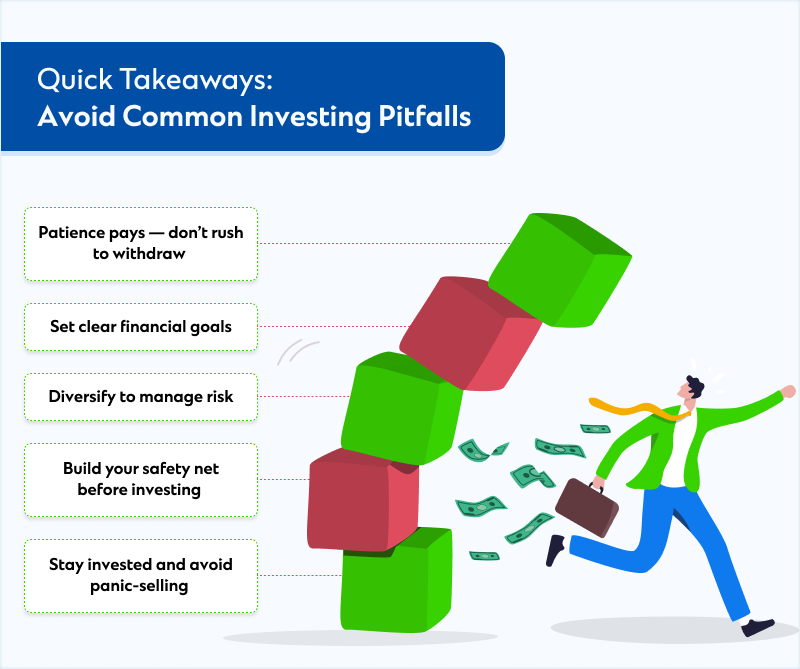
- Common investment mistakes involve trying to time the market, failing to diversify the portfolio, and emotional reactions, such as panic selling.
- Short-term underperformance sometimes compels investors to withdraw funds, ignoring the long-term investment discipline required for reasonable returns.
- Establishing an emergency fund, diversifying the portfolio to minimise risk, and avoiding the use of money needed in the near future are equally important.
All investments inherently carry some degree of risk, and investors are required to understand the nature of the associated risks before investing. The value of an investment can fluctuate as market performance can go both up and down. New investors often learn through trial and error, encountering mistakes that affect their returns.
The investment journey typically starts with an end goal of wealth creation. However, when hard-earned money is at stake, it is understandable that investors might be prone to panic-driven, poor investment decisions. Investors can avoid common investment mistakes, such as premature withdrawal or improper asset or geographical allocation that can hamper the achievement of their investment goals.
Withdrawing investments too quickly
Investors frequently withdraw their invested amount prematurely because the capital did not perform as they expected within a specific period. To prevent this common investment mistake often driven by fear and short-term impatience, it’s essential to research the investment options available and monitor industry developments thoroughly. Seeking guidance from a financial professional can help create an investment strategy suited to one’s financial goals.
Investors looking for quick growth should keep in mind that investing in certain investment vehicles like equity comes with significant risks, and without evaluating their risk appetite, investing in a particular asset class may result in substantial risk exposure. It’s important to remember that investments typically yield reasonable returns over extended periods. Therefore, maintaining an investment for the long term is crucial for potentially maximising returns.
Neglecting to build an emergency fund
Before getting started with an investment, one should set aside an amount for emergencies and unexpected expenses. Usually, experienced investors try to keep 3 to 6 months’ worth of living expenses in their emergency cash pot. While investment returns are important, maintaining easy access to essential cash for those unexpected “rainy days” is equally vital.
It’s tempting to invest after hearing a few investment success stories. However, one should keep in mind that it’s better to avoid a get-rich-quick scheme. Before committing to an investment, an investor must assess their readiness and ensure all outstanding financial obligations are covered.
Investing without any financial goals
Financial goals are key to creating an effective investment strategy. Investors usually invest for different reasons, including building a retirement fund, saving for a child’s school fees, etc. However, a pitfall is investing without a specific purpose, focusing only on chasing higher returns.
Once the goal is clear, investors are able to select the right mode of investment to achieve it. This clarity dictates the level of risk you should take, ensuring the portfolio is appropriate for that particular goal. That’s because high returns come with higher risks. Investors can also aim to meet their objectives with investments that involve a lower degree of risk. Clarity on the objective will also help in understanding the time and investment required to achieve the desired returns.
Not diversifying the portfolio
Diversification is considered a crucial financial strategy that helps manage risk, even when markets are volatile. Spreading money across different regions and asset classes helps mitigate the impact of localised downturns and supports steady wealth accumulation. A well-diversified portfolio also helps protect investments if a certain industry or an asset type takes a hit.
For example, by investing in bonds from different markets or stocks from various countries, investors can diversify their portfolio and mitigate risk even when the local economy experiences a downturn.
Experienced investors also mix things up with commodities, fixed deposits, and real estate investment trusts (REITs) from both Malaysian and global banks. While it provides exposure to different market segments, it can strengthen the portfolio while reducing overall risk.
Timing the market
Trying to time the market, both globally and locally, is often ineffective and detrimental. Many investors take emotionally driven decisions, getting caught up in short-term market fluctuations. This leads to buying high and selling low, which hurts returns as well as disturbs long-term financial goals.
Instead, investors can focus on a long-term strategy and consistently invest, rather than attempting to predict market bottoms. That is why it is important to stay disciplined, invest consistently, and diversify the portfolio, keeping in mind that the market will also have ups and downs. Investors who want steady growth can benefit from the power of compounding over the long term.
To get started, kindly leave your contact information here and one of our Relationship Managers will get in touch with you.