


Table of Contents
Short on time? Here’s what to expect from the article:
- Start your investment strategy like a football manager. Get a tailored game plan by defining goals and risk tolerance.
- Map the role of each investment vehicle by understanding their risks and benefits for a balanced portfolio.
- Rebalance and review regularly as markets and life stages change.
Ever wondered what your favourite sport and your investment portfolio have in common? Turn out, quite a lot! Behind every strong football team is a manager who studies his team and works on game strategies that push the team toward a win. Often enough, the manager’s plans and choices can make or break a match (or a whole season!) for a team. Managing your investments is a lot like being a football manager. The way managers prepare for matches and shape their teams can offer valuable lessons for anyone looking to build a solid investment portfolio.
Step 1: The game plan
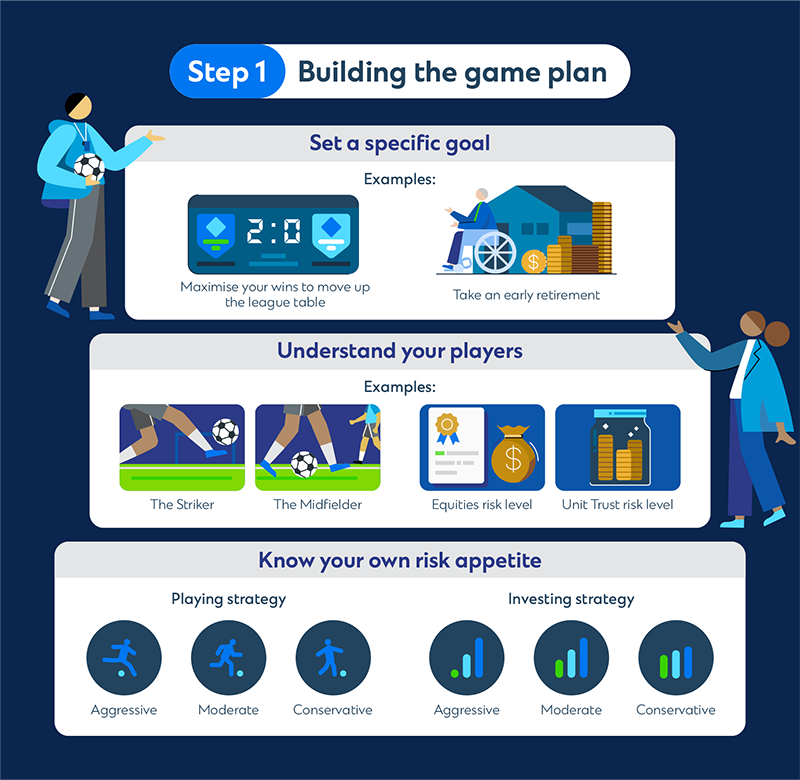
Before a big match, managers evaluate their team’s strengths and find ways to leverage them against the other team’s weaknesses.
They may decide to play more attackers if the opponents have a weak defence. Or play up defence when contending with a notably offensive team. How does this translate to investing? Smart investors tailor their strategies to market conditions. increase your investments when the market is stable or remain patient (hold your investments) when prices are in flux.
Managers also pay attention to how their players have performed in the past and how they handle pressure. Investors can do the same by thinking about their own financial goals and how much risk they’re comfortable with. Do you want to grow your money fast, earn regular income, or protect what you already have? Defining your investment goals helps you choose the right mix of investment vehicles to suit your needs.
Step 2: The dream team

A football team needs a balance. After all, you can’t win if you have only strikers or only defenders. After reviewing the players’ skills and the team’s needs, a manager brings together the right mix for each match.
This idea fits well with building your investment portfolio. You want to include different kinds of assets, each with their own risk and reward. Sometimes, what helps one investment do well might cause another to struggle, so spreading your investments can help protect you.
Here’s how you can think about your portfolio, using football positions:
- Strikers: The go-getters
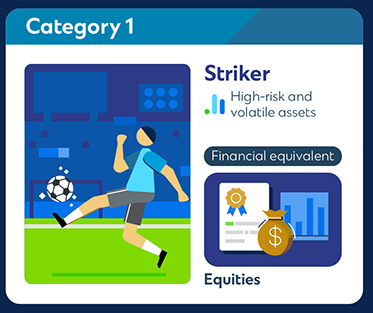
Strikers are the goal scorers. They’re exciting and can bring big wins, but they also run the risk of being unpredictable. In investing, this could be high-growth stocks, small-cap shares, or high-yield bonds. These options might offer big rewards but they come with major risks. A few of these elements make sense in a balanced portfolio, but too many may leave you vulnerable.
- Midfielders: The all-rounders
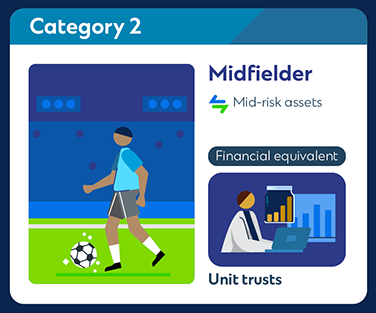
Midfielders help both in attack and defence. In the investment arena, unit trusts are similar. They usually hold a mix of different investments, spreading the risk out. Some unit trusts focus on growth, while others focus on safety. Choose the ones that match what you want and the risk you’re happy to take.
- Defenders: The protectors
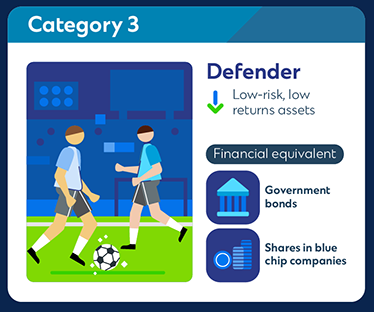
Defenders aren’t quite as popular as strikers, but don’t overlook them. They’re the ones protecting the goal when the opponents get too close.
Bonds are the defenders of your portfolio. They rarely bring in huge returns, but they offer stability, especially when markets are down.
- Goalkeeper: The safety net
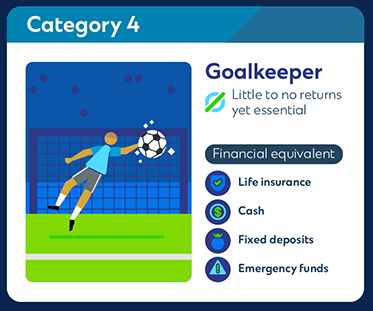
The goalkeeper’s main responsibility is preventing the opponents from scoring any goals. Without them, the team is vulnerable and exposed.
From a financial perspective, cash, fixed deposits, and insurance act as this last line of defence. They’re not contributing much by way of returns, but they’re on hand whenever you need emergency funds or protection during tough times. Health insurance also shields your savings if something unexpected happens.
Step 3: Adapt your plan to the game

On the football field, matches don’t always go as expected. A good manager keeps an eye on what’s happening and isn’t afraid to make changes, like bringing in fresh players if things aren’t working.
So, what does this mean for your investments? Check on your portfolio regularly. If something isn’t performing, or if your life situation changes, be ready to adjust your mix of investments. Rebalancing helps keep your portfolio in line with your original goals and risk level.
Step 4: Review every season
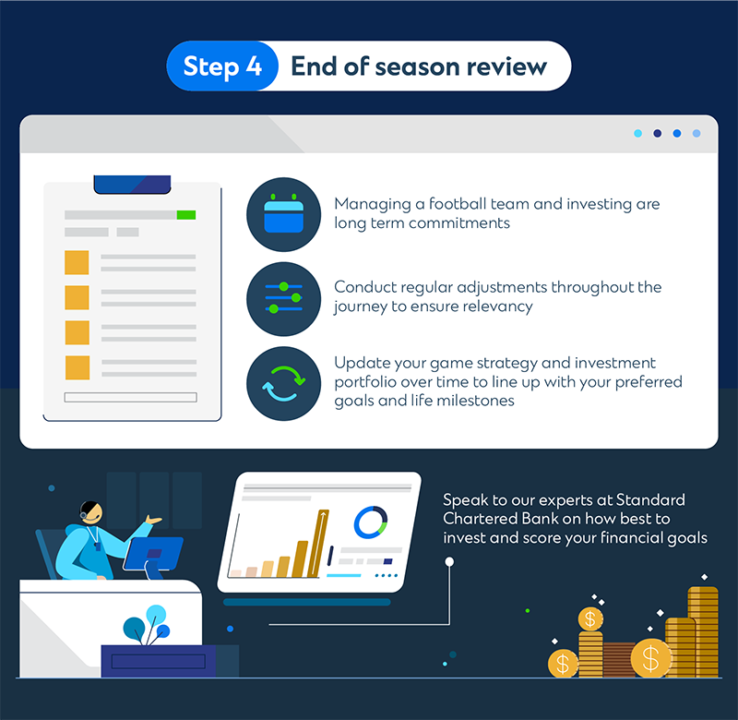
Managing a team and investing both require patience; they’re not about quick wins. The real victories come when you stay in the game for the long run.
At the end of the football season, managers look back at what worked and what didn’t, then make changes for the next season. In your financial life, big changes (like starting a family or getting closer to retirement) may represent new seasons. When you’re young, you might focus on growing your money and taking more risks. As you get older, you may shift towards protecting what you have by choosing safer investments.
See your portfolio through the eyes of a football manager
Whether you’re a football fan or not, sport certainly has lessons that can help you both on and off the field. But when you’re not sure what to do, don’t hesitate to connect with your coach for tips, lessons, and advice. Fortunately, the investment world offers financial coaches in the form of financial advisors or wealth managers. They use their experience and knowledge to create a winning portfolio tailored to your needs.
To explore more investment options, kindly leave your contact information on the lead form and one of our Relationship Managers will get in touch with you.