



Table of Contents
In a rush? Read the summary:
- Life and health insurance serve as a critical financial safeguard, protecting families from the severe economic impact of an unexpected illness, injury, or the death of a breadwinner.
- With Malaysian healthcare costs rising significantly, health insurance provides prompt, high-quality medical care and covers substantial expenses.
- Securing life and health coverage early is essential, as starting young can lead to lower premiums and more comprehensive coverage.
Many people get so busy with their daily lives that they don’t take time to consider the importance of insurance protection against unexpected adverse situations. An illness of a family member can impact household income and expenses; however, the death of the family’s breadwinner can have a far more profound impact. The family still needs to repay outstanding loans, and substantial funds may be required for children’s education.
Though such events cannot be prevented, having life and health insurance can ease the financial burden.
According to the Household Expenditure Survey Report 2024 released by the Department of Statistics Malaysia (DOSM), there has been substantial growth in average spending on medical-related insurance, driven by a combination of factors, including rising medical and insurance costs and greater health consciousness amongst Malaysians. The average monthly household expenditure on health-related insurance increased by 283% from RM24.13 in 2022 to RM92.46 in 2024.
Given the greater health consciousness among Malaysians, prioritising health through exercise and diet is essential to reduce the chances of being afflicted by lifestyle diseases.
In exchange for a premium, a medical and health insurance policy can cover some or all of the health and medical expenses arising from injuries or illness. These policies usually cover hospitalisation, medications, doctor consultation fees, medical and surgical expenses, costs for care providers, and, occasionally, dental expenses.
Types of life and health insurance
If the breadwinner dies unexpectedly and the family is short on cash, a life insurance policy can help. Whole life insurance and term life insurance differ in purpose and benefits. A policyholder should understand how each plan works before investing.
Term Life insurance
- A person can choose term life insurance to give the family a lump sum support in the event of the death of the breadwinner.
- It’s a cost-effective option. The earlier the policy is purchased, the more can be saved on insurance premiums.
- A policyholder can receive protection for a specific term by taking a term insurance policy, such as 20 or 30 years.
- If the death of the breadwinner occurs within a specific period of time, the family receives a payout. Conversely, if the insured survives the term, the family receives no compensation.
- Term insurance is not ideal for those who are uncomfortable with paying premiums without receiving a maturity benefit in return if the insured survives.
Whole life insurance
- Whole Life insurance, as its name suggests, covers the insured for the entire life. The insured person receives a guaranteed payment at the end.
- In many cases, an additional bonus component may also be included.
- Compared to term insurance plans, whole life insurance generally costs more because it offers lifelong protection and added benefits.
Importance of insurance
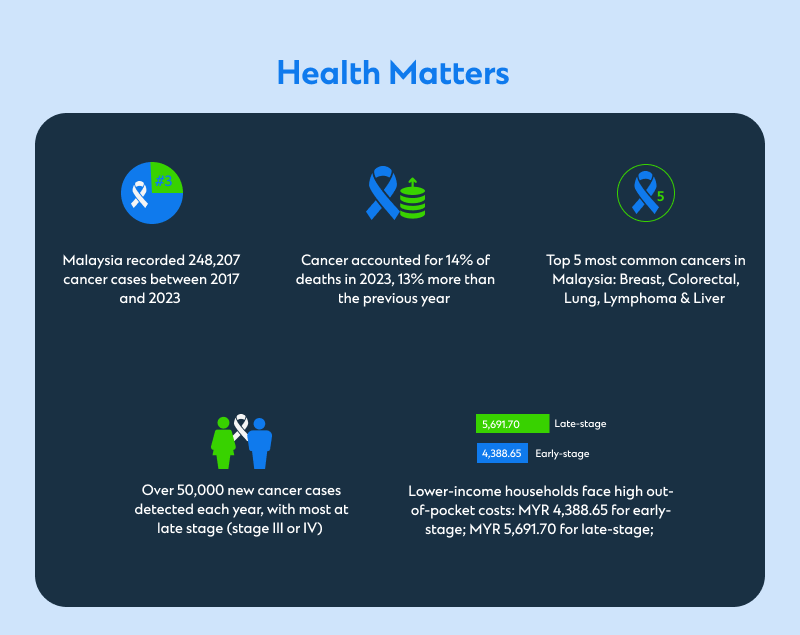
- Rising costs: In Malaysia, healthcare costs are rising at an average of 12% to 15% per year. While public hospitals offer subsidised care, private care comes at a price. Public hospitals, on the other hand, have limited access to specialists and long queues. At a private care hospital, routine appendix surgery can cost RM 10000, while cancer or heart disease may go up to RM 50000 or more. A medical insurance policy can cover all these out-of-pocket expenses.
- Accessing quality care: While people set aside savings for emergencies, a hospital stay can be financially demanding, and waiting for specialist appointments is often undesirable. To access quality care quickly, private hospitals offer better facilities and professional specialists. Health insurance ensures that the policyholder can afford swift access to quality medical care.
- Good coverage: While most people wait until they are older to take medical insurance, the policyholder should keep in mind that the coverage may become limited due to pre-existing conditions. People can have lower premiums with comprehensive plans if they start early. When illness strikes, it helps ease the emotional and financial burden on loved ones.
Making a will
It’s a legally binding document that outlines how an individual’s estate, including cash, valuable property, and other assets, will be distributed.
A will is particularly crucial when an individual has the responsibility of elderly or disabled family members.
One of the key advantages of making a will is that it removes uncertainty and prevents potential disputes among relatives regarding the estate.
Protecting the home
A home is considered one of the most valuable assets and safeguarding it is everyone’s priority. A home insurance policy, also known as householder or homeowner insurance, helps protect the residence and its contents against potential damage and risks.
Additionally, a home insurance policy provides coverage for liabilities arising from accidents within the home or on the property. An individual can receive comprehensive protection and peace of mind, along with financial security, by preparing themselves for unexpected events.
In Malaysia, homeowners usually consider three main types of coverage: fire insurance, which offers protection against lightning strikes and fire; homeowner insurance, which provides broader coverage and protection against fire incidents, natural disasters, and theft; and householder insurance, which extends coverage to personal property and safeguards both the structure and valuable assets.
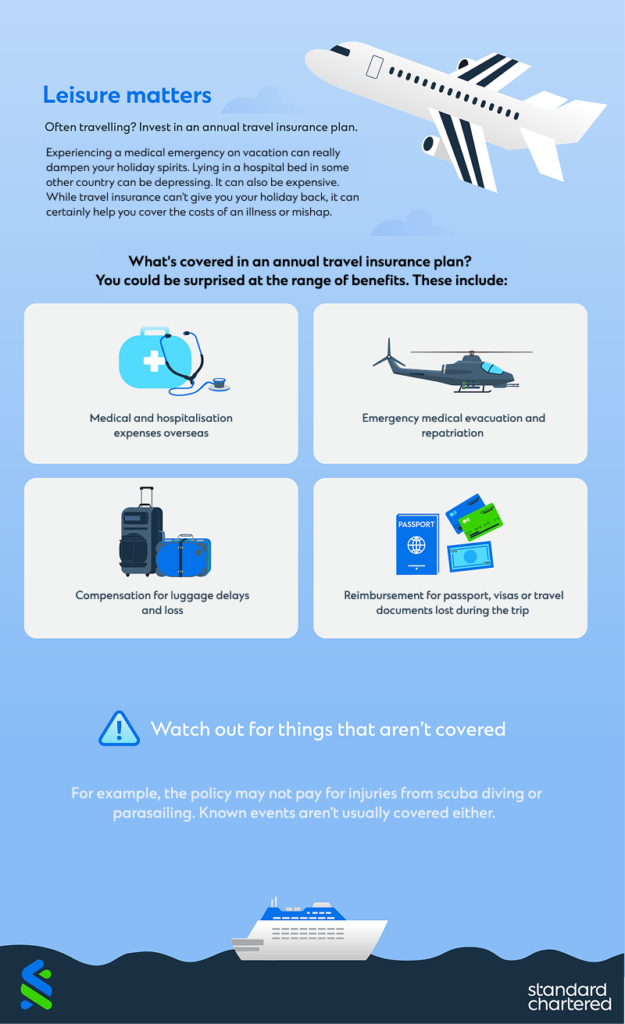
Often travelling? Invest in an annual travel insurance plan.
Steps for future proofing
Futureproofing begins with taking protective measures for both individuals and loved ones.
A review of existing health and life insurance policies helps determine whether the medical card or hospitalisation plan is sufficient to cover current needs. With higher income, policyholders may consider expanding their coverage.
Evaluating home insurance and mortgage insurance is equally important to ensure they remain adequate.
Lastly, a properly drafted will is important, especially for individuals with children and dependents relying on them.
To get started, kindly leave your contact information here and one of our Relationship Managers will get in touch with you.