Airlines: Strong fundamentals, rising fuel cost pressure
Airlines began 2026 with resilient balance sheets, but higher jet fuel prices are testing earnings and capital structure resilience.

Airlines entered 2026 with broadly resilient balance sheets, but rising fuel costs are rapidly becoming problematic. Middle East conflict has driven sharp increases in jet fuel prices, with the US EIA forecasting an approximate 56 per cent year‑on‑year rise. With fuel accounting for roughly a quarter of revenues and more than a third of operating expenses, earnings sensitivity remains significant, even if jet fuel prices remain elevated for only a part of the year.
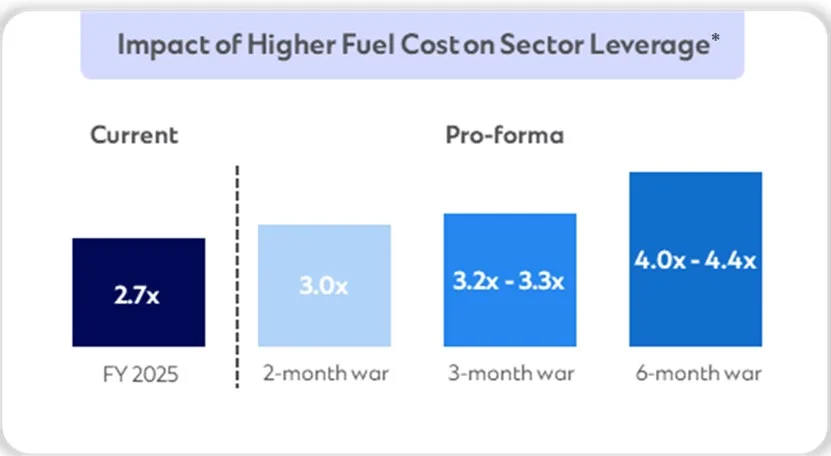
Our analysis of 23 leading global airlines indicates that EBITDA could be impacted significantly as the conflict continues beyond its second month. Net leverage is projected to increase to ~ 4.5x, compared to around 2.7x in FY25, even after accounting for fuel hedges. Additionally, about one-fifth of the peer group is expected to shift into the ‘highly leveraged’ category, a notable change from the ‘excess capacity’ assessment at the beginning of the year.
Having said that, most airlines have remained agile, and passing on some of this cost increase has also helped, albeit at the expense of lower sales.
In this environment, maintaining capital structure discipline is crucial. Our recent client outlook survey shows airline treasurers are focused on risk management, particularly around commodity exposure, interest rates, upcoming maturities, and credit protection.
With ongoing geopolitical volatility expected to persist, even beyond the ongoing conflict, now is a good time to review broader capital structure policies and carefully consider headroom and other restrictive factors.
To explore these themes further, including their implications for airline capital structure, please get in touch with us here.
Related insights
Turbulence ahead: Fuel shock deepens the returns challenge
A six-month stress test shows most airlines remain liquid, but weaker earnings and higher leverage may further s…