US-India: Enabling the next wave of corporate growth
As investment flows deepen, the US-India corridor is becoming a platform for capital deployment, capability-building and corporate expansion.

Key takeaways
- US companies continue to expand investments across technology, consumer, healthcare and industrial sectors in India, while Indian companies are accelerating outbound investment into the US through acquisitions, partnerships and strategic investments.
- Structural drivers including demographics, talent availability, digital infrastructure investment, Make in India and Production Linked Incentive (PLI) schemes continue to strengthen India’s position as an investment destination.
- As capital flows grow in both directions, treasury, financing and risk-management capabilities are becoming critical enablers of growth.
US-India corridor by the numbers

USD500 bn
Bilateral trade target by 2030

USD16.4 bn
India FDI into US (2024)

USD58.5 bn
US FDI into India (2024)

USD40+ bn
Investment generated by Indian companies in the US (2023)
A corridor powered by capital, capability and growth
Trade remains important, but investment is increasingly shaping the next chapter of the US-India relationship. Joint policy initiatives such as the US-India COMPACT and TRUST are creating a stable and conducive environment for investment across technology, manufacturing and other strategic sectors.
The US continues to be one of India’s largest foreign investors, accounting for more than billion of FDI inflows with focused commitments across AI, digital infrastructure, and advanced manufacturing.
At the same time, Indian companies are pursuing growth in the US through acquisitions, partnerships and strategic investments, reinforcing the US’s position as a key destination for Indian outbound capital.
As per a Confederation of Indian Industry (CII) report over 160 Indian companies have collectively generated over USD40 billion of investment in tangible investments across the US. As Indian corporates pursue scale, technology capabilities and access to new markets, outbound investment is becoming an increasingly important part of the corridor story.
Several structural drivers continue to strengthen investment flows. India combines one of the world’s fastest-growing major economies with a large consumer base, favourable demographics and a deep STEM talent pool. Policy has also become an important part of the investment story. Initiatives such as Make in India and PLI schemes are helping attract capital into strategic sectors including semiconductors, electronics, manufacturing and digital infrastructure, while platforms such as GIFT City are creating new channels for international capital flows. Together, these developments are helping global investors access opportunities in India and enabling Indian corporates to connect with international financing and investment markets.
Where investment is flowing
Investment is increasingly gravitating towards several strategic sectors and growth centres.
Across India, cities such as Bengaluru, Hyderabad, Chennai, New Delhi and Mumbai continue to attract capital across technology, GCCs, digital infrastructure, manufacturing, healthcare and consumer businesses. These flows are supported by talent availability, infrastructure development, policy incentives and expanding local ecosystems.
Meanwhile, Indian corporates continue to invest into US markets such as California, Texas, New Jersey, New York and Illinois, attracted by technology ecosystems, access to capital, innovation clusters and opportunities for inorganic growth.
Alongside technology, GCCs and advanced manufacturing, India’s growing consumer market is also drawing attention from US corporates seeking exposure to rising domestic demand, digital adoption and long-term consumption growth.
US clients are taking a longer-term view of India. Across manufacturing, digital infrastructure and strategic partnerships, they see opportunities to strengthen resilience, expand capabilities and support future growth.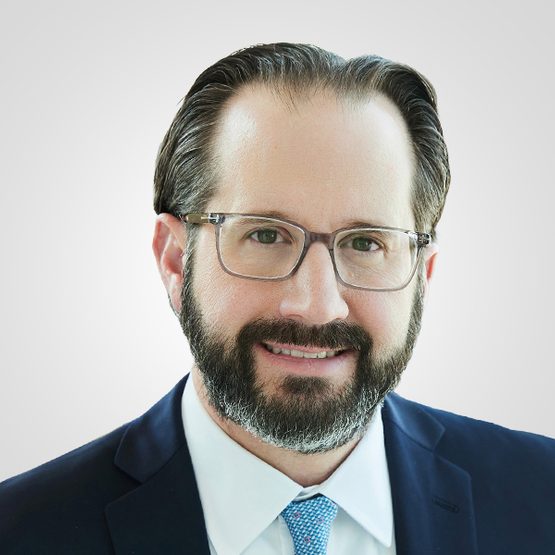 Sal VitaleHead of Coverage, US & Americas
Building capabilities across the corridor
Technology remains one of the most established pillars of the corridor. What began as a cost-driven outsourcing model has evolved into an innovation-led partnership.
India now hosts more than 2,100 GCCs, many established by US-headquartered multinationals such as tech giants Microsoft and Amazon. Increasingly, these centres have expanded their mandates into AI, research and product development, making India an integral part of large-scale technology strategies. This ecosystem generated an estimated USD98.4 billion in revenue in FY26 and employs 2.36 million highly skilled professionals.
US companies remain the dominant driver of India’s GCC expansion
63%
of GCC headquarters represented in India are from the US, underscoring the scale of US corporate investment in India’s capability ecosystem.
Beyond GCCs, investment momentum is also being driven by hyperscalers and global technology companies expanding cloud and data-centre capacity across India. Long-term demand commitments and investment incentives are accelerating digital infrastructure deployment. As AI adoption and computing demand grow, these investments are cementing India’s role as a strategic hub for cloud infrastructure and next-generation innovation. The India-US AI Opportunity Partnership is a further testament to both countries’ shared ambition to build resilient AI ecosystems.
The next chapter of the GCC story is defined by ownership and AI capabilities, with India’s centres playing an evolving role in shaping global priorities rather than simply delivering them.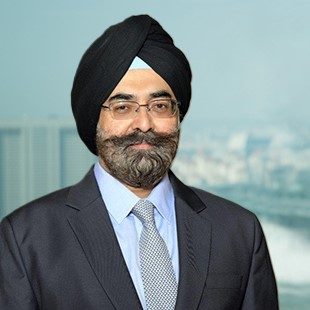 P.D. SinghCEO, India & South Asia
Expanding production and supply chains
Manufacturing is becoming one of the fastest-growing dimensions of the corridor as companies diversify supply chains and seek additional production platforms. Incentives such as Make in India, Production Linked Incentives, and the Electronics Components Manufacturing Scheme (ECMS), combined with infrastructure investment and a maturing supplier ecosystem, are driving investment in semiconductors, electronics, and industrial manufacturing.
US companies are increasingly investing in these sectors to expand capacity, strengthen resilience, and capture long-term growth opportunities. Backed by engineering talent, improving infrastructure and a maturing supplier ecosystem, India is increasingly becoming a preferred destination for manufacturing and supply chain diversification.
Micron’s recent investments brings the scale of the opportunity into focus. Following a groundbreaking in 2023, the company officially opened India’s first semiconductor assembly and test facility in Sanand, Gujarat earlier this year, representing a combined investment by Micron and its government partners of approximately USD2.75 billion. The facility expands India’s semiconductor capacity and strengthens its role in global electronics supply chains at a time when demand for AI and data-intensive technologies is accelerating.
As demand for AI and data-intensive technologies continues to grow, expanding semiconductor capacity in key markets is increasingly important. Our investment in Sanand reflects the role India can play in supporting future demand and strengthening global supply chains.Sanjay MehrotraChairman, President and CEO of Micron Technology
Advancing healthcare and life sciences
Healthcare has become one of the most significant two-way growth opportunities within the corridor.
Indian healthcare and pharmaceutical companies continue to expand internationally through acquisitions and partnerships, while US healthcare organisations are leveraging India’s specialised talent and clinical research capabilities. These developments are creating a more cohesive healthcare corridor characterised by capital and knowledge flows.
India’s role in the global healthcare ecosystem continues to deepen. The country is attracting investment in specialty pharmaceuticals, biosimilars and biotechnology. US healthcare and life sciences companies such as Bristol Meyers Squibb and Abbott are also looking to India for clinical trials and research partnerships, reflecting the country’s growing importance within global healthcare value chains.
Growth is also being driven by rising M&A activity, licensing arrangements and strategic collaborations. Indian pharma companies have continued to pursue capability-building initiatives in the US to strengthen market access, while cross-border collaborations are helping companies access new technologies and patient populations. Together, these developments are accelerating the internationalisation of healthcare businesses across the corridor.
Structural drivers shaping investment across the corridor
As the corridor enters its next phase, corporates will need to align investment strategy with operating models, treasury structures and financing capabilities:
- Expanding in India: India’s deep talent pool, expanding consumer market and supportive policy initiatives continue to attract investment across sectors. Amazon’s intent to invest USD48 billion between 2026 and 2030 highlights the scale of opportunities created by digital adoption and an evolving business ecosystem. GCCs can be the foundation of this expansion, bridging global business priorities with India’s talent and innovation ecosystem while supporting broader capital deployment.
- Expanding in the US: For Indian corporates, the US remains an important destination for growth, offering access to technology ecosystems, capital markets and acquisition opportunities. As outbound investment accelerates, financing, risk management and liquidity frameworks will become increasingly important in supporting international expansion.
- Connecting both markets: As capital, talent and technology move more freely between India and the US, businesses will require increasingly integrated operating models, supply chains and decision-making frameworks. GIFT City can serve as a strategic gateway for capital flows, enabling companies to centralise cross-border financing, foreign-currency liquidity and treasury operations within India. Companies that align financing, liquidity and risk management with broader investment strategies will be better positioned to scale sustainably across the corridor.
Supporting capital flows and cross-border expansion
As investment activity continues to deepen across both markets, companies that align strategy, operations and financing will be best positioned to capture opportunities across the US-India corridor.
Whether expanding GCCs, investing in digital infrastructure, building manufacturing capacity or pursuing acquisitions, businesses face increasingly complex financing, treasury and working-capital requirements.
Drawing on more than 25 years of operating its own GCC in India and supporting multinational clients worldwide, Standard Chartered helps organisations navigate these challenges around the investment lifecycle. The Bank combines international connectivity with deep local expertise to help clients, capital, manage risk and support sustainable growth.
Related insights
Corridors in focus: United States-ASEAN
As two-way investment continues to accelerate, the US-ASEAN corridor is …
Corridors in focus: Singapore-United States
From goods to digital infrastructure, the Singapore-United States (SG-US…
India-ASEAN: Where capital meets supply chains
Trade between India and ASEAN has surpassed USD120bn. The bigger story i…
Explore Corporate & Investment Banking
What we offer
We act as a global superconnector for flows from corporates and financial institutions.
Tailored solutions
Learn how we can support your business to grow across markets with our wide range of tailored products.
Our strategy
We serve a diversified client base with a broad product suite and differentiated cross-border capabilities.