Egypt-Japan: Connecting capital and industry
Industrial expansion, supply chain integration and clean energy are transforming economic ties between Egypt and Japan.

Key takeaways
- The Egypt-Japan corridor is underpinned by complementary strengths, combining Egypt’s industrial capacity and regional reach with Japanese technology, expertise and capital.
- Manufacturing is becoming the backbone of Egypt-Japan economic engagement, creating skilled jobs while accelerating technology transfer, industrial expansion and operational know-how.
- Regional connectivity, trade access and expanding logistics infrastructure continue to strengthen Egypt’s position as a production and distribution hub.
- Financing and liquidity capabilities are becoming critical enablers of expansion as cross-border activity and operational complexity increase.
Egypt-Japan corridor by the numbers

USD7.26 bn
New investments secured by the Suez Canal Economic Zone (2025)

100+
Japanese companies operating in Egypt, primarily in manufacturing

30 per cent
Share of global container traffic linked to the Suez Canal route

45 per cent
Target share of renewable energy in Egypt’s electricity generation by 2028
Linking production, investment and regional access
The Egypt-Japan relationship is increasingly anchored in manufacturing, logistics and regional connectivity. Developments such as the strategic partnership framework and the proposed Japanese industrial zone within the Suez Canal Economic Zone (SCZone) highlight a growing commitment to strengthening production networks and commercial ties.
Several structural drivers continue to reinforce Egypt’s attractiveness as an investment destination. Its location at the intersection of Africa, Europe and the Middle East provides businesses with access to multiple markets from a single operating base, while the SCZone combines industrial and logistics infrastructure designed to serve export-oriented industries. In 2025, the zone attracted 117 new projects worth more than USD7 billion, underscoring sustained interest from international developers and investors.
Egypt’s extensive network of trade agreements further strengthens its attractiveness as an export-oriented manufacturing base, helping companies diversify supply chains and reduce concentration risk.
These developments extend beyond operational expansion. Larger supplier ecosystems and multi-market procurement networks require greater visibility over working capital, liquidity and FX exposures. As activity scales across the corridor, treasury structures and funding frameworks become more crucial in supporting operational resilience and capital efficiency.
Where investment is flowing
Economic cooperation between Egypt and Japan is increasingly translating into long-term commitments across future-facing industries. Two themes stand out: the expansion of manufacturing ecosystems that support regional supply chains, and the development of clean energy value chains that will underpin the next generation of industrial growth.
The Egypt-Japan corridor is built on complementary strengths. Egypt brings industrial capacity, regional connectivity and market access, while Japan brings advanced technology, manufacturing expertise and long-term capital, creating a strong platform for deeper trade and investment.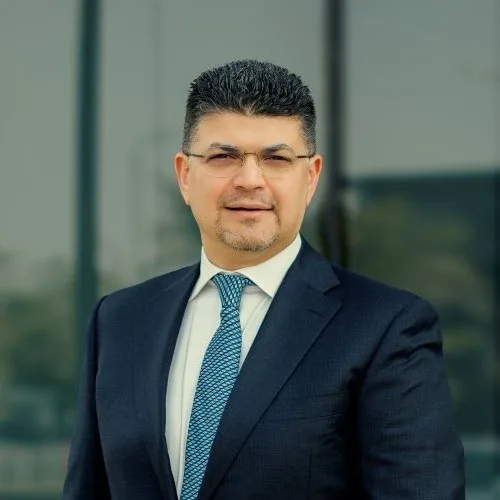 Mohamad GadCEO, Standard Chartered Egypt
Building regional production networks
Manufacturing sits at the heart of the corridor, bringing together Egypt’s ambition to strengthen its industrial base with Japan’s advanced production capabilities. Areas attracting interest include automotive and auto components, industrial machinery, building materials and electronics.
For Japanese manufacturers, Egypt offers an opportunity to diversify production footprints while strengthening supply chain resilience across multiple regions.
Rising supply chain diversification efforts, demand for production resilience and growing interest in high-growth markets across Africa and the Middle East are encouraging Japanese manufacturers to rethink traditional operating models. As a result, investment decisions are increasingly being shaped by access to regional demand, supply chain flexibility and export diversification.
Recent investments point to growing momentum. In 2026, Nissan expanded its commitment to Egypt’s automotive sector through a USD45 million investment in vehicle production operations, reinforcing the country’s role within regional production networks.
Investment in manufacturing capacity is supporting technology transfer, workforce development and the transfer of operational expertise, while helping expand local supplier networks and create higher-skilled employment opportunities. Egypt’s position along the Suez Canal, a route that carries more than 10 per cent of global trade and 30 per cent of global container traffic, reinforces its role within regional manufacturing and distribution networks.
As supplier networks become more interconnected, financing requirements become increasingly complex. Businesses are looking to optimise working capital, support procurement and supplier relationships, and manage currency exposures across multiple jurisdictions. Manufacturing groups operating across Asia, Africa and the Middle East increasingly require integrated trade finance, FX and cash management solutions to support efficient operations as supply chains scale across borders.
Scaling future energy value chains
The energy transition is emerging as a second pillar of corridor activity, creating opportunities across green hydrogen, green ammonia, renewable energy infrastructure, industrial decarbonisation and sustainable transport.
Egypt’s renewable energy ambitions complement Japan’s engineering and technological strengths, creating the foundations for new low-carbon industries and export value chains. Egypt is targeting renewable energy to comprise more than 45 per cent of its electricity generation mix by 2028, while Japan’s plan to scale hydrogen consumption is creating new opportunities across clean energy infrastructure and future value chains.
Investment activity is already translating into commercial projects. Egypt signed USD1.8 billion worth of renewable energy agreements in 2026 covering solar generation and battery storage. Japanese participation is also becoming more visible. In 2025, Mitsubishi Power, part of Mitsubishi Heavy Industries, completed Egypt’s first industrial hydrogen fuel conversion project at the Alexandria National Refining and Petrochemicals Company, reducing carbon emissions by approximately 65,000 tonnes annually.
These developments extend beyond power generation to industrial production, logistics, export infrastructure and supporting supply chains. As projects move from development to execution, demand is expected to increase for sustainable finance solutions, project financing and risk management capabilities that support long-term capital deployment and operational resilience.
For Japanese businesses, supply chain resilience and market diversification remain top priorities. Egypt’s industrial ambitions, clean energy investments and regional connectivity are creating opportunities for long-term partnerships and capital deployment.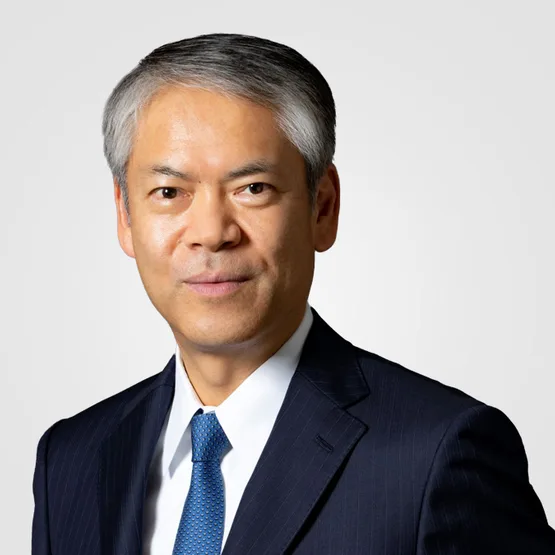 Yusuke AsaiCEO, Standard Chartered Japan
Case study
Amunet Wind Power Company: Connecting Japanese investment with Egypt’s clean energy ambitions
Amunet Wind Power Company demonstrates how Japanese investment and international financing can support Egypt’s transition to a more diversified energy system. The company, a joint venture between UAE-based AMEA Power and Japan’s Sumitomo Corporation, secured financing for a 500MW onshore wind project in Egypt’s Gulf of Suez.
Standard Chartered helped structure and arrange up to USD519 million in senior project financing, acting as Bookrunner, Mandated Lead Arranger and Documentation Bank. The transaction was the first project finance transaction jointly supported by the International Finance Corporation, Japan Bank for International Cooperation and Nippon Export and Investment Insurance.
A 25-year power purchase agreement with the Egyptian Electricity Transmission Company, backed by a Ministry of Finance guarantee, provides long-term revenue visibility and enhances the project’s bankability. The project also achieved one of Egypt’s lowest wind power tariffs, demonstrating how international capital, Japanese participation and public-private collaboration can help deliver affordable renewable energy at scale.
By bringing together Egypt’s renewable energy ambitions, Japanese investment and cross-border financing, Amunet Wind Power offers a tangible example of the corridor’s potential. The project highlights how Egypt’s renewable energy ambitions and Japan’s investment capabilities can come together to create long-term value across the corridor, while demonstrating the role of cross-border financing in bringing large-scale infrastructure projects to life.
Capturing opportunities across the corridor
As manufacturing localisation, energy transition investment and regional supply chains increasingly converge, Egypt and Japan are building a more integrated economic relationship. The next phase of growth will be shaped by how effectively businesses align production, capital and long-term investment strategies across markets.
Complementary strengths are creating a stronger case for collaboration across the corridor. Egypt’s industrial ambitions and regional connectivity continue to attract manufacturing and infrastructure investment, while Japan’s expertise in technology and engineering offers opportunities for capability building and long-term partnerships. Together, these trends are reshaping how businesses approach investment, operating models and regional expansion.
Egypt’s strategic location, industrial ambitions and growing infrastructure ecosystem continue to attract manufacturing, logistics and clean energy investment. Beyond capital inflows, these investments can support workforce development and technology transfer, while requiring operating models and treasury structures that are capable of supporting larger supplier networks, cross-border trade flows and regional distribution.
Japan offers access to advanced manufacturing, technological expertise and long-term capital. For Egyptian corporates, deeper engagement with Japanese partners can support capability-building, innovation and participation in future-facing sectors linked to industrial modernisation and decarbonisation.
The greatest potential lies in combining Egypt’s regional connectivity with Japan’s industrial and technological strengths. Businesses that align production networks, financing structures and treasury frameworks across both markets will be better positioned to capture opportunities emerging from manufacturing, infrastructure and clean energy investment.
Supporting trade, investment and industrial expansion
As commercial ties deepen, the Egypt-Japan corridor is creating new pathways for industrial development, supply chain integration and clean energy investment. Businesses that align strategy, operations and financing will be better positioned to capture opportunities emerging across both markets.
Through its network across Asia, Africa and the Middle East, Standard Chartered supports clients with trade and supply chain finance, treasury and FX solutions, liquidity management, sustainable finance and project financing. By connecting capital, commerce and expertise across markets, the Bank helps businesses navigate opportunities emerging across the Egypt-Japan corridor.
Related insights
Corridors in focus: US-India
As investment flows deepen, the US-India corridor is becoming a platform…
Corridors in focus: Singapore-United States
From goods to digital infrastructure, the Singapore-United States (SG-US…
Corridors in focus: United States-ASEAN
As two-way investment continues to accelerate, the US-ASEAN corridor is …
Explore Corporate & Investment Banking
What we offer
We act as a global superconnector for flows from corporates and financial institutions.
Tailored solutions
Learn how we can support your business to grow across markets with our wide range of tailored products.
Our strategy
We serve a diversified client base with a broad product suite and differentiated cross-border capabilities.