-

Sustainability
Sustainability stakeholder engagement
Our approach is shaped by open dialogue with all of our stakeholders.

Why we engage
As a global bank which operates across a diverse range of markets, stakeholder engagement is important to understanding local, regional, and global perspectives that shape our business.
Listening and responding to stakeholders’ priorities and concerns is key to achieving our purpose and delivering on our brand promise, here for good.
We strive to maintain open and constructive relationships with a wide range of stakeholders including clients, governments and regulators, investors, suppliers, civil society, and employees.
Defining our sustainability focus areas
We have conducted two separate materiality assessments guided by ISSB educational material on ‘Sustainability-related risks and opportunities and the disclosure of material information’ and ‘GRI 3: Material Topics 2021’.
Material topics under GRI are those that represent an organisation’s most significant impacts on the economy, environment, and people, including impacts on their human rights – both positive and negative.
Our material topics under GRI include:
- Sustainable Finance – how we identify opportunities for driving positive environmental and social impact by helping our clients address environmental and social challenges, transition towards low carbon economies and achieve sustainable growth.
- Climate – the positive and negative impacts of our financing activities, direct operations and supply chain on the climate. This includes our emissions, physical and transition climate risk management, and progress against our net zero roadmap.
- Nature – how we contribute towards our ambition of shifting financial flows towards nature-positive outcomes. This includes the Group’s progress against our nature-related ambitions.
- Human capital management – the practices used for recruiting, developing and optimising employee output and relationships, across the value chain. This includes human rights and modern slavery, health and safety (including physical and mental wellbeing) and diversity, equity and inclusion.
- Society and community relations – the positive and negative impacts of our financing activities on the societies and communities around us. This includes financial inclusion, job creation, vulnerable customer protection, and charitable giving.
- Data security and privacy – the protection practices over client and personal information held by the Group.
- Corporate governance – governance structures and internal control processes by which the Group is directed. This includes risk management, business conduct, anti-bribery and corruption, anti-money laundering, and whistleblower protection.
For more information on our materiality assessments using ISSB guidance and under GRI please refer to pages 72-73 of our Annual Report 2025.
Our engagement priorities
Our dedicated Sustainability Engagement and Disclosures Team actively engages with the Bank’s key stakeholders to help inform strategy and ensure clear, well-informed, and transparent sustainability-related disclosures.
The team prioritises engagements that align to three key areas.
Our Stands
Our long-term ambitions on climate, financial inclusion and globalisation help us make a difference.
Our footprint markets
We engage with key stakeholders to support sustainable, inclusive growth in our markets.
Our Position Statements
See our cross-sector, sensitive sector and prohibited activities Position Statements.
Engaging our stakeholders
We’re in regular dialogue with our key stakeholders to help us identify and understand environmental and social trends and opportunities in our markets. We share stakeholder feedback internally to senior management through the relevant forums and governing committees, such as the Sustainability Forum, and to the Board’s Culture and Sustainability Committee which oversees the Group’s approach to its main stakeholder relationships. We communicate progress with external stakeholders each year in our Annual Report and our sustainability reports and publications.

How we create value
We engage with our clients to understand how they live and work across our markets so we can design services and solutions that help them navigate an increasingly complex financial environment.
Our clients span individuals, entrepreneurs and families in our Wealth and Retail Banking (WRB) businesses, and large corporations, financial institutions, fintechs, governments and development organisations in our Corporate & Investment Banking (CIB) business.
We engage with our clients regularly so we can respond to their evolving priorities, strengthen long-term relationships and continue to enhance the value we create for them.
These interactions shape how we innovate, how we tailor our solutions and how we ensure our products and services meet the specific needs of clients across our global footprint.
How we serve and engage
Please refer to pages 38-39 of the 2025 Annual Report.
Key topics of interest and engagement
- Differentiated product and service offerings
- Digitally-enabled and positive experiences
- Sustainable finance
- Access to international markets

How we create value
We engage with public authorities to play our part in supporting the effective functioning of the financial system and broader economy.
How we serve and engage
Please refer to our public policy engagement webpage, and to page 41 of the 2025 Annual Report.
Key topics of interest and engagement
- Strong capital base and liquidity position appropriate to a global systemically important bank
- Robust standards for financial conduct and financial crime
- Competitive economies and markets
- Digital innovation and the use of AI in financial services
- Operational resilience
- Sustainable finance and net zero transition
- Market integrity and customer protection
- International and digital trade
- Financial stability

How we create value
The Group’s investors include institutional shareholders and private and non-institutional shareholders.
We rely on capital from both equity and debt investors to execute our business model.
We recognise the importance of maintaining open, transparent and constructive engagement with investors to support sustainable long-term value creation and maintain market confidence.
How we serve and engage
Please refer to pages 39-40 of the 2025 Annual Report.
Key topics of interest and engagement
- Strong and sustainable financial performance
- Execution on the Group’s long-term strategy
- Robust governance practices Progress on ESG matters, including advancing our net zero agenda
How we create value
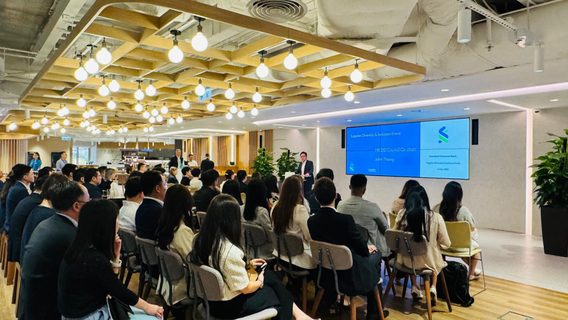
We are committed to fostering an inclusive and sustainable supply chain that reflects the diversity of the communities we serve. By engaging with diverse suppliers – small and medium-sized businesses, businesses owned by women, ethnic minorities, persons with disabilities, and social enterprises – we help create equitable economic opportunities and drive innovation across our value chain.
Our partnerships enable diverse suppliers to access new markets, build capacity and strengthen their business resilience, while providing us with fresh perspectives, agile solutions, and stronger community connections. Through these relationships, we continue to advance shared growth, inclusion and long-term value creation for all stakeholders.
We continue our focus on decarbonising our supply chain. We work with our suppliers to calculate emissions and set reduction targets where appropriate.
How we serve and engage
Please refer to page 41 of our 2025 Annual Report and our Supplier Charter which sets out our principles in relation to ethics, human rights, diversity and inclusion, and environmental performance.
Key topics of interest and engagement
- Open, transparent and consistent tendering process Simple and consistent onboarding requirements
- Accurate and on-time payments
- Willingness to adopt supplier-driven innovation
- Guidance on implementation of sustainability matters

How we create value
We partner with global and local NGOs to help the Group and the Standard Chartered Foundation, formerly Futuremakers, economically empower under-served young people, especially women and those with disabilities.
Youth unemployment is a key issue in many of our markets. The involvement of key external stakeholders that are part of the employment and entrepreneurship ecosystem, including local businesses and governments, is critical to ensuring our programmes provide participants with the skills, capabilities and networks that help them secure employment and business growth opportunities.
How we serve and engage
We engage with a wide range of civil society, international and local Non-Governmental Organisations (NGOs), from those focused on environmental and public policy issues to partners delivering our community programmes.
Please refer to pages 40-41 of our 2025 Annual Report and Standard Chartered Foundation for more information.
Key topics of interest and engagement
With our partners, our programmes are designed and delivered in collaboration with relevant local stakeholders to address key barriers to youth employment and entrepreneurship. Focus areas include:
- Access to decent jobs
- Financial access for microbusinesses
- Gender equality
- Disability inclusion
- Skills and businesses that address environmental and social challenges
- Provision of mentoring and training support

How we create value
Our employees are key to driving our performance and productivity and the diversity of our people, cultures and network sets us apart.
Ensuring we have optimal talent and cultural experience to enable sustained high-performance from colleagues is vital in delivering our strategy.
By engaging employees and fostering a positive experience for them, we can better serve our clients and deliver our purpose. Our inclusive and high performing culture enables us to unlock innovation, make better decisions, deliver our strategy, live our valued behaviours and embody our brand promise, here for good. We proactively assess and manage people-related risks, such as capacity, capability and culture, as part of our Group Risk Management Framework. Our people strategy, approved by the Board, is future-focused, with external events accelerating many of the future of work trends which continue to inform our approach.
How we serve and engage
Please refer to page 39 of our 2025 Annual Report, our flexible working approach, our leadership agreement, our approach towards strengthening diversity and inclusion and our gender and ethnicity pay gap analysis in our Diversity, Equality and Inclusion Impact Report 2025.
Key topics of interest and engagement
- Day-to-day experience
- Health and wellbeing
- Reskilling and upskilling initiatives
- Career progression
- Reward and remuneration
- Positive work/life balance
We engage with a with a range of agencies on our Environmental, Social and Governance (ESG) approach.
| Organisation | ESG Scores 2025 (As of February 2026) | Scale (best to worst) |
|---|---|---|
| MSCI | ‘AA’ | AAA to CCC |
| Sustainalytics | 17.7 (low risk) | 0 to 100 |
| CDP | A | A to D- |
| S&P Global | 60 | 100 to 0 |
We build our knowledge and understanding of key issues and share best practice through our membership of industry and sector organisations, adoption of global commitments, and implementation of guiding frameworks.
| #BackBlue | In January 2025, we joined #BackBlue, an Ocean Finance Commitment under ORRAA, which aims to ensure a regenerating and sustainable ocean has a seat at the table in finance and insurance decisions. |
| Center for Climate-Aligned Finance (CCAF) | We formally joined CCAF, which was established by Rocky Mountain Institute, in 2023. We participate in CCAF working groups for the Aviation and Aluminium industries. The Group is a signatory to both the Poseidon Principles, a global framework for assessing and disclosing the climate alignment of financial institutions’ shipping portfolios and the Sustainable STEEL Principles, which helps banks to measure and disclose the alignment of steel lending portfolios with 1.5-degree Celsius climate targets. |
| Equator Principles | We have been a member since 2003 and actively apply these principles to ensure the projects we finance and advise on are developed in a manner that is socially responsible and reflects sound environmental management practices.¹ |
| Glasgow Financial Alliance for Net Zero (GFANZ) | We are an active participant of the GFANZ Principals Group. Our Group CEO co-leads the GFANZ working group on Financing Opportunities & Solutions. |
| Global Investors for Sustainable Development (GISD) | Standard Chartered co-chairs the United Nations’ GISD Alliance, which has set ambitious objectives to scale up long-term finance and investment in sustainable development. |
| Integrity Council for the Voluntary Carbon Markets (ICVCM) | Our Head of Carbon Markets Development serves on the board of the ICVCM, which is focused on developing high-quality carbon markets. Our Group CEO sits on the Distinguished Advisory Group of the ICVCM, which is involved in the development of carbon markets around the world. |
| Ocean Risk and Resilience Action Alliance (ORRAA) | In 2023, the Group became a member of ORRAA to support investments into coastal and ocean resilience. |
| Partnership for Carbon Accounting Financials (PCAF) | We joined PCAF as a signatory in 2022 to measure and disclose the emissions associated with the Group’s financing activities in alignment with PCAF standards. |
| Poseidon Principles | We have been a member of The Poseidon Principles since 2021, an industry initiative aiming to reduce carbon emissions in the shipping sector. |
| Roundtable on Sustainable Palm Oil (RSPO) | RSPO promotes the growth and use of sustainable palm oil products through credible global standards and engagement of stakeholders. |
| Singapore Sustainable Finance Association (SSFA) | We are a member of the SSFA. This was established by the Monetary Authority of Singapore (MAS) and the financial industry to foster closer collaboration across various asset classes in the financial sector and strengthen the nexus with real economy sectors. |
| Sustainable Markets Initiative Financial Services Taskforce (SM FSTF) | We are a member of SMI’s FSTF supporting efforts to mobilise finance to accelerate the world’s transition to a sustainable future. |
| Taskforce on Nature-related Financial Disclosures (TNFD) | In January 2024, the Group joined a cohort of early adopters of the TNFD framework, and published its first Nature Report2 in early 2026. |
| United Nations Environmental Programme Finance Initiative (UNEP FI) | We’re a signatory of the UNEP FI Statement on Environment and Sustainable Development. |
| United Nations Principles for Responsible Banking (PRB) | Developed by UNEP FI and founding banks, the PRB provides a voluntary sustainable banking framework that can be integrated into banks’ strategies and across their portfolio of activities, bringing purpose, vision, and ambition on sustainable finance to the core of the organisation. Our Head of Sustainable Finance Solutions co-chairs the PRB Adaptation Finance working group, which developed a comprehensive framework and practical guidance for banks to set credible adaptation finance targets. |
| United Nations Global Compact (UNGC) | We are a member of UNGC and support the UNGC’s Ten Principles on human rights, labour, environment, and anti-corruption. |
| World Economic Forum’s Alliance of CEO Climate Leaders | Our Group CEO and CSO are part of the World Economic Forum’s Alliance of CEO Climate Leaders. This is a CEO-led community committed to raising bold climate ambition and accelerating the net zero transition by setting science-based targets, disclosing emissions and catalysing decarbonisation and partnerships across global value chains. |
1. Please see our Equator Principles Reporting.
2. Please see our Nature Report.
How to contact us
We review our approach annually and are open to feedback from our stakeholders.
We view constructive conversations as a valuable source of learning, please contact us at sustainability.feedback@sc.com and we will aim to be responsive.
Learn more about our approach to sustainability
Responsible business practices
We strive to be a responsible business, guided by our valued behaviours.

Bespoke sustainable finance
We leverage our deep expertise and suite of over 40 products to help our clients.

Innovating for our markets
We advocate in service of our markets to unlock capital where it’s needed most.

Sustainability library
View our key impact and sustainability reports, including our latest climate change disclosures.