-

Studio Sessions
Extreme Weather: how should your business adapt?
Watch our in-depth discussion on how leaders can reduce risk and deliver long-term opportunities for growth.


In the episode
- Why extreme weather is now a material business issue
- How leaders can move beyond backward‑looking risk models
- What to do about the acute shocks which drive the greatest disruption, such as floods, droughts, wildfires and typhoons
- Why adaptation can both reduce risk and unlock new growth opportunities
Meet the guests
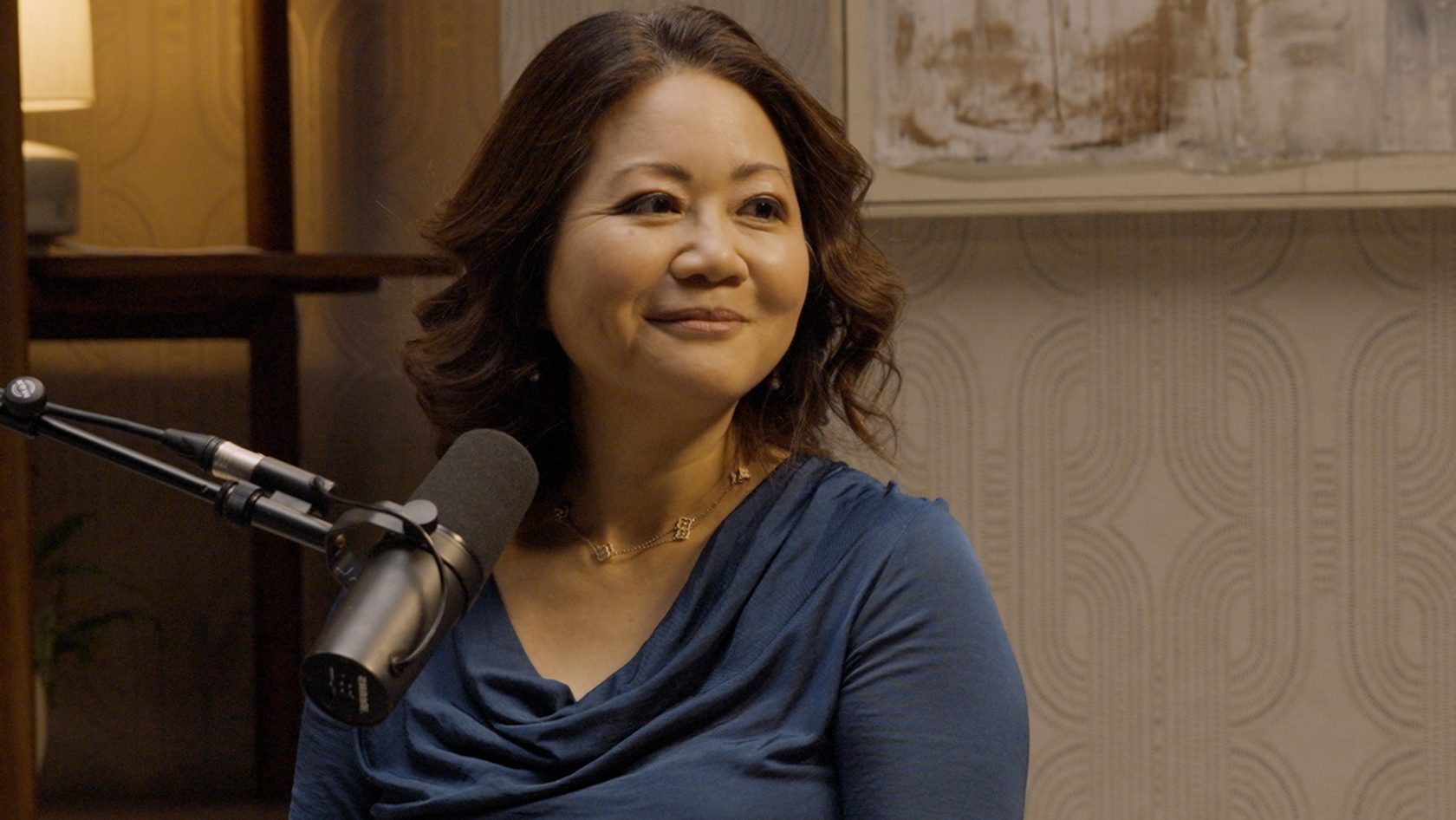
Dr Linda Yueh, CBE
Linda is an economist and financial broadcaster. She is an Independent Non-Executive Director of Standard Chartered PLC and the Court of Standard Chartered Bank. She holds a variety of non-executive directorship, chair, and trustee positions at FTSE 100 and other companies and organisations. Dr Yueh is a Fellow of St Edmund Hall, Oxford University and Adjunct Professor at London Business School.
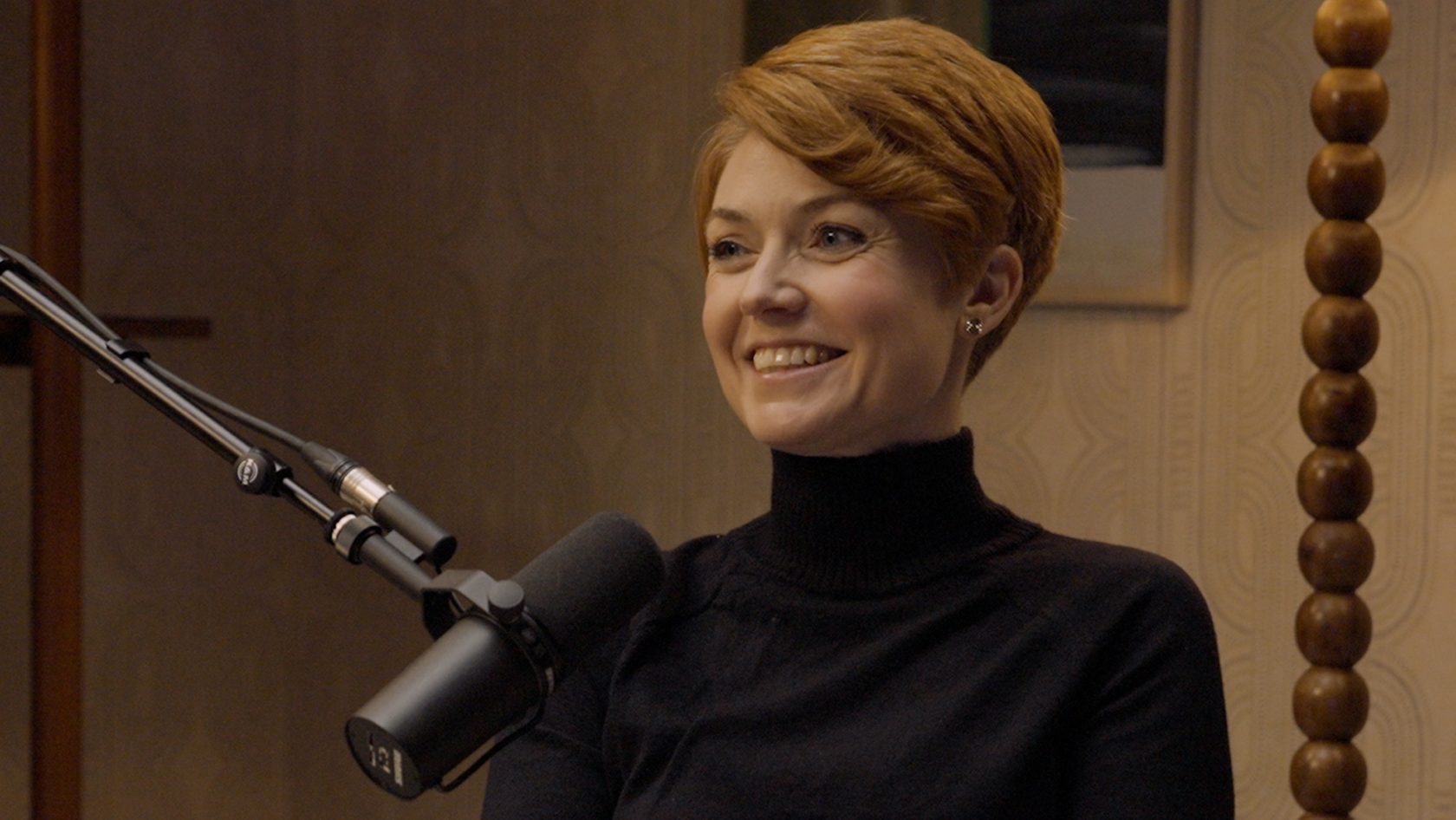
Professor Nicola Ranger
Nicola is Executive Director of Earth Capital Nexus and Professor in Practice of Natural Capital, Risk and Finance at the London School of Economics and Political Science. She is an expert on the relationship between finance, natural capital, and sustainable development. Nicola serves as a senior advisor for The World Bank.
Adaptation isn’t just about reducing risk – it’s a major growth and competitiveness opportunity. Professor Nicola RangerExecutive Director at Earth Capital Nexus
Glossary of key terms
- Transition Finance: Any financial service provided to clients to support them align their business and/or operations with a 1.5 degrees Celsius trajectory or national net zero target. [SC Transition Finance Framework 2025]
- Adaptation Finance: Funding that aims to manage and minimise risk, reduce vulnerability and enhance the capacity of systems (whether social, economic or environmental) to deal with the impacts of natural hazards and climate change. [Standard-Chartered-Bank-Guide-For-Adaptation-And-Resilience-Finance-FINAL.pdf]
Further reading
- Learn more about our approach to adaptation and resilience
- 10 key questions about adaptation finance [World Resources Institute]
- What role does the Private Sector play in the Climate Adaption Finance? [Climate Policy Initiative]
- Download the United Nations Environment Programme’s Adaptation Gap Report
- Download the FCA’s Mobilising Adaptation Finance to Build Resilience Report
Episode 1: Cyber Security
Watch the first Studio Sessions episode to learn why cyber risk is now a strategic business priority.
Mobilising adaptation finance
The Guide for Adaptation and Resilience Finance offers a roadmap to financing investable activities.
Navigating extreme weather
We support clients to address extreme weather, access adaptation finance and transition.
Standard Chartered has an important role to play in supporting our clients, sectors and markets to deliver net zero, but to do so in a manner that supports livelihoods and promotes sustainable economic growth. We provide financial services to clients, sectors and markets that contribute to greenhouse gas emissions however we’re committed to managing our environmental and social risks and to becoming net zero in our financed emissions by 2050.
Learn more about our approach.
Studio Sessions: Extreme Weather transcript
Dr Linda Yueh, CBE (Independent Non-Executive Director, Standard Chartered): We know about the erosion to nature, natural capital. We know that global temperatures are rising.
Professor Nicola Ranger (Executive Director, Earth Capital Nexus): Businesses can’t ignore this. They’re seeing it on their balance sheet right now.
Emma Hughes (Head of Group Content & Social, Standard Chartered): Today, we’re talking about extreme weather and adaptation, and I’m joined by Dr Linda Yueh, a Fellow in economics at Oxford University and Adjunct Professor at London Business School. On the Board at Standard Chartered, she chairs the Culture and Sustainability Committee.
And Professor Nicola Ranger, a Professor in Practice at the London School of Economics and Executive Director at Earth Capital Nexus, a research centre devoted to mobilising investment in adaptation and nature.
Thinking about extreme weather events as being one of the most significant risks, how did you get into this area? Why is it so interesting to you?
Linda: So, I am an economist. I’m at Oxford University and London Business School. My research is on economic growth and increasingly both the quality and the quantity of growth.
I also write on when growth doesn’t happen, which is why my last book was called The Great Crashes – so I’ve looked at crises as well.
I became very interested in sustainable development and I had the honour of addressing the United Nations High-Level Forum on the Sustainable Development Goals.
Emma: Amazing. And what about you, Nicola?
Nicola: Well, I started life as a scientist, so my PhD is in atmospheric physics.
After my PhD, I had the opportunity to work in government in the UK and one of the things I realised is that while scientists can provide the evidence, unless we can translate it into economic and financial terms, it becomes very difficult for that to be understood.
That’s why I made this transition into economics and finance. At first, working at Treasury, working at the World Bank and working at Oxford for a while as well, and then now, the London School of Economics.
A lot of my work is about bridging that gap between the science, the economics and finance. I work particularly with financial institutions, both public and private, with ministries of finance around the world and central banks.
I also work with financial institutions to help them develop the tools that are needed to bring the science into their decision making but then importantly, to find the investable opportunities.
A lot of my work is about what’s the role of government in creating that right enabling environment for investment and how can financial institutions be working to support this transition as an opportunity for this more resilient, nature-positive and net-zero future.
Emma: The world has changed profoundly over the last 20 years and is continuing to do so in unpredictable ways. One of the risks that has emerged as a really high priority is climate risk and the impact of extreme weather events. Linda, what is the impact this is having at board level?
Linda: It’s a massive consideration now for boards and has a number of implications for how boards operate.
So, one is that you want to have a risk appetite. So, in other words, a board needs to assess what are the scenarios that extreme weather could pose to its operations. So, for a bank, to its lending.
The way to do that is not to use backward looking models but do look at scenarios. What different types of climate scenarios could look like – what a central scenario could be, what an extreme scenario could be, and maybe also what a benign case would be. Then boards could give that oversight, that strategic direction, to the executives to operate their businesses in the most resilient way possible.
Nicola: Early in my career, I worked in the insurance industry. There was a big event in the insurance industry, or a few big events; in 1992, Hurricane Andrew struck Florida, and it was the first time that insurers, a number of insurers went insolvent as a result.
It was the first time that the insurance industry really got to grips with: “We can’t just look backwards in time to understand risk. We need to think about modelling risk more explicitly.”
That led to a big revolution in how the insurance industry functions and its understanding of risk, and its use of models and data to understand that. And it also led to big changes in regulation as well, requiring firms to conduct risk analysis.
Emma: And, Nicola, you’re someone who’s obviously had a lot of experience in the sustainability space, including thinking about climate risk as something that is increasingly on the agenda for boards and for corporate organisations. How has that landscape changed over the last 20 years or so?
Nicola: Well, it’s changed a lot.
In terms of the science, you mentioned at the start of our conversation that these changes are unpredictable, but from a scientific perspective what’s playing out now is what’s been expected from the scientific community in the last 20 years. The main difference is actually that things are rolling out much more quickly than we estimated 20 years ago.
What has also changed in the last 20 years is the level of understanding in business of these risks. Five years ago, when I was at COP26 talking about these issues, it was really difficult to get the private sector interested in adaptation. They saw it as a long-term issue that they don’t need to worry about now. That has changed totally. That’s as a result of many of these climate risks and businesses can’t ignore this. They’re seeing it on their balance sheet right now.
The other thing that’s really emerged, actually, is the role of technology. The roll out of technology has happened much, much more quickly than was expected 20 years ago.
We have seen huge reductions in the costs of renewables, but also the advent of AI and the opportunities that brings. In my area of research, the importance of nature has also come out much, much more strongly.
Emma: Just to bring us back a step for a second, you mentioned extreme weather there, can you just give us some examples of what extreme weather events look like?
Nicola: When we talk about climate risk, we often separate things into the extremes. We often talk about those that are acute and then the chronic, gradual changes.
The gradual changes are things like gradual changes in agricultural output.
However, it’s the extremes that are actually what tends to drive the biggest risks. This would be the floods, droughts, wildfires, hurricanes, typhoons in Asia – these big, one-off events that lead to very significant damage, both to capital, so buildings, infrastructure, but also business interruptions as well. So, changes in terms of electricity generation that can knock out whole areas and big impacts on supply chains as well.
Emma: And you talked earlier about predictability, but would you say that there is a difference in how businesses view the impact of those things that are longer term versus those that are more extreme and come without warning?
Linda: Both are important. So, if we look at a lot of boards’ governance reporting requirements, it picks that up. In other words, we have risk reporting in two areas. One is the main risks that a board needs to look at – it’s the things which are quite known.
So, we know about the erosion to nature, natural capital. We know that global temperatures are rising. Those are, as you say, chronic changes that impact the climate risks that a board, a company faces.
But there’s also the emerging risks. This means we also have to map what could happen, but we don’t know exactly what will happen.
As Nicola said, we do know there’s an increasing frequency of things like floods, which could disrupt, for instance, your supply chain, your warehouses. We do know that there are typhoons which could disrupt production and supply chains in Southeast Asia and other parts of the world. We do know that there’s risks which are emerging. We may not be able to forecast it precisely, but we know that this is an emerging risk area we need to keep an eye on.
And also, not to be too technical, but a lot of the reporting that boards have to do is also trying to pick up longer-term risks, which incorporates everything that I’ve said and to think about preparedness.
Emma: Nicola, I wonder if you could just share a bit more about the business side of this, and how you and others are supporting organisations in coming to terms with this type of risk.
Nicola: When we think about physical damage, we often think about it in terms of infrastructure, buildings, but it’s much bigger than that.
This is a fundamental transition in where our food grows, our water supplies, it will lead to big changes in our energy infrastructure. Energy is very water dependent, and water is one of the biggest sources of risk.
We are thinking about this as a structural change, and every business in the world is going to have to confront this risk and ask: “what does that mean for my business model? What does it mean for my clients? What does it mean for my supply chains?”
And this means that, for banks in supporting their clients and their counterparties, this is a huge necessity, but also an opportunity, and it’s awful to speak about opportunity in the context of climate change, but this is a huge financing need.
Emma: In your experience on the Board at Standard Chartered – you have been there for a few years; you chair the Culture and Sustainability Committee – how have you seen the conversation changing in terms of how the execs view this type of risk?
Linda: I’m very glad that climate risk and nature-related risk are both very embedded in how the Bank works. What I have seen is Standard Chartered really taking an active role in the analysis, in helping develop the ecosystem around how you could finance and how you could help companies adapt to these risks.
Emma: Nicola, would you say that’s one of the things that has changed over the last 20 years or so – it’s not just a nice to have anymore? It’s not just putting a green stamp on something; it’s genuinely making a difference and it’s actually beneficial.
Nicola: Most definitely. So, 20 years ago when we were looking at this topic, it was very much about comparing these costs of action versus the benefits – this involved looking at the cost of inaction and then looking at the cost of action, and comparing those. That’s totally flipped around now.
We knew that the costs of action were going to be significantly less than the cost of inaction. But now it’s even more so.
We recognise now that the transition towards a green sustainable economy is beneficial. It is more costly not to be doing this, and not just in terms of climate change, but in terms of the opportunities for innovation, for new technologies. The opportunities to expand your client base to become more innovative and more competitive. All of these things are delivering benefits right now.
So, it’s no longer approaching this as a future issue – we need to address it now. There’s a cost, but actually this is a big opportunity today.
Over the last say, four or five years, there’s been a real increase in focus, particularly amongst banks in this area, in getting to grips with the question of what it means day-to-day for them.
We work a lot with banks, particularly on understanding that risk, looking at frameworks to bring that into day-to-day decision making, looking at questions like, what does it mean for credit risk? What does it mean for probabilities of default for these different types of assets and where are these opportunities?
One of the pieces that we’ve worked on with Standard Chartered is as part of the Climate Financial Risk Forum. Standard Chartered co-chaired the group on adaptation over the last year, and we developed frameworks to help banks and other financial institutions build it into their decision making. And actually, scenarios was a key area that we looked at.
Emma: Can you share any more examples of what organisations are doing to try and defend against some of these extreme weather events?
Linda: There’s a range of things.
For instance, warehouses, supply chains obviously. We have seen supply chains can be quite vulnerable to extreme weather.
If you think back maybe a decade ago, there were floods in Thailand that severely disrupted supply chains in Southeast Asia, which had global repercussions because so many supply chains, global value chains, are done in terms of disaggregating production.
This is where you have production that’s done in various countries, including Thailand, which is a leading manufacturing hub in ASEAN (which is the Association of Southeast Asian Nations), before it gets shipped off, say to Europe, for final sale. These GVCs – Global Value Chains, are integral to how international trade is done.
The severe flooding in Thailand disrupted global trade, and therefore GDP national output for lots of countries, not just in the region. It had global repercussions.
So, how can you make that more resilient? Supply chains need alternatives. It’s about building in what some people call redundancy. I describe it simply as needing a plan A, and then you need a plan B; you probably also need a plan C and a plan D – you just need to have options.
When people say you’re resilient, what does that really mean? It just means that you have alternatives – where you can shift production, in that example. That could’ve mitigated some of that impact for clients and for economies.
Emma: And you’ve mentioned cost. Obviously it has been prohibitive in some cases because it is, as you’ve said, expensive. A lot of the areas where some of these extreme weather events are hitting, do not necessarily have the funding in place. How is that starting to change? And what’s the role that banks play in supporting that?
Linda: Transition does have a cost. But there’s no reason why after you transitioned you wouldn’t be more productive, efficient, and you’d have a better quality of growth.
We could have gone a different way. It’s one of those “what if” questions in history, a century ago. That’s the kind of longer-term view of it. It is absolutely true that developing economies, emerging markets find it harder to access both finance and technology. It’s a long-standing debate in the global community.
Because of Standard Chartered’s footprint, Standard Chartered as a bank operates as a super connector in a lot of these markets. Part of it is also information – you need to know the markets that you are operating in, to work out what is a good credit risk; which clients are likely to deliver all of those things. So, expertise really does matter. There’s a lot of scope for growth here in some of the places that probably need the financing the most.
Emma: Nicola, I wonder if you can just add something there. On that super connector cross-border piece, how are organisations like Standard Chartered helping particularly in those economies where it can be more problematic from a finance perspective, but also where the extreme weather events tend to be more prominent?
Nicola: One of the myths that frustrates me most – and actually Standard Chartered has been a great ally in breaking – is that adaptation isn’t investable.
You often hear the adaptation is costly. It’s uncertain. We don’t have the data. All of these things are not the case at all.
Standard Chartered, with the global footprint and huge expertise in this area both locally and globally, has been a real leader in providing the evidence that it is investable and doing it.
For example, putting out a taxonomy of adaptation was a big project of Standard Chartered a couple of years ago. You are showing what adaptation investments are.
Again, it sounds simple, but that didn’t exist. And the number of times we would hear from financial institutions: “We don’t even know what adaptation is. What actually is it?”
Having a tool like that, a taxonomy, is literally a list of these are things which are adaptation – it’s resilient infrastructure, it’s resilient agriculture, it’s investing in early warning systems.
All of these things, this is what adaptation is. So, creating that knowledge and sharing it both internationally and locally is a key role that Standard Chartered has played and doing that analysis to show that this is investable.
I mentioned before the work on credit risk analysis, of showing that there are economic benefits from this now, and by actually doing it as well.
What we find is that many financial institutions tend to be quite early on. In our engagements more widely with financial institutions, and corporates, we find that many are starting to talk about these issues but not necessarily doing much yet.
There’s a lot of discussion of these risks. In the recent disclosures in the EU, around 70 per cent of firms recognise that physical climate risks are material to their business. But when you look at what they’re doing, there’s a lot of recognition of risk, but it’s not really translating yet into action.
That’s the transition that we need to see now, and that’s where banks like Standard Chartered can play a really important role, both providing the knowledge but also the financial instruments, the products to do that.
Another area that we’ve been focusing a lot on is sustainability-linked finance (as being an opportunity in this area). It’s a way that you can incentivise firms through the design of the product, through offering an interest rate reduction, for example, to take this action.
One of the things that, in the work that we’ve been doing with Standard Chartered, that comes across really strongly, is that investing in adaptation means reducing your risk. That means that you can access more capital at cheaper costs, so it makes very strong financial sense.
Particularly in areas like infrastructure – we talked a lot about agriculture, we’ve talked a bit about energy, but it’s so urgent that we bring adaptation into infrastructure because we’re locked into infrastructure for the next 20, 30, 50 years.
We talk a lot about adaptation financing gaps. The adaptation financing gap is estimated to be around USD200 billion a year at the moment. So, it’s big. But actually if you look at the financial flows just for infrastructure, that’s about USD2.9 trillion a year.
If we can be bringing adaptation into those day-to-day decisions that are being made on infrastructure investment, for example, we can be going a long way to solving the problem.
Emma: Does that resonate with you as well, Linda? Obviously you are on the Board of Standard Chartered and you do have these conversations quite regularly, I’m sure. Have you found that, in your experience, they are asking questions about what others are doing and whether this stuff really works?
Linda: Standard Chartered is in a really leading position in this area. Generally, boards do like to see what others are doing and how we can do it, well, better. There is a lot of benchmarking.
I completely agree that the more you can share knowledge, the better. Looking at some of the work that Standard Chartered has put out, one of the papers had about 100 investable cases showing where you can make an investment, as examples for others to consider and to think about.
As we all continue to work in this area – different boards, different companies, different financial institutions are all looking at adaptation – the more that we can learn from each other and share knowledge, the better. That would help develop what is a relatively new area for a lot of corporates.
So, it is about trying to move it forward and shift the dial. And you only do that by giving practical examples and use cases. What others have done, and also lessons learned, because some of it doesn’t work. So, what not to do.
Emma: And just building on that, to take us into the more positive space, what makes you both most hopeful about the way that financial institutions, but also, more broadly, organisations are responding?
Linda: The paradigm has shifted – engaging not just with the risk side, but also in the case of financial institutions, the revenue side.
This is a different way of thinking about how you generate growth for your markets, and for yourself.
I’ve mentioned a couple of times there is more of a focus on the quality, and not just on the quantity, of growth. We do care about the quality of our society, of our environment. And I think that is a very different way of approaching how companies, as well as governments, think about growth.
You mentioned, Nicola, the relationship between adaptation and net zero, which is about trying to achieve net zero in terms of carbon emissions (which countries have signed up to do by 2050).
The nature part of it underpins increasingly a lot of that transition. In other words, we talk about carbon emissions, but we’re really just talking about the planet and preserving nature. Seeing everything holistically and just making that part of the BAU is something that’s emerged in the last few years, even though work has been going on for quite a long time.
Emma: What about you, Nicola?
Nicola: Only five years ago, when I first started talking to different financial institutions about this topic, one of the findings of research we did from interviewing organisations was that insurers were well ahead of the banks. In terms of understanding risk, because insurers have been doing this for decades – and I mentioned 1992, but Katrina obviously was another big shock to the insurance industry. We found that banks were actually a long way behind. Now that has totally changed.
It’s really great to see banks, in particular Standard Chartered, moving from: “Okay, now we’ve got a handle on the risk.” And “oh, now we’ve seen that actually investing in adaptation, investing in resilience, in net zero, in nature is not just an opportunity in terms of new clients, new business lines, but is actually reducing our systemic risk.”
That shift in understanding the system and the role that finance can play – that positive role is a very significant one.
As well as that, another one of the changes that we’ve seen, particularly in the last year, is financial institutions really pushing forward despite some of the regulatory changes that we’re seeing. We have seen things like rolling back, in some disclosures in Europe, some of the changes that we’re seeing in other parts of the world.
Despite some of these examples, potentially governments, rolling back a bit, we’re seeing the financial institutions moving forward. And the reason for that is because there is a clear business case to do so.
Emma: And if you were both to share something that you would like our listeners to take away from today, what would it be?
Linda: The role of capital allocation in society is critical in so many ways. The decisions financial institutions make: what to finance, what not to finance, can really move the dial. So, I do hope that we move the dial on climate, on coping with extreme weather events. And I think financial institutions can play a key role here. And there’s a lot of risks, but opportunities.
Nicola: That that alignment between reducing risk and opportunity is a key one. One thing I would like people to take away from this is that , yes, adaptation is about reducing risk. But it is also more than that. This is a new business opportunity. This is about a shift in thinking about how to support clients.
It’s interesting, we often hear that net zero is about opportunities, about new technologies: energy, industrial revolution. Whereas adaptation is just about managing the stuff that we can’t deal with any other way. But it’s more than that, and it’s about investing now, both in making different sectors resilient, but also, as you said, in the fundamental natural capital on which our economy depends. That itself leads to very significant growth opportunities.
Emma: Thank you both so much for your time. Super interesting conversation.
Linda: Oh, thank you very much.
Nicola: Thank you.