-

Past the inflection point
Top Five Policy Issues report 2026
Insights on a changing policy landscape developed by our Group Public & Regulatory Affairs team.

Jump to
The traditional systems and frameworks of global governance are being replaced or significantly altered. Standard Chartered’s Group Public and Regulatory Affairs team has been closely monitoring these changes to help us sift through the noise, identify enduring trends and navigate the shifting public policy environment.
Sitting at the heart of the world’s most important trade and capital corridors, we see internationally-oriented clients responding with agility to these shifts by redeploying resources, revisiting portfolios, reshaping infrastructure and reworking their operations to build long-term resilience.
As a bank that specialises in providing creative solutions to complex issues, we persistently interrogate, question and challenge our understanding of the changing world so we can continue to respond to evolving priorities and enhance the value we create for our broader stakeholder community.
1. The rebalancing of power
The transition from a rules-based international order to a power-based system continues at pace and its implications are now being felt.
Global policy developments need to be considered through the lens of actors seeking to maximise, defend and/or utilise their relative power assets.
The multi-aligned global system sees a rebalancing of relative power dynamics across geographies, sectors and themes.
Contests and conflicts
The outbreak of the regional conflict in the Middle East in 2026 is only the most recent example of the increased prevalence of state-on-state violence. The number of state-based conflicts globally is at the highest level in 50 years, having roughly doubled since 2009.
It includes both covert or hybrid warfare, e.g., the so-called Russian grey-zone operations in Europe, and overt kinetic action against both state and non-state actors. Increasingly, contests and conflicts also involve the use of lawfare and economic warfare – regulatory and sanctioning authority used to exert pressure. The downside of an international order less constrained by rules or norms is that it lowers the barriers to conflict.
If relative power dynamics are the organising principle of international relations, it creates the risk of conflict in cases where assessments of such relative strength are incorrect or disputed.

Power: Who has it and is willing to use it?
Beneath the trend of rising contests is increased willingness to use power in an offensive capacity.
Although kinetic conflict gets the most attention, we also see the increased willingness to leverage financial power (e.g., financial sanctions), supply chain power (e.g., export restrictions and controls), and even control over basic natural elements such as water.
Those lacking in one area of power are likely to seek to fill in their gaps: e.g., those lacking in hard military strength will increase defence expenditure or alliances; those lacking in wealth will redouble efforts to extract value from their natural resources or strike new trade partnerships; and those lacking in stature will invest in diplomacy and international cooperation.
Middle powers pursue multi-alignment
Multi-alignment reflects several different strategies simultaneously, including:
- a hedge against the risk of changing policies from the great powers,
- opportunistic or transactional dealmaking based on need, and
- an attempt to develop an alternate path forward for rules-based order.
For instance, acting on a multi-directional strategy that Prime Minister Mark Carney calls “variable geometry”, Canada has moved to rebuild diplomatic ties with China to hedge against a deteriorating relationship with the US, took advantage of migration flows from India to Canada to deepen economic relations with India, and expanded military cooperation with Japan and Australia.
In addition, the long-negotiated EU trade deals with the Southern Common Market, Mercosur, and with India have finally been successfully concluded.
Expectations
What will be the most significant driver of change in 2026?
Hover over the pie chart to see what 400 senior business leaders said.
2. Technology adaptation and integration
In 2026, technology is central to national economic strength. Artificial intelligence, digital assets, and infrastructure are now key tools of power and influence.
Governments are linking technology with economic resilience, integrating it into policy for security autonomy and foreign investment.
In return, there is an expectation of private sector alignment with national priorities.

Mainstream acceptance and increased adoption
The evolving tech landscape centres on three key areas, each shaping regulation around national goals:
- Digital assets as regulated infrastructure: 1.Digital assets are transitioning from speculative uses to regulated platforms, with stablecoins leading this shift. Policy responses include the US’s Guiding and Establishing National Innovation for US Stablecoins (GENIUS) Act, UK’s Financial Conduct Authority (FCA) regime, the EU’s Markets in Crypto-Assets (MiCA) regulation, and Hong Kong frameworks, all supporting stablecoin integration and real-world application. Global competition is driving diverse models for digital-money ecosystems including central bank digital currencies (CBDCs) and tokenised deposits – with licensing frameworks and tokenisation sandboxes from Singapore to the UAE – resulting in rapid but uneven integration and adoption driven as much by competition as by regulation.
- Beyond Generative AI (Gen-AI): Gen-AI and Large Language Models (LLMs) are pushing policy towards accountability (e.g., traceability explainability, human oversight, incident reporting). Competing standards from major centres (US, Europe, China) remain voluntary and lack global coherence. Advances in agentic AI offer new opportunities, yet AI is also central to global tech competition and national security strategies. As such, policy currently lacks internal consistency.
- Tech’s resilience: As ‘foundational’ financial technologies embed into traditional financial ecosystems, they are being put to the test by emerging innovations, notably the potential of quantum computing’s impact on cryptography. Data localisation rules and cross-border restrictions challenge cloud infrastructure and analytics, with over 75 per cent of state actors enforcing such regulations. System outages and dependencies highlight the importance of operational resilience. Data centres are now deemed critical infrastructure alongside undersea cables.
Policymakers and regulators are examining various areas of focus, both old and new, to encourage innovation while minimising risks. Regions use legislation, regulation, supervision, and litigation to varying degrees. Given tech’s ubiquity, traditional sector-based regulation is often unsuitable. Policy responses now target specific tech firms or products (such as digital assets and AI), resulting in a mix of entity-level and activity-level regulations. The specific areas that are of relevance are:
- Competition/anti-trust: Increasing scrutiny of mergers, restricting tech companies’ preferential treatment, and opening datasets to new entrants; industrial policy tools are also used to address global imbalances.
- Data management: Privacy and data rules govern access and transfer.
- Consumer protection: Regulations on ethical AI, illegal content removal, and consumer redress.
- Stability standards: Prudential rules ensure operational resilience across industries.
- Safety standards: Guardrails for human-out-of-the-loop, agent-to-agent interactions.
From a policy perspective, nations’ approaches to technology frameworks fall along a continuum anchored by three main poles, each reflecting regional interests and priorities to be protected or promoted in distinct ways.
- The US – which emphasises tech development and market interests of companies and investors.
- China – which emphasises technology use.
- Europe – which emphasises consumer protection and technology sovereignty as an instrument of strategic autonomy.
Other important markets, who array themselves across this spectrum include:
- UK – the UK’s FCA rules (and EU’s MiCA framework) seek to embed digital assets within existing national prudential frameworks.
- UAE – the Central Bank’s Payment Token Services Regulation established a framework for AED-backed stablecoins with licensed issuers.
- The Kingdom of Saudi Arabia – announced plans to introduce stablecoins under national regulation, though frameworks remain under development.
- India – is positioning itself as a hub for affordable and scalable AI, using its large skilled workforce, digital user base and growing private investment to advance domestic innovation.
Expectations
3. Race for resources
Resource control and security now challenge climate cooperation as the defining strategic priority of environmental policy. The Iran war and closure of the Strait of Hormuz brought this trend into sharp relief in 2026, but it has been underway for many years.
The supply shock caused by the war has reinforced the fact that, for all the progress in energy transition, oil and gas remain central to the global economy. At the same time, the stark reminder of global dependence on fossil fuels is likely to accelerate efforts to secure energy independence through renewables.
In a rising cost environment, multilateral efforts to negotiate deeper climate commitments may be deprioritised.
Competition for rare earths and critical minerals
Demand for critical minerals and rare earths is projected by the International Energy Agency (IEA) to quadruple by 2040 and grow sixfold by 2050. China is a leader in this landscape, controlling 90 per cent of rare earth refining and 75 per cent of EV battery production.
Markets that are sources of critical mineral extraction, such as Indonesia, which produces 60 per cent of the world’s nickel that is essential for battery production, are increasingly looking to control more of the processing chain to increase their geostrategic leverage.
Those who lack such reliable access to critical minerals are working to build agreements to secure them, as seen with the G7 Critical Minerals Action Plan.
Water, wind, sun, and land
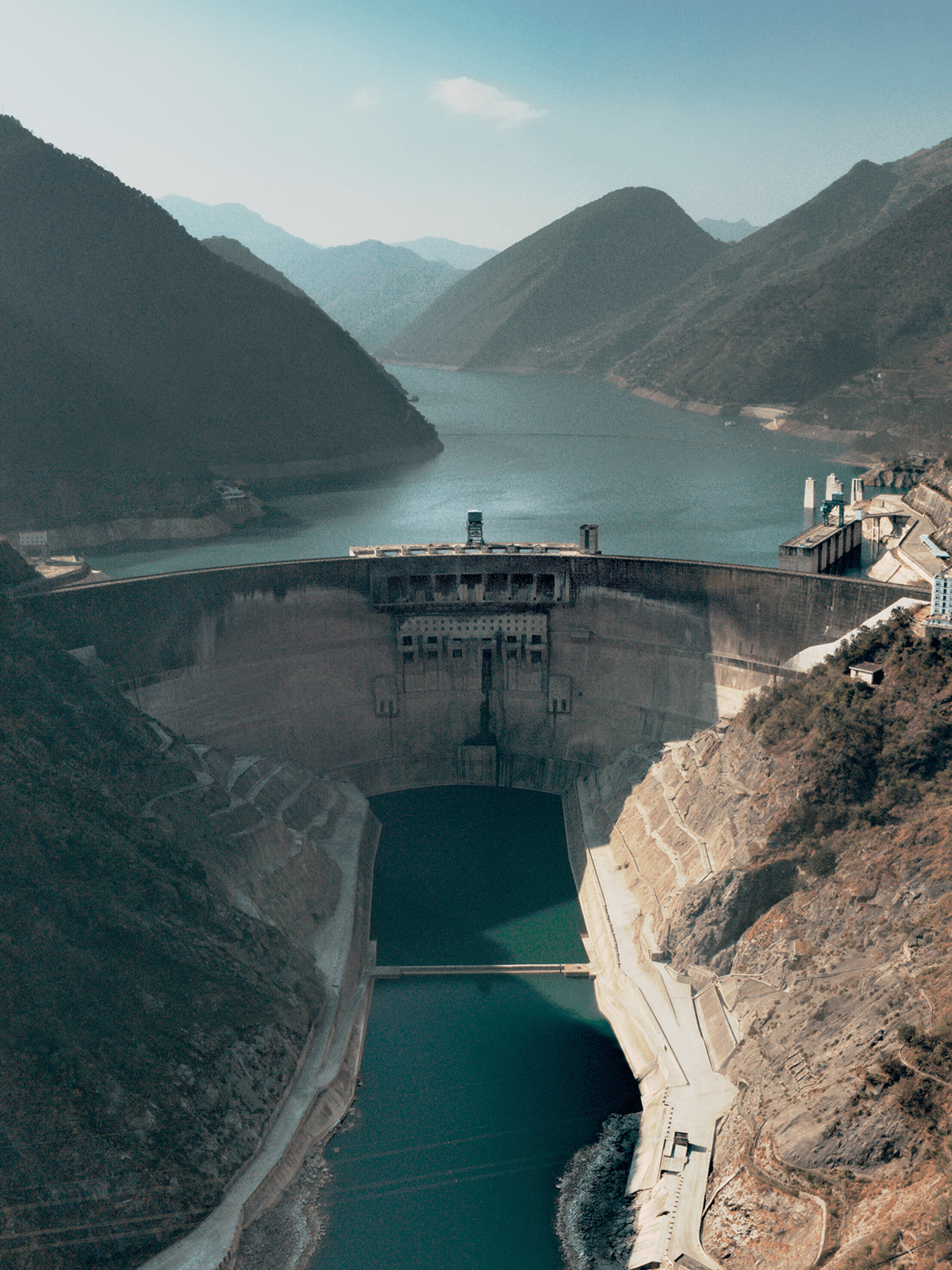
Proliferation of solar and wind technology has increased demand for open land in regions with the right climatic conditions while cooling of AI data centres and semiconductor production create high demand for water.
These trends are also interrelated: placing data centres and manufacturing facilities in regions with mostly sunny weather conditions (such as deserts) allows access to cheap solar power but also increases the need for water-intensive cooling in regions with already-limited freshwater resources. Competition is not limited to terrestrial resources, as both outer space satellite connectivity and deep-sea mineral resources also play a role.
Using energy as strategic leverage
The Strait of Hormuz crisis has illustrated how the protection and defence of energy resources interact. Iran’s success in closing it demonstrates how states can use chokepoints to influence global prices and reshape bargaining power in wider regional conflicts.
Competition for resources is no longer just about discovery and production, but about securing, defending, and, where useful, contesting the infrastructure and routes that move those resources to market.
Globalisation has become a tool in this race, as states selectively use trade, investment, and technology flows to lock in privileged access for themselves while constraining rivals.
Expectations
What will be the most impactful consequences of these changes?
The senior leaders we surveyed indicated that the most significant outcome in 2026 of global restructuring will likely be a shift in trade patterns to favour the Global South, as well as changes to the distribution of wealth, labour markets, and priorities of government spending.
4. Societal divisions
Societal divisions have become a defining political constraint. In many markets, economic insecurity, declining institutional trust, and AI-amplified influence have transformed citizens from periodic voters into continuous political actors. The resulting ‘us versus them’ dynamics are shaping how authority is built and maintained.
In some cases, social policy is no longer primarily redistributive, but more a tool to manage distribution and access to economic and political power across the population. Yet, mishandling or underestimating frustration over such division and inequality risks popular unrest and upheavals, with the potential of creating a febrile environment.

Inequality and demographic stress
Deepening economic inequality and demographic division are intensifying competition over finite resources. Globally, the richest 10 per cent hold about three-quarters of total wealth, while the remaining 90 per cent owns roughly two per cent.
Wealth is also unevenly distributed across groups: older households hold far more assets than younger ones, and women account for approximately 38 per cent of total economic resources in comparison to 62 per cent of their male counterparts, reflecting persistent gaps in earnings, asset ownership, and labour market participation.
These disparities intersect with divides between urban and rural populations and between immigrant and native-born residents. As these pressures grow, demographic and identity groups increasingly organise online to mobilise political influence and shape how resources are allocated.
Trade-offs
In many systems, societal divisions are not only a social outcome but have become a defining political constraint and/or advantage. Some political leaders and influential non-state actors (e.g., media networks, online platforms, activist groups) are benefitting from an information environment where that can quickly form, separate and harden competing views.
Appeals to national identity, cultural preservation, or civilisational threat are increasingly used to mobilise support and define insiders and outsiders. This risks shifting governance away from broad consensus.
Information walls and ecosystems
Control over information pathways is increasingly concentrated in a small number of powerful state and non-state actors – particularly global technology platforms and digital media ecosystems whose reach and resources rival or exceed those of many states. Mobile connectivity is ubiquitous – at least 5.8 billion people worldwide have at least one mobile subscription and average four hours of screentime per day, providing fertile ground for algorithmic curation and targeted amplification to shape discourse and reinforce group think.
Algorithmic feeds increasingly produce parallel versions of the “truth” that contest shared facts, fragment public perception, and erode the common ground.
Governments and political movements operate within – and at times contribute to – this trend, using social policy and cultural narratives to consolidate alignment. As a result, the contest over information flows is increasingly shaping public perception, political alignment, and the boundaries of policy debate and action – both within and across sovereign boundaries.
Expectations
5. Implications for global governance
In today’s power-driven international system, major players increasingly treat rules as constraints rather than shared standards. When rules are ignored, the purpose and operation of institutions are undermined.
International efforts to address global public goods are under strain and increasingly being replaced by a mosaic model of overlapping groups that focus on specific outcomes rather than compromise or consensus.
Global governance more revolving than evolving
The influence of current multilateral architecture continues to be weakened and structural adaptation has been slow. The UN is facing a budget crisis and the P5 veto framework frequently precludes decisive action, serving as a flashpoint for emerging market frustration.2 Progress may well depend on who is elected as Secretary General in late 2026.
As seen, for example, in the perceived failure of the 14th Ministerial Conference in March 2026, the World Trade Organization (WTO) is also gridlocked without a functional Appellate Body for dispute settlement or an agreed pathway for reform, which could not be solved for at its 2026 Ministerial Conference despite concerted effort.
Similarly, the lack of a globally coherent approach to emerging issues, such as AI regulation, has created roadblocks and incentives for nations to take more competitive actions or devise alternative pathways. Importantly, this significantly weakens the prospects for a unified response to future international crises, whether financial or otherwise, to identify, contain and manage them effectively.
2. The P5 veto framework refers to the exclusive power granted to the five permanent members of the UN Security Council.

Credibility gaps
The downside of a model that relies on issue specific or ideological coalitions is that they must overcome the credibility gaps necessary to bridge geopolitical divides. The benefit of the universal institutions such as the UN is that – at least in theory – they operate neutrally in the interest of world peace and the common good.
Institutions that are overtly identified with a single major power are less likely to be viewed as neutral. These bespoke security architectures with overlapping alliances further engrain ‘us versus them’ dynamics in domestic audiences as competing nations are ‘othered’.
Mosaic of minilateralism
A transition towards transactional minilateralism is serving as a stabilising mechanism for nations seeking to maintain strategic order within a more fragmented landscape. By pivoting towards narrow, issue-based blocs, nations are bypassing multilateral gridlock to secure domestic needs such as resource resilience and regional security through high-trust, functional partnerships.
These arrangements do not mark a collapse of global cooperation but instead reflect a pragmatic recalibration of the international architecture in which the pursuit of discrete, actionable outcomes replaces the pursuit of universal consensus. However, this increasingly tangled security alliance structure risks the escalation of regional wars to global conflicts as precipitated the First World War.