-
Insight report
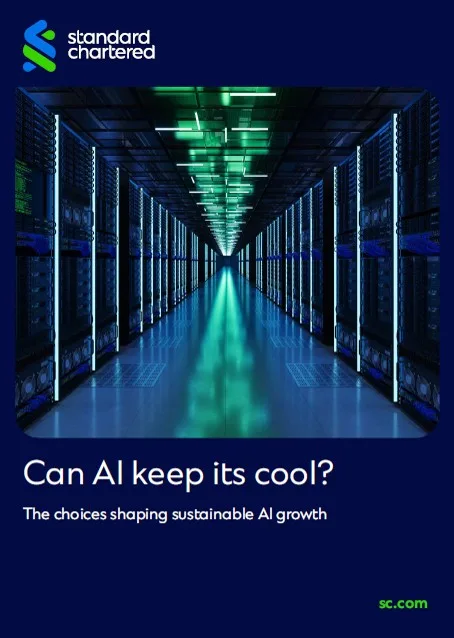
Can AI keep its cool?
Our COP31 report explores practical solutions for more sustainable and resilient data centre growth.

Report highlights
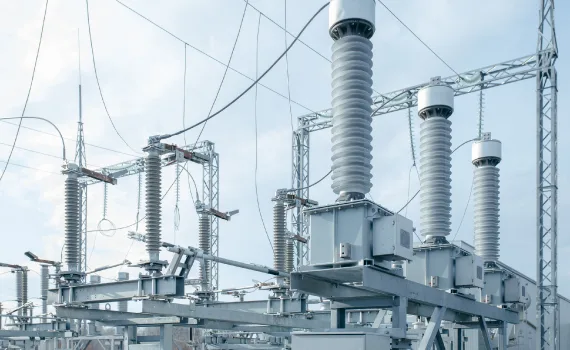
AI is putting pressure on energy systems
Data centre electricity demand could roughly double to around 1,100TWh by 2030, increasing pressure on power generation, grids and local infrastructure.
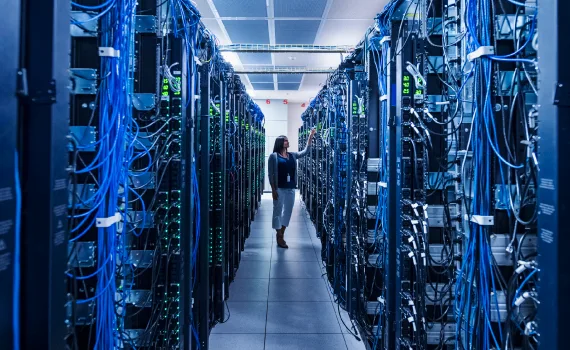
Efficiency could change the equation
More efficient computing, advanced cooling and new power architectures could reduce the energy and water needed for each unit of compute, helping moderate the impact of rapid growth.
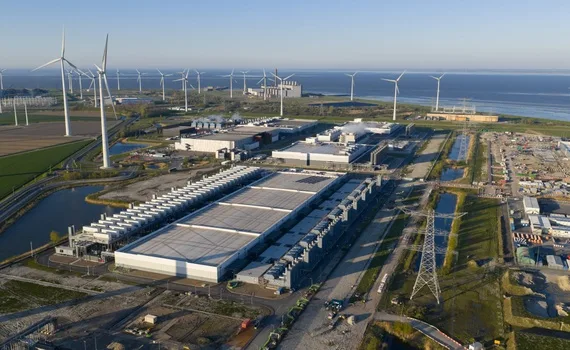
Could AI help drive new energy investment?
An AI infrastructure build-out of up to USD9 trillion through 2040 could create a powerful new anchor for investment in clean power, grids and energy infrastructure.
Amazon, Google, Meta and Microsoft have already contracted 140GW+ of renewable power, including almost 35GW in 2025.
About the report
Inside Can AI keep its cool? The choices shaping sustainable AI growth
AI is accelerating a global data centre infrastructure super cycle, bringing investment opportunities alongside legitimate questions about electricity demand, water use, emissions and pressure on local infrastructure.
Authored by Eugene Klerk, Head of Sustainability Insights, the report moves beyond headline claims to understand where these impacts arise, how they vary by location and operator, and which solutions can make the biggest difference.
Drawing on inputs from Microsoft, NVIDIA and Trane Technologies, it examines how greater efficiency, investment in cleaner power, advanced cooling, circularity and stronger resource management could ease the pressure on power and water systems while building more efficient and resilient infrastructure.
The bottom line
AI-driven data centre growth is neither environmentally benign nor inherently unsustainable. Its outcome will depend on the choices made as the sector expands.
If the right conditions become standard practice, data centres could expand while reducing power and water intensity and potentially supporting the wider energy transition. If they do not, infrastructure, environmental and social constraints could intensify pressure on our energy systems and natural resources, ultimately limiting growth.
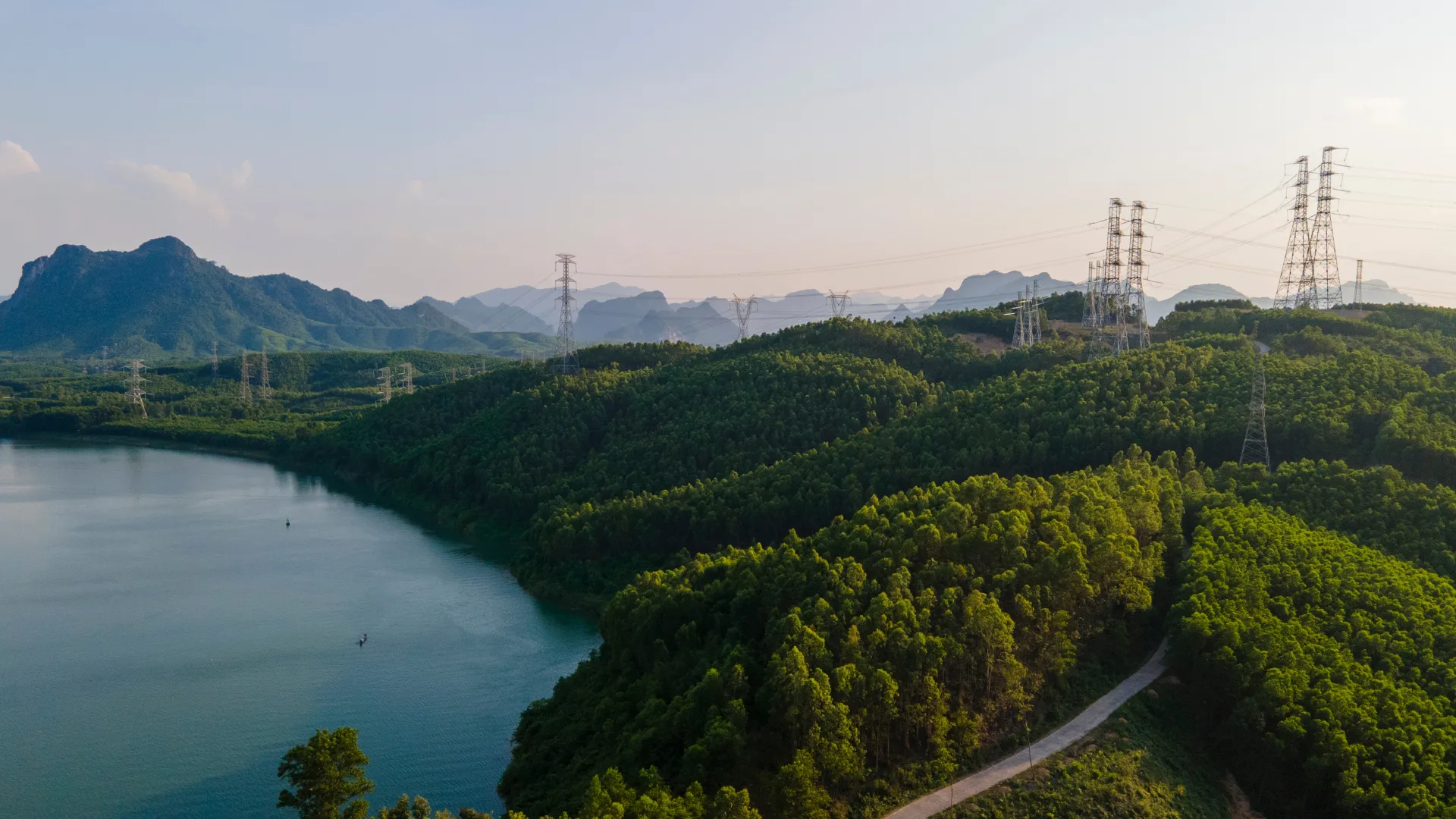
Technology and operating practices are advancing quickly; many of the solutions needed to reduce power and water intensity already exist. The challenge is to make 'what good looks like' the standard across the sector. Marisa DrewChief Sustainability Officer
Key findings
01
How big is the AI infrastructure opportunity?
Around 60 per cent of today’s live data centre capacity was added in the past five years. Industry forecasts suggest the world may add roughly the same amount again by 2030, with Asia and other emerging markets becoming increasingly important growth hubs.
The scale of required investment is significant. Some estimates suggest that enabling the AI-driven build-out may require up to USD9 trillion across IT hardware, physical infrastructure, power generation, grid capacity, cooling systems and enabling supply chains. Enabling data centre growth during the next three years may require external, debt and equity funding of more than USD1 trillion.
60%
Current live data centre capacity added in the past five years
~USD9tn
Investment associated with enabling AI growth between now and 2040
~USD1tn
Data centre-related funding requirements until 2029
02
Could AI accelerate energy transition investment?
The scale of AI infrastructure investment could create a powerful new source of demand for clean power, grids and energy infrastructure. Amazon, Google, Meta and Microsoft have already contracted more than 140GW of renewable power, including almost 35GW in 2025.
Where operators make credible, long-term commitments to efficient infrastructure, additional low-carbon generation and system flexibility, that demand can improve investment visibility and help support the development of new energy capacity.
If AI is used to optimise energy consumption in buildings, industry, transport and power systems, the resulting efficiency gains in those sectors may also perhaps offset a significant part of the additional electricity demand from data centres.
Data centre-related power consumption is low relative to other sectors on a global level, however, near-term local challenges can be significant where rapid growth is already testing power, grid and water systems.
140GW
Renewable power contracted by Amazon, Google, Meta and Microsoft as of 2025
100%
Share of hyperscaler electricity covered by renewable contracts
03
Can data centre growth limit added power demand?
Forecasts suggest global data centre electricity demand could reach around 1,100TWh by 2030, roughly twice 2025 levels, with AI potentially accounting for almost half of that demand.
The challenge is not only how to meet this rising demand, but how to support digital growth without placing unnecessary pressure on global and local electricity systems, energy costs or decarbonisation efforts.
The report identifies several levers that could help leading data centres reposition themselves from large, largely passive electricity users into more efficient and flexible participants in the energy system.
These solutions include more efficient hardware and software, higher utilisation, heat reuse, renewable power, 800V DC architecture, battery storage and microgrids. Next-generation AI infrastructure could also dramatically reduce cooling requirements.
For example, new liquid-cooled architectures can operate efficiently at temperatures of around 45°C, substantially reducing the need for separate mechanical cooling and the associated power and water use.
1.1PWh
Potential data centre electricity demand by 2030
~50%
Potential AI share of data centre electricity demand by 2030
5-14%
Expected facility efficiency gains with 800VDC infrastructure
04
Will low-water data centres become the norm?
Water use remains an important local consideration, particularly in water-stressed regions, but there is substantial variation according to cooling technology, location and power source.
Several levers could help moderate water intensity, including more efficient hardware and software, higher utilisation, heat reuse, renewable power, 800VDC architecture, battery storage and microgrids.
Some leading operators are already improving water efficiency substantially: reported Water Use Effectiveness (WUE) at Amazon, Meta and Microsoft has fallen by 43–52 per cent since 2020. Liquid and dry cooling, higher operating temperatures, recycled water, renewable power and replenishment programmes could reduce future water intensity and may make low to near-zero water intensity a feature of future data centres.
43-52%
Water intensity reduction at Amazon, Meta and Microsoft since 2020
<25%
Of the sector’s water consumption attributed to direct cooling in IEA data
Near 0
Water consumption level possible using the latest cooling technologies
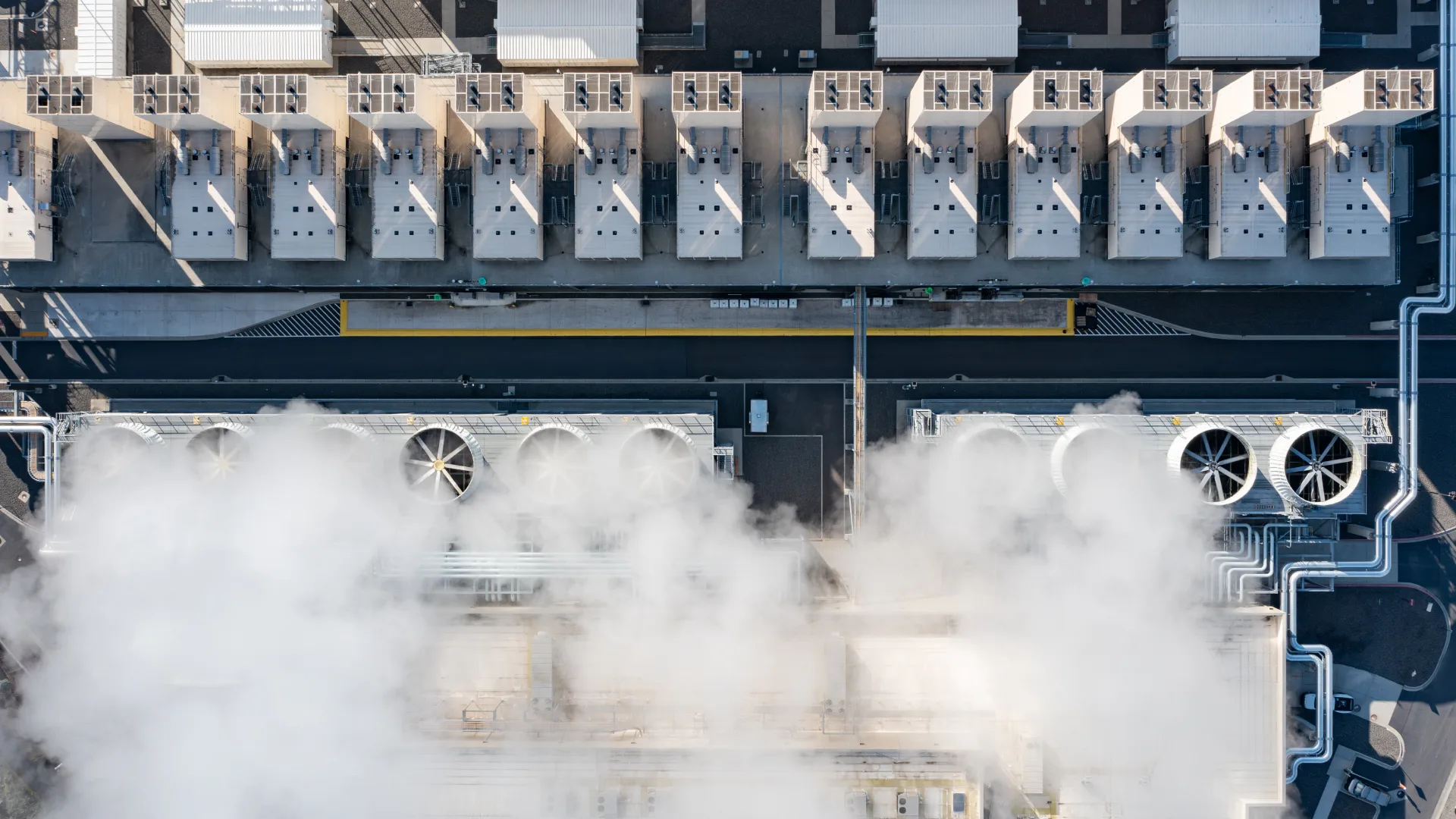
Ultimately, the environmental footprint of AI infrastructure is not fixed. It is shaped by the choices made around technology, infrastructure, resource use, community engagement and reporting requirements. Eugene KlerkHead of Sustainability Insights
05
What does good look like for data centres?
Data centre sustainability cannot be judged through a single metric or portfolio-wide average. Power and water impacts vary according to location, grid mix, climate, technology and utilisation, making facility-level assessment important.
Leading facilities optimise energy, carbon and water together, taking account of local grid conditions, climate and water availability, while reporting both absolute impacts and intensity metrics.
Yet the report’s assessment finds that while more than 60 per cent of the operators reviewed disclose overall energy or water use, fewer than 10 per cent provide facility-level data. More consistent, facility-level disclosure could help make data centres comparable, strengthen planning and investment decisions, and direct capital towards better environmental performance.
<10%
Proportion of data centre operators providing data on a facility level
60%+
Data centre operators disclosing overall energy or water use
1 of 33
Companies reports indirect Scope 2 water intensity
Priority actions
Delivering more sustainable and resilient data centre growth requires action from stakeholders across the ecosystem.