Employee Stories
Anny Pena
The new frontier
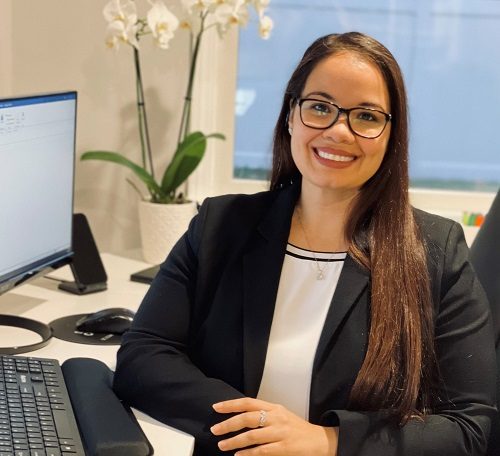
Anny Pena is the Regional Client Management Head in the Americas and the Co-Chair of DRIVEN, a network committed to raising awareness of the challenges faced by veterans and people with disabilities. Anny tells us about helping veterans transition to a civilian organisation, improving access for people with disabilities, and how she’s working to make the Bank as inclusive as possible.
Hi Anny. Tell us your role and how long you’ve been at the bank?
My name is Anny Pena and I’m Managing Director, Regional Head of Client Management for the Americas, I’ve been with Standard Chartered for eleven years now.
Before we find out about what led you personally to DRIVEN, can you summarise what it is for us?
DRIVEN stands for Disability Resource Initiative & Veteran Engagement Network. Our focus is on improving the hiring of individuals living with disabilities, as well as veterans, and providing support and resources to staff within both communities while engaging with community organisations to find talent in that space.
DRIVEN seems to have a slightly more external focus, how come?
It does. People living with disabilities and military veterans have been historically underrepresented in the workplace and there’s a significant opportunity for businesses to target this talent pool. While these individuals have a great deal to offer prospective employers, there are numerous barriers and unique challenges that they face in the job search. Therefore, we aim to create opportunities for potential candidates in these communities to meet and engage hiring managers within the organisation.
What are some of those barriers to entry?
On the disability side, one of the main challenges is access. It’s important that we evaluate our facilities, systems, and tools to ensure they are as inclusive as possible. For example, would someone who is visually impaired be able to access our external hiring site, find a suitable role, and apply? And once we have those individuals within the organisation, how do we ensure they have the right tools to perform their roles effectively?
For military veterans, translating the skills and experience they gained from their time in the military into something valuable to a civilian employer can be very challenging. We work with veterans on resume preparation and career coaching to help then navigate the hiring process in the private sector. We also work with hiring managers to help them understand a veteran’s background and how their experience can be transferrable to civilian employment.
Where can the Bank start making changes to become more inclusive?
Our management team is fully supportive and committed to initiatives that support diversity, equity, and inclusion. As an organisation, we continue to make progress and take steps towards being a disability confident organisation. A great example was moving away from our previous video conferencing providers into Microsoft Teams, which is a more inclusive software. Another example is the redesign of some of our office spaces, which were recently remodelled with accessibility as a key component of the design.
Tell me about your story. How and why did you first get involved, and what led you to the leadership position of DRIVEN?
I served five years on active duty in the United States Marine Corps. While transitioning from military service I was attending Fordham University, where I was recruited by Standard Chartered through their disability and veteran initiative. I was thrilled to have that opportunity and was welcomed by a team that believed in me and invested a great deal into my professional development and growth. Before joining Standard Chartered, I struggled to connect with employers, as most veterans do, and thus my interest and passion in the work I do with DRIVEN. It was important for me to continue this work and provide similar opportunities to other veterans.
How was your own transition from the military to a ‘regular’ workplace?
It was difficult at first. I attended job fairs and applied for jobs online with very little success. Once I joined Standard Chartered, I was very fortunate to have a mentor who was also a military veteran. It was great to have a mentor who not only understood the organisation but also understood my background.
Is there an aspect of DRIVEN’s work that you’re most proud of?
Yes, we led an initiative in 2018 to bring neurodiverse talent into the Bank. It was a significant learning opportunity for the DRIVEN team in terms of sourcing neurodiverse talent, ensuring we have the right accommodations, and identifying the opportunities where their abilities are a competitive advantage versus a neurotypical candidate.
We created an internship for individuals who are on the autism/Asperger’s spectrum. Some of these individuals have advanced pattern recognition abilities which exceed that of a neurotypical person. It’s a strength, or as some might call it, their superpower. Leveraging those strengths and finding positions where they were an asset to the business was something that opened the door to looking at disability in a completely different way.
What are your current priorities for DRIVEN?
We continue to focus on providing support and services to employees, increasing hiring opportunities, and engaging with community organisation that support people living with a disability.
On the veteran side, we are focused on partnering with community organisations to provide mentoring, coaching, and networking opportunities to help smoothen the transition from military service to civilian employment.