India-ASEAN: Where capital meets supply chains
Trade between India and ASEAN has surpassed USD120bn. The bigger story is how supply chains, capital and digital connectivity are being rewired across Asia.

Key takeaways
- India–ASEAN economic integration is accelerating, driven by manufacturing upgrades, supply chain realignment and deeper digital and financial connectivity.
- Electronics, automotives, particularly electric vehicles (EV), chemicals, pharmaceuticals, and digital services are emerging as the corridor’s most investable growth sectors.
- Capital flows are strengthening, with Singapore consolidating its role as the regional financial and treasury hub connecting Indian and ASEAN corporates and investors.
- Corporates that reconfigure supply chains, centralise treasury operations and enhance cross-border working-capital resilience will capture long-term strategic advantages.
A rising powerhouse
Trade between India and ASEAN has surpassed USD120 billion. But the most important story is not about trade volumes – it is about how supply chains, capital and digital connectivity are being fundamentally rewired across Asia.
The India–ASEAN corridor is rapidly evolving into a multi-layered economic ecosystem that connects manufacturing platforms, investment flows, treasury operations and digital infrastructure across two of the world’s most dynamic growth regions.
Together, India and ASEAN represent an estimated combined GDP of more than USD8 trillion. As global supply chains pivot towards resilience, dual-sourcing and near-shoring, the India-ASEAN axis is emerging as one of Asia’s most strategically important growth corridors in Asia.
The India-ASEAN corridor is evolving into a multi-layered ecosystem of goods, capital and digital flows – defining the next decade of growth.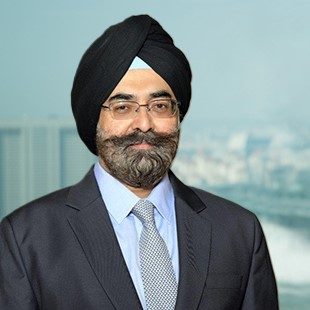 PD SinghCEO & Head of Coverage, India & South Asia, Standard Chartered
Complementary manufacturing hubs
India has built scale in electronics, automotive and EV components, pharmaceuticals, specialty chemicals and industrial engineering. Meanwhile, ASEAN plays a crucial role across semiconductors and electronics (notably Malaysia, Vietnam and Singapore), textiles, footwear and food processing (Vietnam and Thailand), as well as automotive and auto components (Thailand and Indonesia).
With particular reference to auto parts, a significant amount of these components, particularly engines and gearboxes, is exported from Thailand to India for local assembly. The India-Thailand Free Trade Agreement (FTA) and the ASEAN-India Free Trade Area (AIFTA) have facilitated this movement by reducing tariffs, making it more cost-effective to import components or kits.
Together, these capabilities are positioning the India–ASEAN corridor to win share from China-centric supply chains and enabling multinational companies to diversify production footprints with both resilience and cost efficiency.
Case study: Powering a global food and fast-moving consumer goods (FMCG) leader across corridors
We are a principal banking partner to India’s top edible oils and FMCG group. This vertically integrated agribusiness operates across the full value chain, spanning agri-processing, edible oils, consumer goods and bulk logistics, with a significant footprint across Asia, Africa and the Middle East.
To support this scale, we provide globally sanctioned trade facilities of approximately USD2.1 billion, enabling end-to-end financing across the Group’s procurement, processing, and distribution flows. In India, we provide USD224 million in trade facilities, powering both trade and domestic supply chains.
Our support is embedded across the Group’s operating ecosystem:
- Export corridor strength: The Group runs a diversified outbound supply chain for de‑oiled cakes into France, China, Japan, Pakistan, Singapore, Switzerland, Spain, Thailand, the UK, and more. We support these flows through export performance certificate limits that enable scale, speed and certainty.
- Domestic agri and processing support: For time-sensitive oilseed procurement and processing cycles, we provide tailored local bill discounting solutions that improve liquidity.
The result is a fully integrated financing framework that allows the Group to manage cross-border complexity, scale efficiently across corridors, and run a more resilient, capital-efficient supply chain.
Capital flows: the financial spine of the India-ASEAN corridor
Singapore is increasingly anchoring the financial architecture of the India–ASEAN corridor. As Indian corporates expand across Vietnam, Indonesia, Thailand and Malaysia, many are centralising treasury, liquidity management and risk oversight in Singapore to improve capital efficiency, strengthen governance and simplify multi-currency operations.
At the same time, ASEAN and global investors are using Singapore as a gateway into India’s manufacturing, infrastructure and digital economy opportunities. This is reinforcing the city-state’s role not just as a booking centre, but as the coordination hub for cross-border capital, liquidity and balance-sheet optimisation across the corridor.
Singapore anchors the India-ASEAN corridor, directing global capital into India and Indian capital across ASEAN. Chow Wan ThonhHead, Coverage, Singapore and ASEAN, Standard Chartered
Digital and financial connectivity
Cross-border financial integration is accelerating through a new generation of digital rails, such as UPI – PayNow instant payments, digital trade documentation, fintech sandboxes linking India, Singapore and Malaysia and the growing use of INR in bilateral settlement.
The impact is tangible: Faster settlement cycles, lower friction in cross-border commerce, and steadily improving working capital efficiency. Digital infrastructure is no longer a support layer – it is becoming a core enabler of trade and capital flows.
What this means for corporates
The strategic implications are immediate and practical:
- Re-optimise supply chains across India and ASEAN
- Strengthen cross-border liquidity and risk management frameworks
- Enhance working capital and trade finance structures
- Build resilience into multi-market expansion strategies
A decisive decade ahead
In the years ahead, the India–ASEAN corridor will not just shape regional trade patterns. It will increasingly determine where supply chains are built, where capital is concentrated, and where Asia’s next generation of competitive advantage is created.
Explore Corporate & Investment Banking
What we offer
We act as a global superconnector for flows from corporates and financial institutions.
Tailored solutions
Learn how we can support your business to grow across markets with our wide range of tailored products.
Global network
Discover our global footprint and how we deliver seamless cross-border solutions for clients worldwide.