Enabling sustainable and inclusive growth: Standard Chartered’s strategic commitment to India’s ambitious agenda
P.D. Singh, CEO for India and South Asia explains how we are leveraging our global expertise to help accelerate India’s transition.

India’s growth story is being written in two parallel narratives. One of financial inclusion, and another of climate action reshaping key industries. As a “super-connector” bank that can leverage global capital and deploy it across markets towards high-impact sustainable outcomes in the real economy, the Bank is positioned to mobilise capital in support of this agenda.
Over the past two and a half years, according to the bank’s internal data, it has acted as Mandated Lead Arranger and Bookrunner for over USD1 billion in offshore financing raised by India’s largest microfinance institutions (MFIs) and Non-Banking Financial Companies (NBFCs).
Reopening markets when it mattered most
The Bank’s commitment to India’s microfinance sector came at a critical juncture. “The sector was emerging from one of its most difficult periods after the COVID-19 pandemic, with stressed balance sheets, elevated Non-Performing Assets (NPAs) and cautious interest from international lenders,” says P.D. Singh, CEO of India and South Asia, Standard Chartered.
Against this backdrop, we played a pivotal role in reopening the international debt market for the microfinance industry in India by anchoring the first Social Loan for the sector. Singh said, “We engaged with select development-focused lenders and mainstream investors across the Middle East, South Asia, Singapore, Taiwan and Japan. Our primary objective during the syndication process was to drive investor education about the immense social impact and strong fundamentals of the microfinance industry in India”. This effort helped re-establish international confidence and created a replicable template to scale financial mechanisms linked to social outcomes.
The USD200 million ECB facility we arranged for CreditAccess Grameen in June 2023 was significantly oversubscribed, a testament to our syndication efforts leading to revived investor confidence, and paving the way for follow-on deals with Muthoot Microfin, Annapurna Finance, and Satin CreditCare.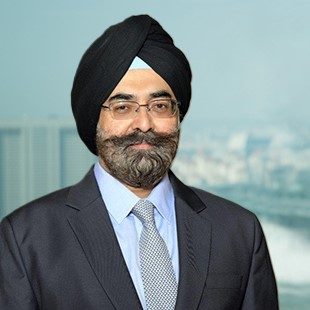 P.D. SinghCEO, India and South Asia, Standard Chartered
Building global confidence in Indian microfinance
We have stayed committed to the Microfinance Institution (MFI) space even through recent turbulence. The Bank has long-standing partnerships with institutions that support millions of low-income individuals across the country. This commitment is rooted in the bank’s deep-seated engagement with Indian microfinance since 2005, reflecting the sector’s purpose to widen access to finance and support sustainable growth.
Singh noted that while MFIs have historically shown record resilience, they rely heavily on domestic bank lending and Priority Sector-driven flows, both of which can change with shifts in liquidity and regulation. Offshore funding helps them diversify, secure longer-tenor capital, and maintain greater stability.
He underscored the need for thorough due diligence. In a collection-led business like microfinance, he said it was essential to closely assess each client’s underwriting practices and governance before taking on any syndication mandate.
This deep-dive allowed the team to build a strong conviction in the credit story and growth potential, and to present it convincingly to international banks lending to the sector for the first time. He added that strong regulatory oversight, along with the proactive role of self-regulatory bodies, provides lenders with added reassurance that MFIs can navigate temporary spikes in credit stress. Such periods, he noted, often stem from natural economic cycles that influence customers’ ability to repay.
Supporting one million women and counting
During 2024 and 2025, the Bank disbursed USD640 million specifically for the microfinance industry. “Every USD1 million we mobilise reaches roughly 1,600 women borrowers, which we estimate has the potential to enable over a million women to sustain and grow their micro-enterprises,” Singh noted, citing Standard Chartered’s internal data.
“For women entrepreneurs, micro-loans act as working capital,” Singh explained. “These benefits are particularly unique to women who often manage ‘nano-enterprises’ that lack traditional collateral and are disproportionately affected by household income shocks. For these borrowers, micro-loans serve as essential working capital that is often unavailable through traditional banking channels. Timely funding helps them stabilise these small businesses, managing inventory, navigating lean periods, and absorbing shocks that could otherwise disrupt income.”
Every USD1 million we mobilise reaches roughly 1,600 women borrowers, which we estimate has the potential to enable over a million women to sustain and grow their micro-enterprises.P.D. SinghCEO, India and South Asia, Standard Chartered
NBFCs: The growth multipliers
Beyond microfinance, we have been a leading arranger for NBFCs. “NBFCs are a vital component of the financial ecosystem and drive inclusion amongst various population segments which are underserved by the traditional banking system,” Singh observed.
Singh noted that while the sector has demonstrated robust growth over the past decade, penetration levels remain low, providing a long runway for growth. The bank’s approach remains selective. “We continue to evaluate upcoming players for a solid credit story, employing a rubric of underwriting standards, control systems, management quality, diversification of asset book, ALM profile and capital raising track record,” he said. For such select institutions, the bank leverages its extensive international presence to connect them with foreign lenders who act as strategic, long-term partners.
Supporting India’s climate ambitions
India’s pledge to achieve net zero emissions by 2070 has the potential to transform its rapidly growing economy into a global leader in clean energy. Realising this shift, however, requires an unprecedented scale of financing. To help bridge this gap, we are deploying our deep sustainable and transition finance expertise, comprehensive capabilities, and an innovative product suite.
The Bank achieved several market firsts, including the first-ever green project finance loan for the electrical mobility sector for Greencell Mobility and the first sustainability-linked loan in the telecom space. With USD5.5billion in ESG bonds arranged over two years, we are established as a market leader.
Singh added that India’s sustainable growth has been bolstered by strong government policies, ambitious targets, and rising awareness among corporates. Demand comes not only from clean energy and transportation but also from financial institutions supporting affordable housing and social infrastructure.
The green buildings imperative
We have partnered with the Indian Green Building Council and financed over USD500 million in green buildings over the past two years. In India, where infrastructure growth is rapid, focusing on energy and resource efficiency is crucial. “By supporting Green Buildings, which have higher energy efficiencies and better waste and water management systems, we aim to make a meaningful contribution in reducing emissions in this sector,” Singh explained.
What’s next?
Looking ahead, Singh sees significant opportunities linked to India’s recent policy activity, such as local currency ESG labeled bonds, the draft climate finance taxonomy, and carbon credit trading schemes. “We are dedicated to coming alongside our clients and markets to help facilitate the transition.”
As India seeks to drive sustainable and inclusive economic growth, our focus on accelerating sustainable finance and lifting economic participation offers a compelling example of how banking can support its ambitions.
We’re creating avenues to back transition technologies and initiatives through new products such as transition finance and carbon credit financing.P.D. SinghCEO, India and South Asia, Standard Chartered
Related insights
Partnering to advance Indonesia’s energy transition am…
Learn how we worked with global partners to support financing for ACWA Power’s Saguling Floating Solar Plant in …
Standard Chartered has an important role to play in supporting our clients, sectors and markets to deliver net zero, but to do so in a manner that supports livelihoods and promotes sustainable economic growth. We currently provide financial services to clients, sectors and markets that contribute to greenhouse gas emissions however we’re committed to net zero by 2025 and in our financed emissions by 2050.