


Table of Contents
In a rush? Read this summary:
- Sukuk (Islamic bonds) represent asset-backed instruments that comply with Shariah principles, offering exposure to tangible assets rather than debt.
- The UAE has introduced Dirham-denominated Islamic Treasury Sukuk, enhancing the local currency bond market and broadening capital access.
- Various sukuk types, such as Ijara, Murabaha, and Mudaraba, support investment in sectors like infrastructure, leasing, and trade, while maintaining ethical and transparent structures.
In today’s fast-changing world, investors are increasingly seeking diversified and resilient strategies to manage their wealth. Shariah law-compliant financial instruments, such as sukuk, also known as Islamic bonds, offer diversification benefits by allowing investors to allocate their investments across various asset classes and industries. These instruments are structured in accordance with Islamic principles and typically involve investments in halal-compliant sectors.
The launch of Dirham-dominated Islamic Treasury Sukuk (T-sukuk) by the Ministry of Finance in collaboration with the Central Bank of the UAE underscores the UAE’s commitment to developing its local currency bond market. It contributes to building a local currency bond market and helps diversify capital sources, offering a safe investment alternative for both local and foreign investors.
What is sukuk
Islamic bonds, also known as sukuk, are bonds that involve undivided shares of ownership in a tangible asset. Therefore, instead of holding a debt obligation, your investment in a sukuk signifies an ownership share in a tangible asset. These bonds aim to deliver stable returns while adhering to Islamic ethical and legal principles.
Why are sukuk ideal for portfolio diversification
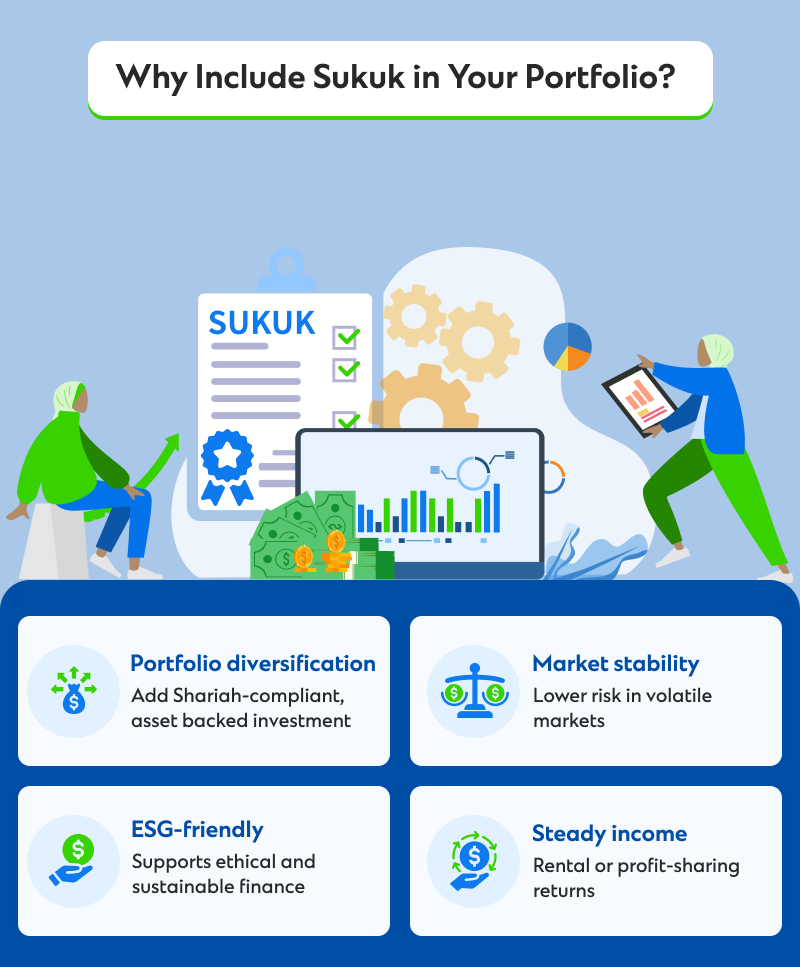
The increasing demand for sukuk is largely driven by a preference for financial instruments adhering to Environmental, Social, and Governance (ESG) principles. This highlights the role of sukuk in the growing ethical investment market.
Global credit rating agencies, including Fitch Ratings and Standard & Poor’s (S&P), have projected a sustained rise in sukuk and bond issuance. This projected rise is also fueled by a global shift towards diversified funding sources and the increasing appeal of Islamic finance instruments
Unlike traditional fixed income instruments, sukuk are backed by physical assets, offering a layer of security that can appeal during periods of market volatility. As such, it is seen as a practical addition to one’s investment portfolio, especially for people looking to include stable and income-generating assets that adhere to ethical finance principles. Sukuk typically provides predictable cash flows through profit sharing or rental income, making it suitable for long-term wealth preservation.
Types of sukuk you can explore
A range of Shariah-law-compliant halal assets is available, reviewed and approved by Shariah experts to ensure compliance with Islamic principles. Below are some common types:
- Ijara sukuk: A contract where a party leases out a specific asset, including buildings, equipment, etc., to a client against a rental fee. The lessor and lessee agree in advance about the duration of the rental and the fee, while the ownership of the asset remains with the asset owner or lessor.
- Murabaha sukuk: A Shariah-compliant sales contract where the asset is sold at its purchase price and the owner receives an agreed profit margin; the seller discloses the cost and profit upfront, ensuring full transparency. This is widely used for short-term financing and offers predictable returns aligned with Islamic principles.
- Musharaka sukuk: A business equity or a project financing where the certificate holder becomes a part owner via an SPV (Special Purpose Vehicle). In joint ownership, both the investor and the issuer contribute capital and share profits based on a pre-agreed ratio. In the event of losses, both parties bear the loss in proportion to their capital contribution to the project.
- Mudaraba sukuk: These are trust certificates available based on a profit-sharing partnership. This certificate is issued to financial projects and is managed by the original entity on behalf of the sukuk holder. Based on the pre-agreed ratio, the profit generated from the project is shared between the originating entity and the SPV (Special Purpose Vehicle). If the loss happens due to the Mudarib’s or manager’s negligence or misconduct, then Mudarib would bear the loss.
- Istisna sukuk: These are used to fund large-scale construction or manufacturing projects like power plants or real estate developments. Investors finance the project upfront and gain ownership of the asset through an SPV during its construction. Once completed, the asset is either sold or leased out, with the sukuk becoming tradable only after delivery.
- Salam sukuk: These are certificates of equal value issued for mobilising salam capital. Investors pay in advance for goods, and the certificates are delivered at a future date. The certificate holder gains ownership of that good upon delivery, and the full payment is made up front.
With a range of structures, asset classes, and maturity profiles, sukuk offer flexibility, transparency, and stability. These attributes make them a compelling consideration for any investor seeking to diversify their portfolio ethically and effectively.
Speak to your Standard Chartered Relationship Manager or contact us to learn more about sukuk and how it can fit into your investment portfolio.