Partnering to advance Indonesia’s energy transition ambitions
Learn how we worked with global partners to support financing for ACWA Power’s Saguling Floating Solar Plant in Indonesia.

Indonesia is advancing its energy transition in line with national climate commitments and long-term energy security objectives. The expansion of renewable energy capacity has been incorporated into the nation’s electricity sector planning, alongside increased attention to project readiness, governance frameworks, and access to sustainable financing. Within this context, large-scale renewable energy projects require not only proven technology but also financing structures that align with international standards and established risk management practices.
Realising Indonesia’s energy transition ambitions presents challenges, particularly in structuring bankable financing solutions and ensuring projects meet rigorous international standards. ACWA Power’s Saguling Floating Solar Power Plant (PLTS Terapung Saguling) in West Bandung Regency exemplifies how successful energy transition hinges not only on technology, but equally on governance, structured financing, and investor confidence.
The Indonesian government has committed to achieving Net Zero Emissions by 2060. Under this mandate, the Electricity Supply Business Plan (RUPTL) projects that renewable energy and storage capacity will increase to 52.9 GW, representing 76 per cent of the projected 69.5 GW in additional power generation capacity required over the next decade.
To finance this transition, total investment requirements are estimated at approximately USD178 billion. This substantial figure underscores a fundamental reality: without mobilising international capital and implementing innovative financing structures, Indonesia cannot achieve its energy transition targets on the accelerated timelines required by climate imperatives and energy security considerations.
The Saguling Floating Solar Power Plant marks a significant milestone in ACWA Power’s commitment to Indonesia’s energy transition, and underscores the critical role of structured, bankable financing in accelerating Indonesia’s path towards its Net Zero Emission targets. Sustainable infrastructure development must balance environmental stewardship with community needs, and the comprehensive approach taken for Saguling sets a strong precedent for the funding of future renewable energy projects across the archipelago.
The strategic role of international financing
Global financial institutions are, therefore, critical enablers of energy transition at the scale and speed demanded by this moment. With over 160 years of operational presence in Indonesia, the Bank supports its clients and markets by helping to enable the energy transition.
Globally, we have committed to achieving Net Zero in our financed emissions (Scope 3) by 2050 and Net Zero operationally (Scope 1 and 2) by 2025 – ambitions supported by a target of mobilising USD300 billion in sustainable financing by 2030.
“The financing of the Saguling Floating Solar Project demonstrates how large scale energy transition projects must be underpinned by robust financing structures, disciplined governance, and the consistent application of international standards,” said Amit Verma, Managing Director & Head of Coverage, Standard Chartered Indonesia.
Our involvement in this project reflects our commitment to support the development of bankable and sustainable clean energy infrastructure in Indonesia.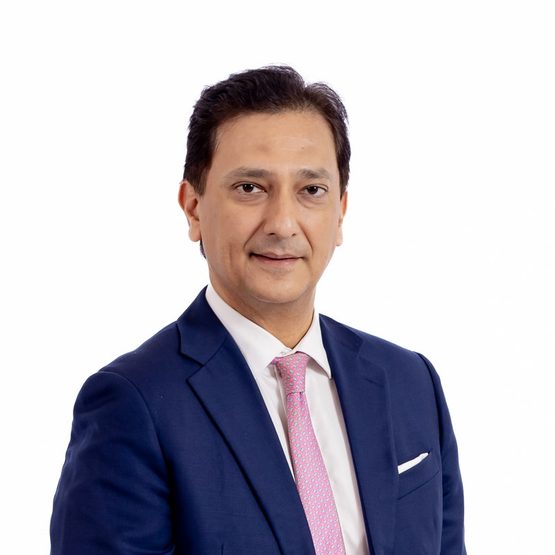 Amit VermaManaging Director & Head of Coverage, Standard Chartered Indonesia
ACWA Power’s involvement in Saguling represents a flagship initiative developed in partnership with PLN Indonesia Power. The project is designed to rank among Indonesia’s largest-scale floating solar installations. Its location on a reservoir presents distinct advantages in optimising spatial efficiency and solar resource utilisation, while simultaneously introducing meaningful technical and social complexities. Developing infrastructure on water bodies demands precision engineering, comprehensive environmental risk mitigation, and a stakeholder-centric approach to protecting community interests and livelihoods.
International standards and rigorous governance frameworks
From a financing perspective, this complexity necessitates the implementation of exacting international standards. The Bank, alongside other international lenders have ensured that Saguling achieves full compliance with the Equator Principles and IFC Performance Standards – the definitive global frameworks establishing best practices for sustainable infrastructure financing.
To strengthen this governance architecture, an independent Lender’s Environmental & Social Advisor (LESA) was appointed to conduct a comprehensive assessment of environmental and social dimensions, spanning from regulatory permitting through community impact evaluation and mitigation strategies.
Comprehensive environmental documentation, including a rigorous Environmental Impact Assessment (AMDAL), forms a mandatory prerequisite for financing authorisation. Beyond procedural compliance, this rigorous process is engineered to safeguard the ecological integrity of the reservoir ecosystem and protect the livelihoods and traditional activities of local communities, particularly fishing communities dependent on the water body.
Complementing environmental and social due diligence, an internationally recognised Lender’s Technical Advisor (LTA) was engaged to conduct an in-depth independent assessment of design specifications, technology systems, and the layout of floating solar array installations. A critical focus area has been ensuring that solar panel installations remain appropriately separated from community activity zones, thereby minimising potential social friction from the project planning stage.
This comprehensive, multi-disciplinary approach reflects a fundamental evolution in how major energy infrastructure is financed and developed. Structurally sound financing is no longer oriented solely toward financial feasibility metrics; increasingly, it must incorporate and demonstrate long-term sustainability, social equity, and environmental stewardship. For Indonesia, this advanced governance approach is instrumental in ensuring that energy transition initiatives align with principles of social justice and environmental protection.
Demonstrated track record and learning from Cirata
Our experience in financing Indonesia’s Cirata Floating Solar Power Plant (PLTS Terapung Cirata) – a predecessor to Saguling – provides a documented foundation of confidence and demonstrated capability. This track record conclusively demonstrates that floating solar projects in Indonesia can satisfy the expectations of international lenders and institutional investors when designed according to international standards and executed with rigorous governance.
Understanding Indonesia’s clean energy financing architecture and requirements is developed through sustained market engagement and stakeholder dialogue. We draw on continuous market analysis, proprietary research, and ongoing consultation with key stakeholders spanning regulators, developers, and the international investor community. Furthermore, active participation in global discourse on the just energy transition, green taxonomy development, and cross-border capital mobilisation mechanisms informs the design of bankable, credible financing structures.
From a domestic perspective, the successful closing and financing of the Saguling Floating Solar Power Plant sends the strong message that Indonesia possesses the technical and institutional capabilities to develop clean energy infrastructure that meets international standards and attract premier-tier international financing. This demonstration effect is decisive for enhancing global investor confidence in Indonesia’s energy transition, particularly as countries compete for international green capital flows.
At a macroeconomic level, Saguling’s contribution to Indonesia’s national electricity system will not affect an immediate transformation of the nation’s energy profile. However, its strategic significance lies in its powerful demonstration potential as a replicable model. This project can serve as a template for developing floating solar installations across Indonesia’s numerous reservoirs and water bodies, while simultaneously advancing the strategic diversification of renewable energy infrastructure.
From an environmental perspective, expanding floating solar capacity is expected to help reduce Indonesia’s structural dependence on coal-fired generation, which is the traditional foundation of the national electricity supply system. Simultaneously, the application of international standards ensures that economic benefits generated by the project are equitably distributed to surrounding communities, without compromising environmental sustainability or ecological integrity.
Sustainable financing as the bridge between ambition and implementation
Looking forward, the defining challenges for Indonesia’s energy transition extend beyond technology availability into critical domains of policy consistency, regulatory certainty, and institutional readiness to execute projects that meet global standards. Bankable financing structures act as the essential bridge connecting policy vision with ground-level implementation. In this context, dynamic collaboration among government, private developers, and international financial institutions is the key to success.
The Saguling Floating Solar Power Plant demonstrates that energy transition is not about abstract policy discourse, but concrete implementation through long-term commitment, disciplined governance, and consistent application of global standards. When international best practices are systematically implemented and national interests remain central to strategic planning, clean energy projects can flourish as dynamic components of sustainable development strategies.
The Saguling initiative offers a reference case for renewable energy projects driving tangible climate action – where energy transition is fundamentally a collaborative enterprise integrating public policy innovation, technological advancement, and responsible, structured financing. As Indonesia continues to expand its renewable energy portfolio, projects developed under clear regulatory frameworks and internationally recognised standards can contribute to investor confidence and market development. Lessons from such projects may inform the structuring and financing of future renewable energy initiatives in Indonesia.
Related insights
How climate risk is impacting cross-border supply chains
From floods to hurricanes, extreme weather is forcing businesses to rethink how they move their goods.
Standard Chartered has an important role to play in supporting our clients, sectors and markets to deliver net zero, but to do so in a manner that supports livelihoods and promotes sustainable economic growth. We currently provide financial services to clients, sectors and markets that contribute to greenhouse gas emissions however we’re committed to net zero in our own operations by 2025 and in our financed emissions by 2050.