Building materials: Defending margins through uncertainty
The building materials sector faces macro uncertainty, uneven recovery and rising transition needs, making margin defense and funding discipline key.

The building materials sector is navigating a difficult mix of macro uncertainty, uneven end-market recovery and rising decarbonisation requirements.
While profitability remains exposed to energy and raw material cost volatility, earnings have so far proved resilient and leverage has remained relatively low, supporting a broadly stable credit outlook. The challenge is therefore not immediate balance sheet stress. It is whether companies can fund the next phase of investment while preserving financial flexibility
Investment needs are becoming a funding challenge
Elevated capital expenditures, shareholder distributions and acquisitions have constrained free cash flow generation in recent years. As markets remain fragmented and investment requirements stay high, what was previously an investment story is increasingly becoming a funding discipline question.
For many companies, the issue is not whether to invest, but how to fund growth, transition and shareholder returns without eroding balance sheet resilience. Capital allocation discipline is likely to become more important as the next cycle develops.
What should the building material sector focus on now amid uncertainty and transition?
01. Release working capital to fuel investments
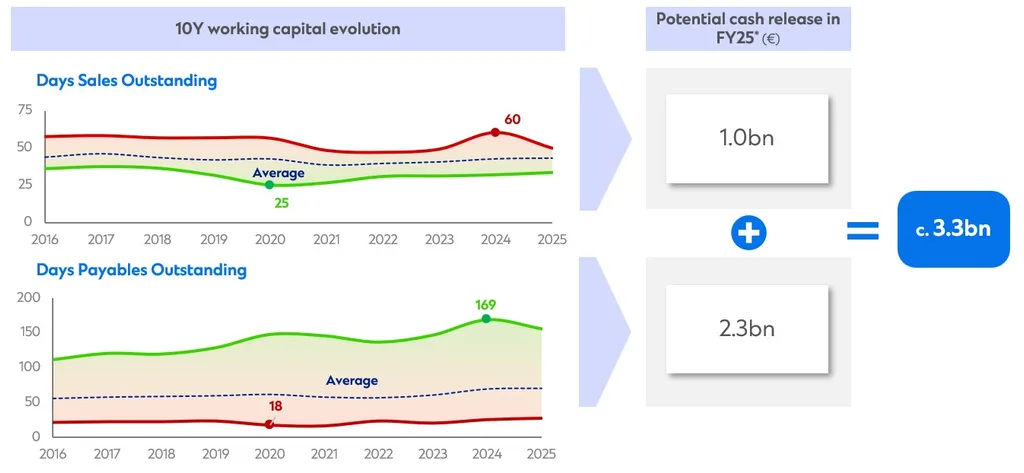
Working capital remains one of the most immediate and lowest-risk sources of liquidity. Tightening discipline across receivables and payables could release c. EUR3.3bn of additional headroom, providing internal funding capacity before companies turn to external financing.
02. Strengthen risk management to protect margins
Energy and raw material volatility remain key risks to earnings. Structured hedging, procurement discipline and clearer risk management frameworks can help protect margins, improve earnings visibility and support funding capacity through the cycle.
03. Plan for transition funding before balance sheets are pressured
Decarbonisation investments are necessary but capital intensive. For larger projects, partnerships and structured financing solutions can be effective tools to fund transition projects while managing balance sheet impact.
Navigating the next cycle of growth
Our Capital Structure & Rating Advisory team supports building materials corporates in optimising capital allocation, strengthening balance sheets and designing funding strategies aligned to long-term investment needs.
If you are reassessing how to fund growth or navigate transition investment, speak to our team to explore the options available.
Related insights
Turbulence ahead: Fuel shock deepens the returns challenge
A six-month stress test shows most airlines remain liquid, but weaker earnings and higher leverage may further s…