Turbulence ahead: Fuel shock deepens the returns challenge
A six-month stress test shows most airlines remain liquid, but weaker earnings and higher leverage may further strain returns.

Rising fuel prices and supply shortage is exacerbating the returns problem
The ongoing Middle East conflict is impacting fuel prices and reducing supply. As with all previous fuel volatility episodes, earnings are disproportionately impacted. Margins are forecast to fall across every region by at least a fifth.
However, the more important issue may be one that predates the conflict. Airlines have struggled to consistently generate returns above their cost of capital and higher fuel costs risk widening that gap further. Our analysis of six-month conflict-linked stress scenarios suggests over 90 per cent of airlines will generate returns below their cost of capital in 2026
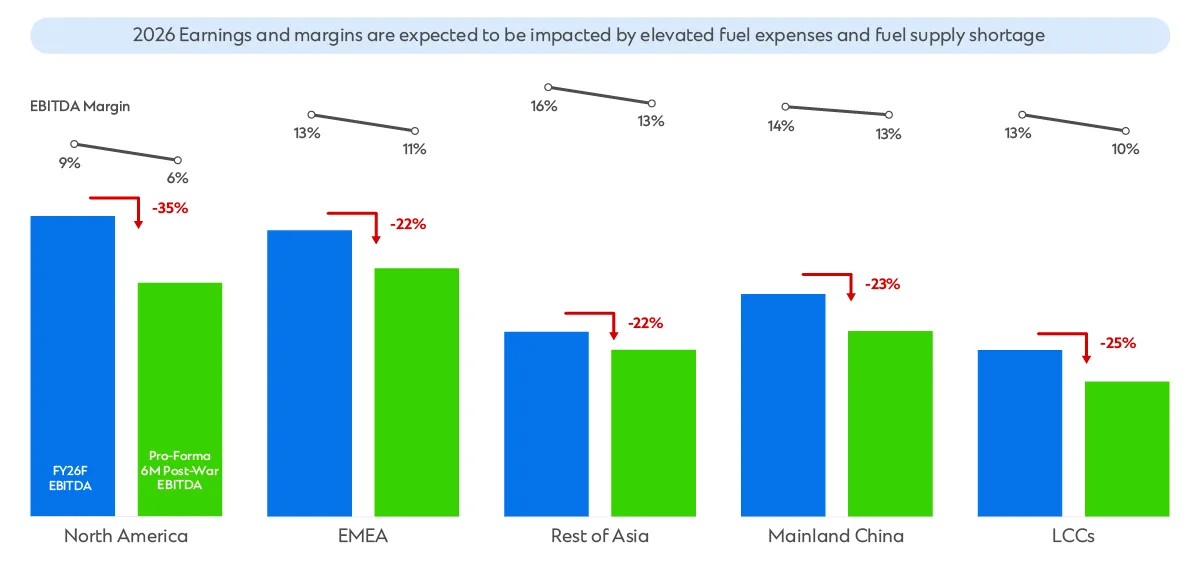
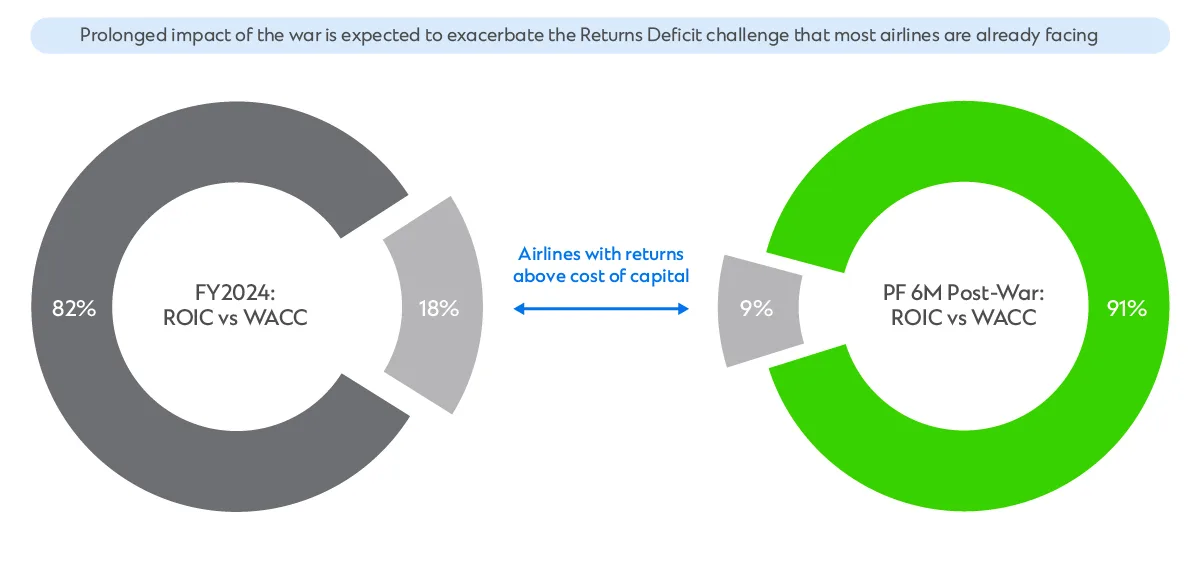
Liquidity holds, but leverage will come under pressure
Liquidity remains a relative strength for the sector, but leverage is exposed. Most airlines appear well positioned to meet near-term funding needs, supported by healthy cash and committed facility buffers. Under an extended conflict scenario, however, leverage worsens, particularly in mainland China and North America, where net leverage is projected to reach 5.0x or higher. This pushes a greater share of airlines into the stress, highlighting the need to diversify funding sources.
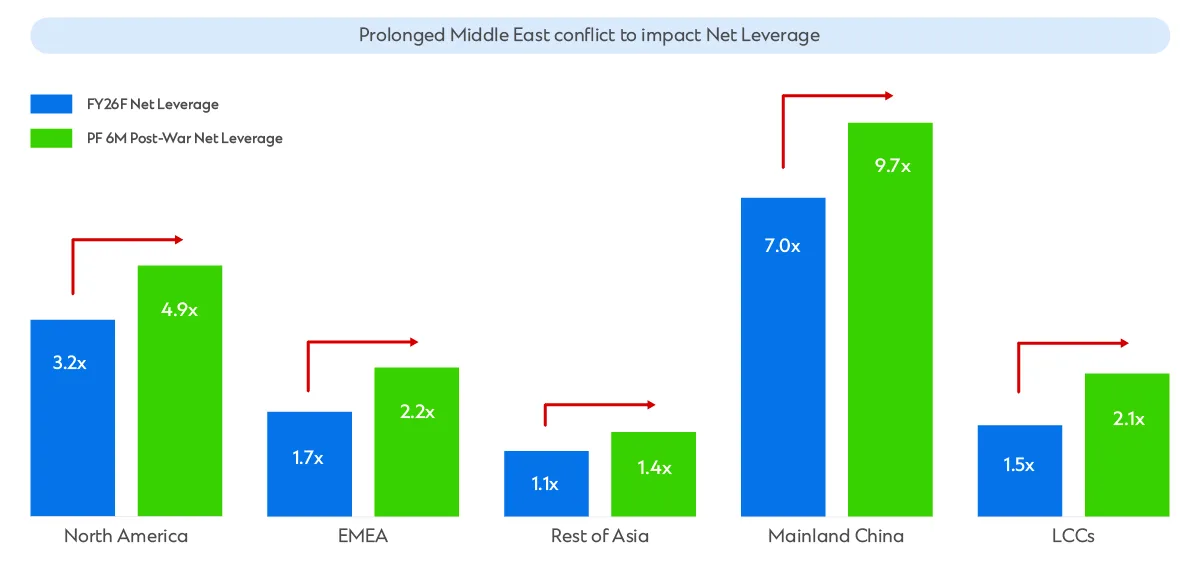
Fuel hedging policy is now critical
Several carriers have already responded to rising fuel costs through fare increases, fuel surcharges and capacity adjustments, but operational adjustments can go so far. In a geopolitical environment where disruption seems quite frequent, perhaps fuel hedging deserves renewed attention to mitigate risks’ or similar
We expect unhedged airlines to see their 2026 EBITDA contract by around 60 per cent year on year, compared with 23 per cent for heavily hedged carriers, highlighting how risk management can materially soften the financial impact of higher fuel costs.
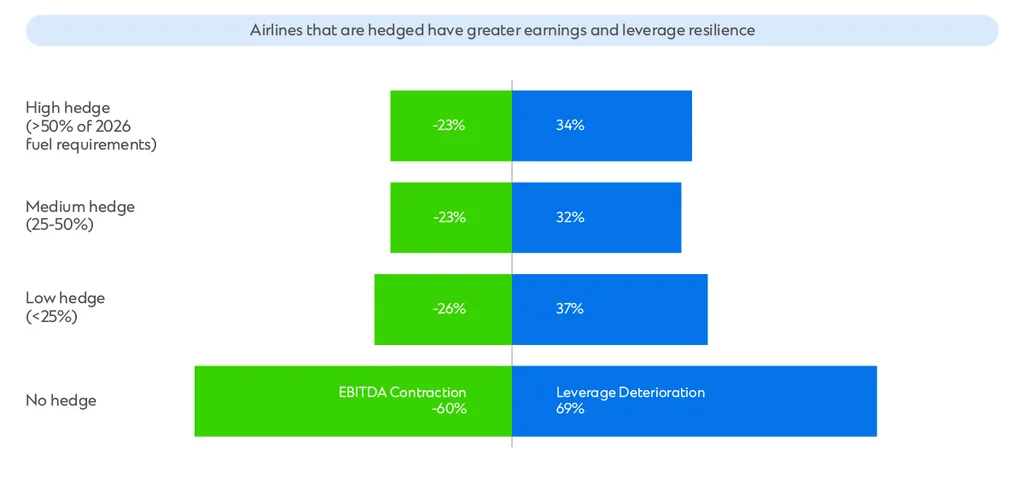
Rising fuel prices and supply constraints are adding further pressure to airline returns. Our latest analysis explores the impact on profitability, leverage, liquidity, and funding flexibility and highlights why fuel risk management is becoming increasingly critical in a volatile operating environment.

What this means going forward
While policy changes during the crisis are difficult, our findings suggest that fuel risk management has become an increasingly important lever for preserving financial flexibility. Airlines remain broadly liquid, but leverage is increasingly a concern under a prolonged stress scenario.
The carriers likely to remain most resilient are those combining effective fuel risk management with diversified funding sources, prudent liquidity buffers and sufficient balance sheet headroom.
To discuss the findings and explore potential implications, contact us for a deeper analysis.
Related insights
Building materials: Defending margins through uncertainty
The building materials sector faces macro uncertainty, uneven recovery and rising transition needs, making margi…