How the ASEAN-China growth story is evolving
As ASEAN and China deepen economic integration, how can businesses navigate shifting trade dynamics, technological change and emerging growth opportunities?

The Asia New Vision Forum: Innovation 2026, organised by Caixin Global, co-hosted by DLD (Digital Life Design), and supported by the Singaporean government, was held in Singapore from September 29 to 30. Under the theme “Disruption Meets Resilience”, the summit brought together more than 300 policymakers, business leaders and scholars from China, ASEAN, Europe, the US and other regions. Participants discussed how Asia can leverage innovation and resilience to shape a sustainable future landscape amid rapid technological change and shifts in the global landscape.
During the summit, Caixin Global and Standard Chartered co-organised a series of panels under the “ASEAN Business Forum: The Future of Capital and Connectivity”. Government, financial, technology and business leaders explored how China and ASEAN can harness transformation to drive more resilient, inclusive and sustainable growth.
In his opening remarks, Patrick Lee, CEO, Singapore and CEO, ASEAN and South Asia, Standard Chartered, highlighted ASEAN’s structural advantages. This includes diverse industrial capabilities, abundant natural resources, a rapidly expanding digital economy, growing consumer market and a combined population of nearly 700 million.
Simultaneously, Patrick added that the region’s connectivity must keep pace with its development ambitions, spanning power grids, ports and logistics, digital networks, common standards and payment systems. He added the next phase of ASEAN’s growth would depend on connecting the strengths of its economies more effectively, with capital serving as a key catalyst.
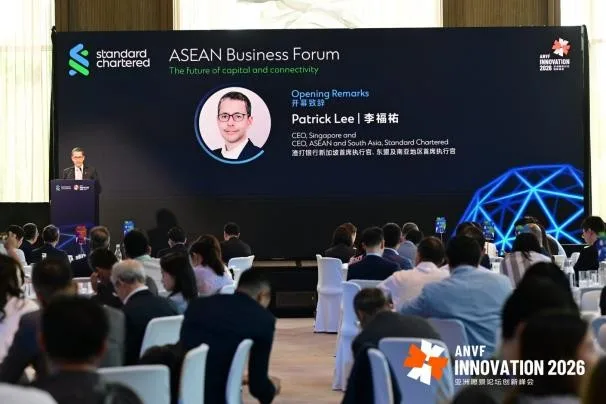
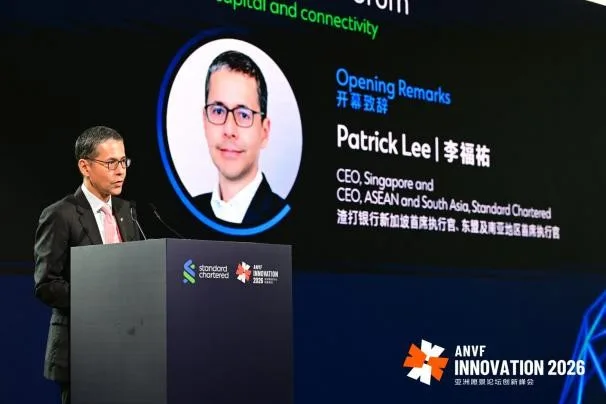
Patrick Lee, CEO, Singapore and CEO, ASEAN and South Asia, Standard Chartered
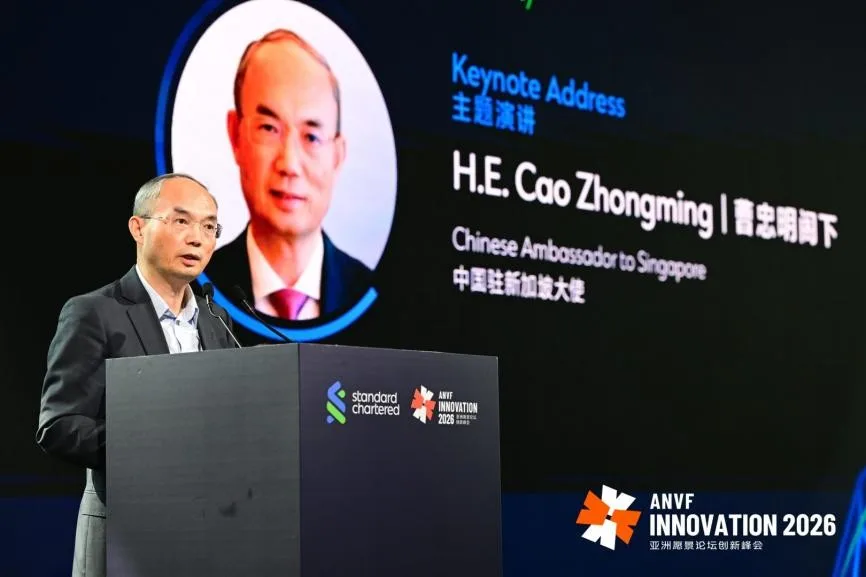
Cao Zhongming, China’s ambassador to Singapore, said in his keynote address: “Resilience is not about remaining unchanged. On the contrary, it is the ability to adapt under pressure and turn risks into opportunities.” He said that China’s resilience stems largely from its ability to adapt and embrace change, while the resilience of ASEAN countries rests largely on internal integration and external connectivity. Looking ahead, he called on China and ASEAN to further strengthen strategic coordination and deepen cooperation in innovation and industrial upgrading and the green transition. He also added that greater openness across trade, services, finance and digital infrastructure would further enhance the resilience and momentum of regional development.
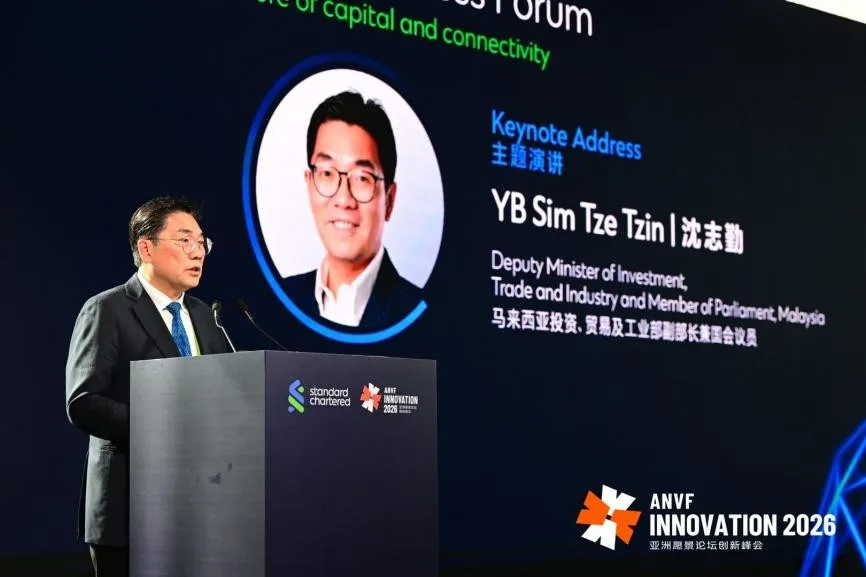
In his keynote address, Sim Tze Tzin, Malaysia’s Deputy Minister of Investment, Trade and Industry and Member of Parliament, said ASEAN and China must pursue deeper strategic integration. Citing the Suzhou Industrial Park, the partnership between Geely and Proton, and Indonesia’s electric-vehicle battery industry ecosystem, he stressed the need to promote joint investment, technology transfer and supply-chain integration, while sharing risks and returns.
With the ASEAN member states planning to formally sign the ASEAN Digital Economy Framework Agreement at the upcoming ASEAN Summit, it could provide a new platform for cross-border digital trade and long-term partnerships.
At the “Fueling Asia’s Growth” panel discussion, Jean Lu, CEO & Executive Vice Chair, Standard Chartered China; Allen Zhu, Managing Partner, GSR Ventures and Andy Lee, VP of International Business and GM for Southeast Asia Region, Alibaba Cloud Intelligence Group exchanged views on the opportunities and challenges facing China and ASEAN amid the emergence of new forms of trade and technological evolution.
Jean Lu expressed that an increasing number of Chinese companies have expanded overseas in recent years, “they are the first generation of truly multinational Chinese companies, and they need to forge their own path,” she said. ASEAN integration also represents significant opportunities for growth, and Allen Zhu also added that entrepreneurs should look beyond the ASEAN market and pursue growth opportunities globally.
Andy Lee opined that further adoption and deployment of AI in ASEAN will potentially create new investment opportunities. The panel was moderated by Kelsey Cheng, Company News Chief, Caixin Global.
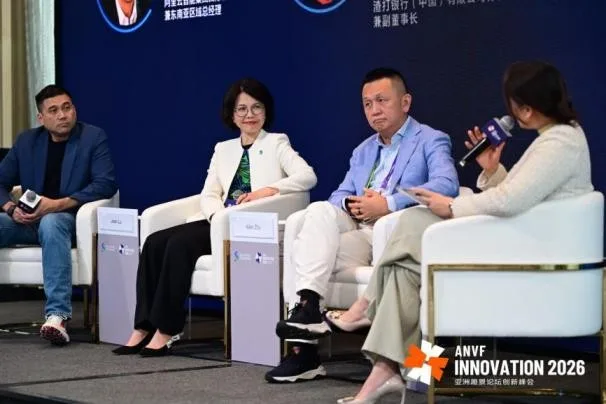
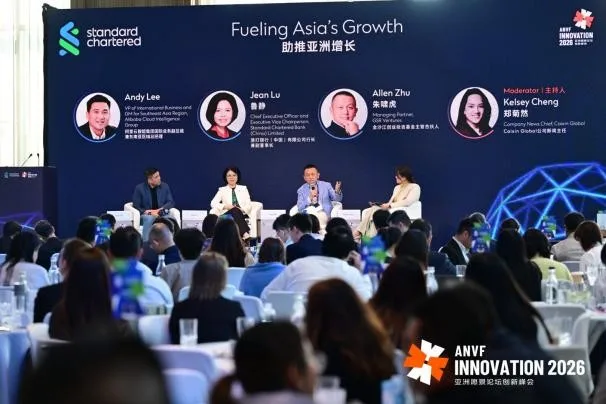
The “Fuelling Asia’s Growth” panel discussion
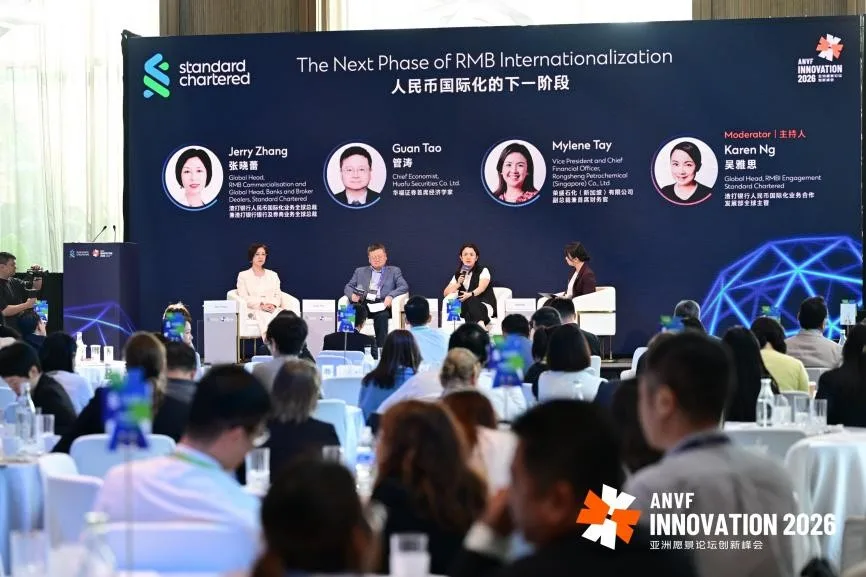
“The Next Phase of RMB Internationalisation” panel discussion was represented by Jerry Zhang, Global Head, RMB Commercialisation and Global Head, Banks and Broker Dealers, Standard Chartered; Guan Tao, Chief Economist, Huafu Securities Co. Ltd.; and Mylene Tay, Vice President and Chief Financial Officer, Rongsheng Petrochemical (Singapore) Co., Ltd.
Jerry Zhang shared that as supply chains between China and ASEAN become increasingly integrated, the growth of bilateral trade is generating greater demand for RMB transactions. Cost considerations, she added, had become the most realistic and commercially viable driver for companies to adopt the currency, supporting its transition from a payment one to that of financing.
Guan Tao said the next stage of the currency’s internationalisation would depend on China converting its strengths in trade and investment into greater advantages for the RMB as a pricing and reserve currency. He also called for improved cross-border RMB infrastructure, and a more supportive environment for investors to use and hold the currency.
Mylene Tay observed that 100 per cent of Rongsheng Petrochemical Singapore’s financing was currently RMB-based, while almost all of procurement’s priced in U.S. dollars. She attributed this gap largely to the limited availability of hedging products, which made it difficult for suppliers and multinational companies to manage their RMB exposure effectively. The panel was moderated by Karen Ng, Global Head, RMBI Engagement, Standard Chartered.
The third panel discussion focused on “Crazy Trendy Asians: Decoding and Serving New Consumers.” Vivek Sharma, Southeast Asia Consumer Industry Leader, Deloitte, framed the forum discussion by sharing how consumers’ expectations for convenience and personalisation were rising, while technological change and shifting social structures were reshaping business models.
Chow Wan Thonh, Head, Coverage, Singapore and ASEAN, Standard Chartered; Aaron Huang, Chief Financial Officer, CHAGEE; Wong Siew Loong, Executive Director and Chief Operating Officer, KLN Logistics Group Limited shared their observations on consumer trends and the overseas expansion of businesses. With ASEAN’s competitive advantage lying increasingly in the strength of the region as a whole, the panellists shared how companies can connect complementary capabilities, capital and infrastructure across ASEAN to best capture the next wave of growth.
Chow Wan Thonh said that consumer industries in China and Southeast Asia were undergoing three major transformations: supply-chain integration, changes in corporate business models and a shift in the logic of competition. As Chinese companies expanding overseas, they are moving towards seeking partners locally and increasing strategic investments to strengthen their capabilities. With ASEAN not being a uniform market, companies need to pursue localisation while strengthening regional coordination.
Citing CHAGEE’s experience in Singapore, Aaron Huang emphasised that companies should innovate rather than simply replicating existing models. They also have to keep in mind local food-safety regulations, religious requirements and cultural differences Variations in logistics infrastructure across Southeast Asia, coupled with rising delivery expectations driven by cross-border e-commerce and instant retail, was placing greater pressure on logistics systems and service providers, Wong Siew Loong added. Together, their insights underscored that companies seeking growth in ASEAN must combine a regional perspective with a deep understanding of local market dynamics. The panel was moderated by James Nesbitt, Head of Global Subsidiaries, Singapore and ASEAN, Standard Chartered.
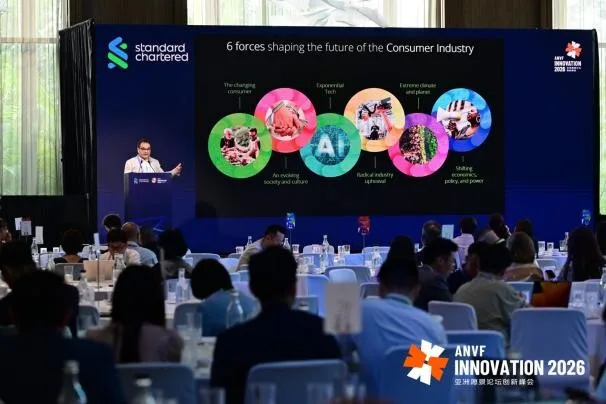
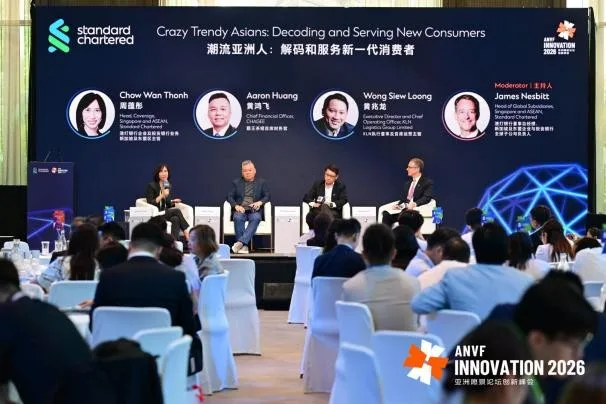
The “Crazy Trendy Asians: Decoding and Serving New Consumers” panel discussion
The forum concluded with closing remarks by Lu Shi, Global Sector Head of Industrials & Autos, and Head of Coverage, CIB and Deputy CEO, Standard Chartered China.
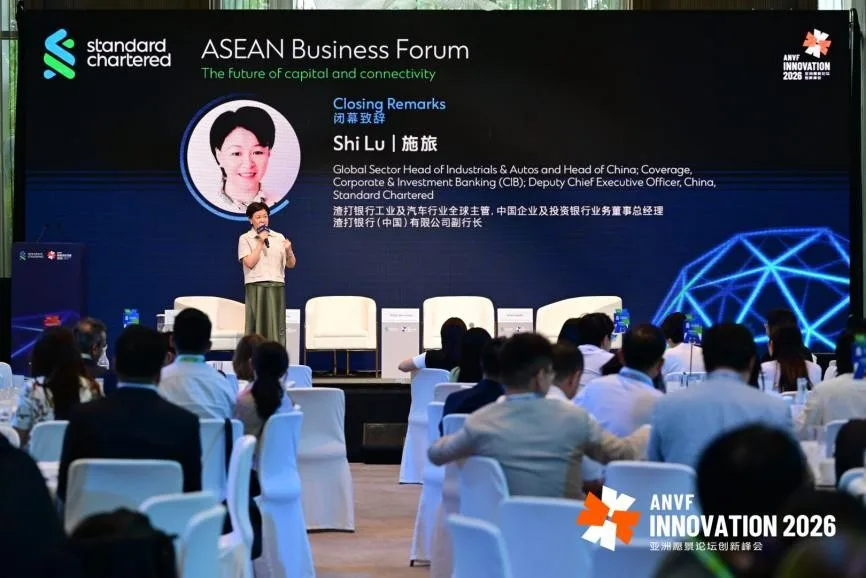
Singapore can play a powerful role in making those connections happen, bringing together capital, treasury, technology and regional leadership with the markets where growth is taking shape. As new factories, data centres and infrastructure create opportunities across the region, financing will be what turns that potential into progress. With Standard Chartered’s network across ASEAN and links to major growth corridors including China, India and the Middle East, Standard Chartered can help international companies grow into ASEAN, and take local companies’ ambitions further afield.
ASEAN already has many of the ingredients – scale, resources, talent, technology and capital. Next year, Singapore will assume the ASEAN Chairmanship as ASEAN marks its 60th anniversary. This presents a timely opportunity to advance deeper regional integration and strengthen partnerships beyond the region, to build ASEAN into a more effective single market.
Related insights
Islamic finance’s next test: Connecting fragmented markets
As trade corridors shift, Islamic finance is helping strengthen regional connectivity and resilience. Key insigh…