-
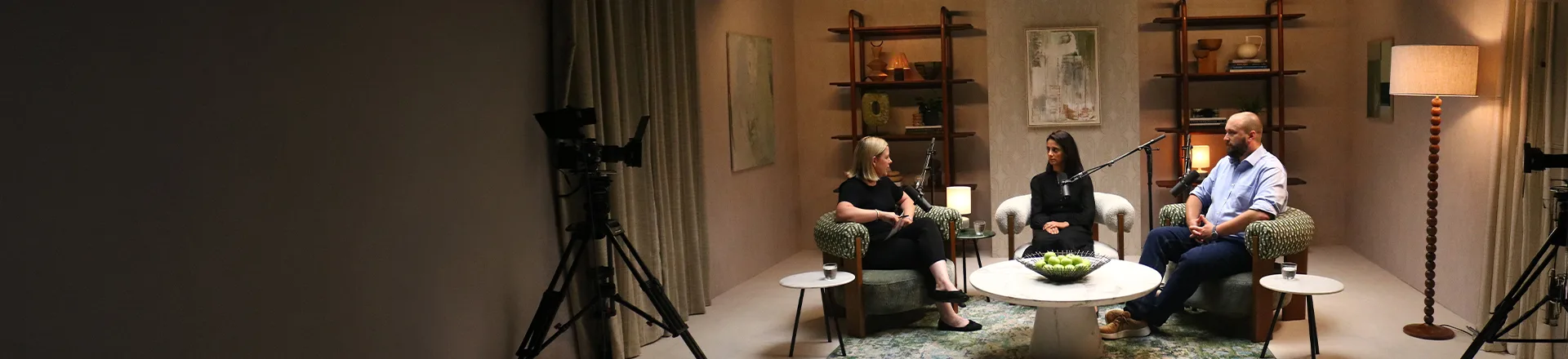
Studio Sessions
Trade in a fragmented world
What lessons can we learn from the past about trade today and in the future? Watch our in-depth discussion.

In the episode
- 1:41: In an increasingly complex geopolitical landscape, global trade is being reshaped in ways that echo patterns seen throughout history.
- 7:26: Understanding historical trade shifts can help business leaders navigate change and identify opportunities for growth.
- 25:26: Innovation has always transformed global commerce, but today’s technological advances are accelerating change at an unprecedented pace.
- 4:42: As the world becomes increasingly multipolar, emerging trade corridors and new economic relationships are creating fresh opportunities for businesses and markets
Meet the guests
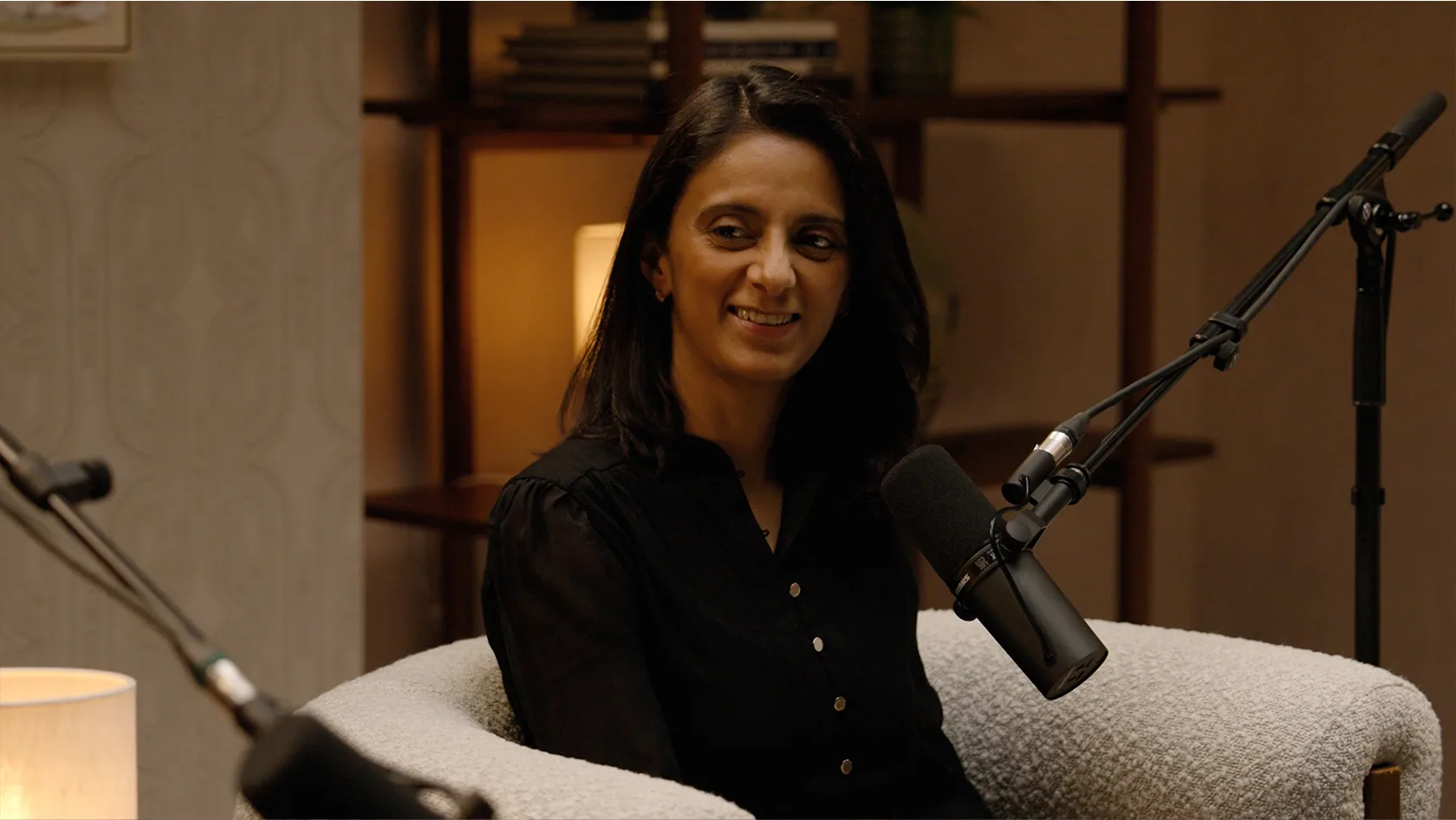
Madhur Jha
Madhur is a Global Economist and Head of Thematic Research at Standard Chartered. She leads our thematic research team, overseeing our strategic thought-leadership and research agenda. She joined the Bank in 2013 after spending six years at HSBC as a global economist. Her expertise in emerging markets was shaped at a research consultancy and as an FX economist at ICICI Bank in India.
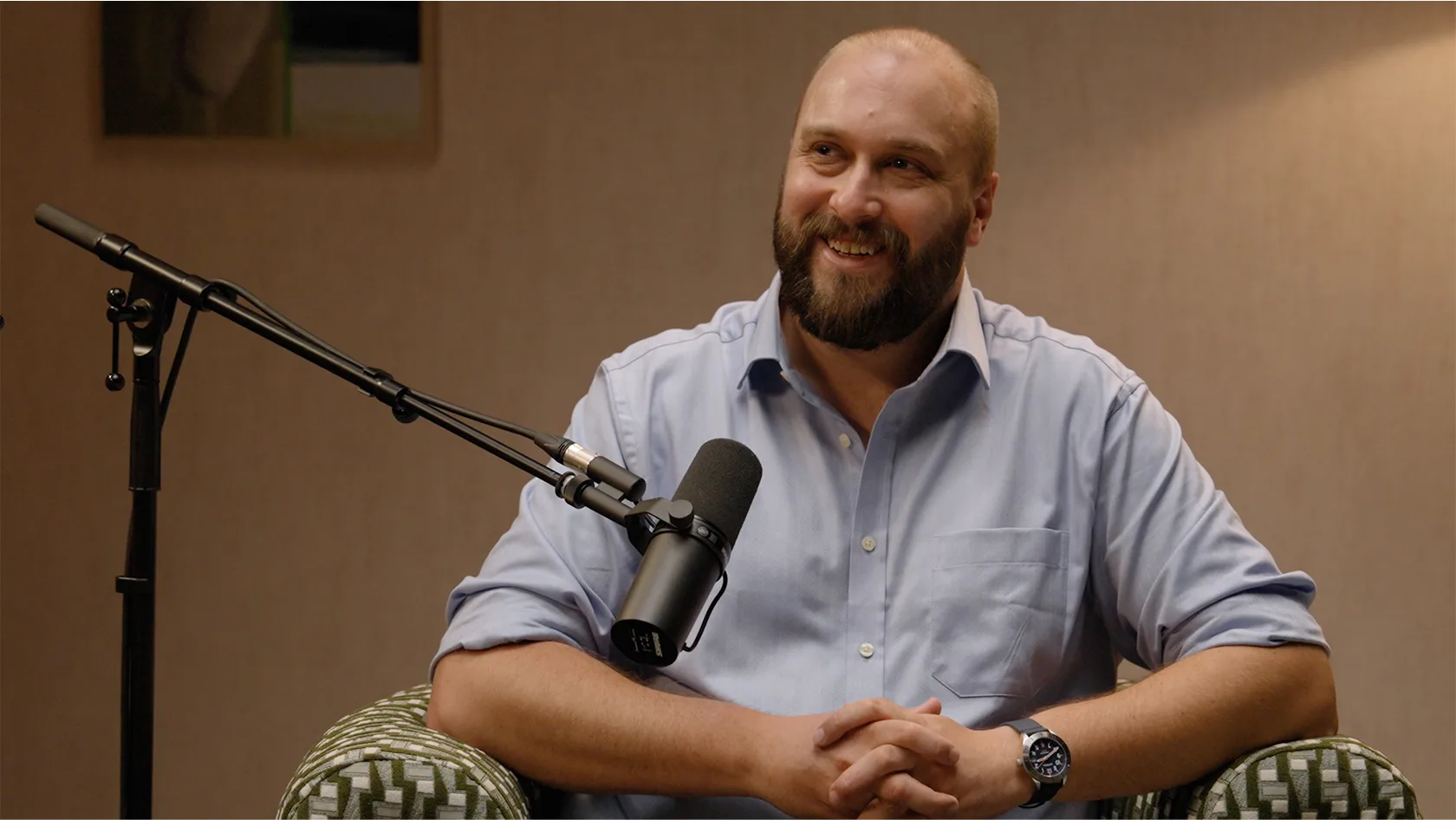
Edmond Smith
Edmond is Professor of Economic Cultures and a historian of globalisation, capitalism and economic change at the University of Manchester. His global research explores how everyday behaviours shape economies. He’s a prize-winning author and advises private, public and third sector organisations on long-term economic transformations and the cultural drivers of economic activity.
There's so many examples from the past of people learning how to operate in a more fractured world.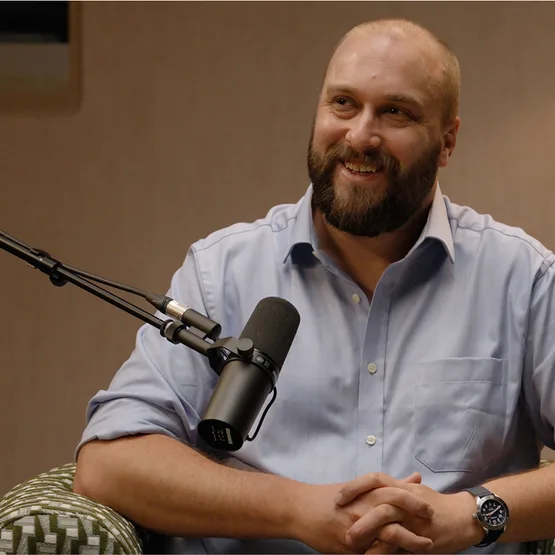 Edmond SmithProfessor at the University of Manchester
Glossary of key terms
- Swift (Society for Worldwide Interbank Financial Telecommunication) – A global member-owned cooperative headquartered in Belgium. It operates the world’s leading secure financial messaging network.
- BPO – Business process outsourcing involves outsourcing routine business tasks to a specialist external provider, helping companies save time and money.
- Multipolar world – A global system in which power is shared among several influential states, rather than concentrated in one or two dominant powers.
- Globalisation – The process through which economies, societies and markets are interconnected across borders. It is driven by the movement of goods, services, capital, technology, people and ideas, shaping how countries trade, how businesses operate and how different cultures interact with each other.
- South-South trade – The exchange of goods, services, investment and capital between markets in the Global South, often developing and emerging markets.
Cyber Security
Watch the podcast for in-depth insights about the evolving cyber threats faced by organisations.
Extreme Weather
Watch our in-depth discussion on how leaders can reduce risk and deliver long-term opportunities for growth.
Navigating trade
We help clients unlock trade opportunities worldwide through market-leading insights and tailored solutions.
Studio Sessions: Trade’s next chapter transcript
Madhur Jha, Global Economist and Head of Thematic Research at Standard Chartered: …that could be the next exciting growth opportunity for trade.
Edmond Smith, Professor of Economic Cultures and a historian of globalisation, capitalism, and economic change at the University of Manchester:…there’s so many examples from the past of people learning how to operate in a more fractured world.
Emma Hughes, Host of Studio Sessions and Head of Group Content & Social, Standard Chartered: In today’s episode of Studio Sessions, we’re exploring the history of trade and what it might tell us about the forces shaping today’s global trade landscape.
I’m joined by Madhur Jha, Global Economist and Head of Thematic Research at Standard Chartered and Edmond Smith, Professor and historian of Globalisation, Capitalism and Economic Cultures at the University of Manchester.
Madhur, Edmond, welcome to Studio Sessions. Just to start us off, we’re hearing a lot about the world being more fragmented and more complex. From your position, how are you seeing global trade at the moment?
Madhur: The current state of global trade is definitely more challenging than it used to be 10 years ago. There have been a lot of geopolitical stresses and shocks over the last five years, which have meant more uncertainty around trade. Having said that, we seem to be seeing a reorientation of trade rather than a collapse of trade.
Even last year, when Mr Trump, hit pretty much all of his global trading partners with tariffs, trade still managed to hit a record high of USD35 trillion. That tells you there are lots of risks but there are also lots of opportunities in trade.
Emma: And Edmond, you come from the historical perspective. What do you think?
Edmond: It’s interesting because the shift towards a more multipolar world, that we’re seeing today, can be understood, if you take a long-term perspective, as something more akin to a return to historical norms.
If we were looking back 200 years or 500 years, it would make sense to have the economies of India and China as dominant powers within trade. Some of the challenges of navigating a multipolar world align with the experiences that came from the emergence of a more globalised and connected world.
It’s re-establishing trust networks that can cross between different institutional practices, the ability to place firms and agents in contexts that are more unfamiliar, and to navigate the challenges of fracture as a part of doing business, which was so fundamental for the emergence of globalisation that we can see a context where we’re returning to those important conversations today.
Emma: Thinking about that transition from more globalised to multipolar, from a historical perspective, can you talk more about some of the fundamental differences we’re seeing today, that we weren’t necessarily seeing before?
Edmond: If we take it back to the start of trade we’re looking at occasional, disparate, poorly-integrated trading systems, then building through luxury goods exchanges, to the constant movement of bulk goods and interaction through to integrated markets as the pinnacle of globalisation.
I think a multipolar world forces us to acknowledge that there’s a step back towards a fracturing that still allows for this huge volume of goods to be moved, but not necessarily within the same system.
Acknowledging that there’s not necessarily a breakdown – we’re not talking about the disintegration or the disappearance of trade, but rather the reordering – means acknowledging the different systems operating within the whole are going to become more important, whether that’s South-South trade or the shift of economies.
Acknowledging that China can act in certain ways regarding international finance, say, or institutional regulation that the US might have played in previously, adds to the complexity but isn’t necessarily a threat to the overarching system and the growth of trade in the next decade or two.
Madhur: A lot of firms are cognisant of the challenges to trade, but there are also some very interesting and smart workarounds that could be the next exciting growth opportunity for trade.
I love the topic of global trade because I don’t know of any country in the last 70, 80 years that has grown without trade. Whether you look at China, Korea or Japan, these countries moved from low-income to middle-income to high-income countries because they have been able to integrate into global supply chains and trade chains.
Without that, it’s very hard to see an economy growing by itself. That’s why the importance of trade has to be acknowledged and reinforced. It’s just that now there are new centres of trade.
As an example, in 2000, South-South trade, or intra-emerging market trade, used to be about 10 per cent of global trade. Now it’s about 25 per cent, so emerging markets are trading a lot more with each other and that is a very exciting avenue that’s going to continue to grow over the coming years.
Edmond: The shocks we’ve seen recently have re-highlighted the importance of the material world within these trade flows, that maybe at peak globalisation, have felt like they’re almost an inevitable movement of goods without friction
It’s re-established the need to consider a systemic approach that integrates the extraction of rare earth minerals or particular metals with the production of component parts and then the integration into the endpoint of that system.
Perhaps, most prominently, with the potential for AI and everything that goes into that on the material side, has made a greater appreciation of the challenges in the everyday movement of goods, and what that entails is the potential for competition among the struggle for resources or the control of particular parts of the system which maybe would have been more familiar in the past but became less familiar recently.
As that comes back, we’ll see a shift in the way states or firms acknowledge how access to particular markets and particular points of expertise function as chokepoints or key interlocutors within that global system.
Emma: Do you think the past is still a good indicator, then, of what we can expect to see now, but also in the future, in the trade space?
Edmond: There’s so many examples, from the past, of people learning how to operate in a more fractured world, whether that’s building an organisational structure that allows people to act more flexibly in response to shocks, or that has a greater degree of trust between different parts of the system to allow for more resilience. Both have the potential to be useful for managing the future of trade, rather than necessarily predicting exactly which path it’s going to follow.
Madhur: Now most countries are independent, they can choose trade partners but there are spheres of influence and geopolitical risks that you have to take into account.
But, innovation allows even the smallest firms to be able to trade. It could be digital trade, which allows small firms in one country to be able to access firms in another country.
The access to trade finance, on a digital basis, is another very interesting development for small firms, because a lot of these firms were out of the system due to their lack of traditional banking models. Now they have access.
That allows them to aim higher in how they want to trade and with whom. Those changes are really interesting; the use of AI and the use of technology is making more channels of trade possible than before.
Earlier, we did not have much services trade; it was largely goods trade. Now, for the last few years, services trade has been growing the fastest, and, in particular, digitally-delivered services trade.
That tells you there are different avenues you can take. The rise of BPOs, the rise of various tourism and travel organisations, the rise of data centres – all of these suggest there are still avenues. It’s just taking a very different form to what we’re used to and different players are coming into the picture than what we’ve traditionally seen.
Edmond: I think that’s a useful link Madhur makes. When we’re talking about the future of trade, we’re no longer talking about the integration of completely new markets, in terms of new continents, or regions.
It’s ensuring that deeper parts of every economy, and every market, can be integrated into the trade economy more effectively.
With the exception of the development of shipping routes through the Arctic because of climate change, we’re probably not really talking about shifts in the physical world of trade all that much in the 21st century.
It’s the changing technologies that make the trade that does exist more efficient, allowing people to find the clients they want to work with in a global space more easily, which, is maybe the great barrier.
Madhur: You’re right, even as consumers, we have seen the benefits of trade: lower costs and a greater variety of products available. The real challenge is that we have a rise in protectionism, we have a rise in tariffs and non-tariff measures across a wide variety of countries, which pushes up costs and trade friction.
But, at the same time, you have advances in technology, which help lower costs and make a wider part of the world available again. So, which of these forces win is going to be key, in terms of how global trade evolves over time. I’m betting my money on optimism: that AI and other technology will help us to trade more and integrate more, allowing countries which are still not very well integrated into trade supply chains to become more integrated.
Obviously, there’s going to be periods of friction that the world economy has to navigate and deal with.
Edmond: One of the great uncertainties when it comes to the fracturing of a unipolar world is the impact AI is going to have on, not just the US economy, but also everything else. The most positive views of AI, allow America to regain its position of prominence by accelerating productivity making some of this fracturing less optimal, in terms of opportunities in accessing different markets.
If AI is so powerful that it changes the US economy, then perhaps you see a shift towards a less fracturing world and the re-establishment of an older, later 20th-century global trading order.
Even in that context, people across the world will still have a say and demand that institutions and global regulations reflect their opinions and perspectives. Even if the structure of global trade doesn’t fracture as much as some of the predictions are suggesting, you still might see a demand for the reorganisation of the levels above that in terms of regulation and institutions.
Madhur: We have a survey called the Future of Trade and, in that, it’s very clear that the foremost thing most firms are looking to do to make themselves more resilient, is to adopt digitalisation.
At the same time, they’re trying to strengthen their treasury management practices, by using various technologies, making themselves more efficient and more cost effective.
All of this is helping them ensure their supply chains are more resilient and that’s been a key focus for a lot of our clients over the last few years.
When I’ve spoken to them they all talk about the need to, not necessarily shorten their supply chains, but to make them more visible because. At one point in time, supply chains had become so complex that you didn’t know who your supplier’s suppliers were and who their suppliers were. If you had an issue, an earthquake say, your entire supply chain could be impacted because a supplier’s supplier’s supplier is not able to supply the goods.
Firms are trying to move away from a very long and complex supply chain to more visible and, if possible, shorter supply chains. At the same time, they’re trying to diversify their suppliers. It’s not just China and the US; it could be China plus ASEAN or China and a few other countries. The fast-growing trade corridors are Asia-MENA, Asia-Sub-Saharan Africa, Asia-LatAm.
You’re seeing a lot more trade and a lot more diversification coming through and what’s really interesting is a move away from just-in-time stock building. Firms used to have just enough stock to meet whatever they needed in the short-term. Now they’ve moved to just-in-case stock building, which is more about resilience, as well as making sure their interests are protected.
The use of AI and regulation would help with this. Another key challenge is that AI is moving very quickly and maybe regulations are not moving quite as fast. How do you marry the two to make sure things continue to move in a frictionless and efficient manner going forward?
Emma: You’ve talked about the impact on the organisations and the markets that they operate in due to these shifting changes. What about the flow of capital?
Madhur: The flow of capital generally is very strongly correlated with the flow of trade. The main driver of trade over the last year has been AI-related goods. So, China, Japan and Korea have done exceedingly well because they are the producers of AI-related goods, whether it’s semiconductor chips or computers.
More people will want to integrate into that supply chain. AI-related trade could even be things like critical minerals like rare earths and raw materials. All of that is coming into play a lot more, that’s what’s going to be driving the global trade story for the foreseeable future.
Emma: What about the impact on people and people’s lives? And bringing it back to the human level, what do you think we can expect there?
Edmond: Prices will go up for certain goods dependent on a frictionless model of international trade and, unless there are spikes in productivity potentially brought about through AI and robotics, that seems a likely consequence of these changing dynamics.
The more concerning, or more challenging impact on people’s lives, is the extent to which competition in the global trading landscape is allowed to build towards genuinely competing blocks or further barriers to trade.
This is where the historical examples are a dire warning, where trade conflict and economic conflict have been precursors to deeper forms of violent conflict, warfare and more extreme competition between blocks.
I’d like to think that in the 21st century, enough people are aware of those legacies and are keen to avoid that sort of deep, competitive disengagement in the world economy. But that does depend on some form of reorganisation, that goes beyond simply, slightly shifting trade flows towards discussions about ways to better regulate and organise the world economy.
You mentioned AI as being a huge challenge in this area but questions around the World Trade Organisation and its troubles over the past few years are only going to come further to the fore. These need to be resolved so that there’s not an even bigger impact on people’s lives.
Madhur: The impact on labour markets is a key issue for emerging markets in particular. I don’t know of any economy which has really grown rapidly without being integrated into global supply chains but, in the past, you could move masses of labour away from agriculture, without too much education and without too much skill-building, into manufacturing.
With robotics and AI, you don’t have to invest in a low-cost country but can use onshore production units, the key risk is that the USP of being a low-labour-cost centre starts to erode.
Of course, that’s not the only reason why people set up in emerging markets. It could be for domestic demand, or various other things, but that is a threat and how do you deal with it? How do you upskill yourself? How do you reskill in this changing landscape?
The second thing, which is also very important, is the money is also going into AI-driven centres. A lot of money over the last year has gone into the US, has gone into, Korea or Japan but not the emerging markets that need capital to grow.
How do you make sure emerging markets have the access to the international capital they are hungry for? A lot of countries have already started to move in that direction, so you’re seeing data centres being set up in Malaysia, Indonesia and India.
They are trying to keep up but there are lots of challenges. It’s not just developing countries it’s developed countries too. People are worried about where Europe stands. China and the US are leading the AI game but what about Europe?
There are lots of questions which need to be addressed, and it is a changing environment where, I completely agree with Edmond, we need a rules-based system, which the WTO used to provide.
That has been undermined a lot over the last few years, so how do you continue to have a rules-based system for the world economy so that it helps more regions to participate in the growth story, not just a few?
Edmond: I think it’s an interesting question with developing markets and the role of labour as a key, core product they can make available. How does that fit into changing expectations about the idea, that was popular five or 10 years ago, about the 21st century being Africa’s century as the great growth market?
How does the situation you’ve just described change that, where the demographic boom that’s expected in Africa coincides with changing conditions for how you can integrate into the world economy?
There are some positive signs, by efforts to move beyond a people-focused model and towards the acknowledgment that energy and raw materials are central to these changing practices, too. But there’s so far to go in ensuring that markets have access to some of the most important material goods for AI, and for the energy shifts, are able to benefit and develop within the context of their local or regional economies, rather than falling into a more extractive system.
One of the hopes, in the fractured world model, is that they’d have more opportunities to negotiate with more powerful trading partners to ensure more of the value added from trade is brought in-country and hopefully emerging economies could use that as competitive advantage for themselves.
Madhur: In fact, there is a lot more horizontal trade happening. Usually in the past, it used to be vertical trade, where a developing country would provide raw materials to a developed country and the developed country would then send across finished goods. That’s part of the reason South-South trade has picked up.
One thing I would like to say on the employment side is people have always feared that technology is going to lead to job losses, and historically, technology has always led to more jobs being created.
The classic example is that bank tellers were replaced by ATMs. So, that’s a big job loss but with the ATMs came the ATM technicians and other types of jobs, like call centre roles. New jobs are always being created, and we are likely to see new jobs being created this time around too.
Emma: And what about from a historical perspective, Edmond? There have been technological advancements in the past that will have had an impact on trade, and there is this pace consideration, but are there still parallels that we can draw on and lessons we can maybe learn?
Edmond: The point about pace of change is really important because the invention of the steam engine in the 18th century took about 90 years from its first commercial use to being deeply integrated into a significant part of the economy. That gave people time to reconceptualise what it would mean for the political economy, what that meant for people’s involvement in work and what that meant for regulation, education and training.
Perhaps a more positive analogy from the past would be looking at developments that have sped up communication and the ability for people to shrink time in their daily lives. That could be the use of telegraphs and telegram systems to connect the world during 19th-century globalisation, so that you could have the immediacy of contact.
If AI allows for decision-making to happen at an even greater pace, and perhaps overcomes some of the frictions that a more fractured trading environment will create, then maybe there you see the possibilities for AI as an information system, rather than a manufacturing-connected or labour system. That could have more immediate and positive gains for local and global economies.
Emma: We’ve talked about capital flows, but thinking about financial institutions specifically, how have they historically played a role in global trade and are we starting to see a change in this current environment?
Madhur: In some ways, banks, especially banks like ours, are in a position to be super-connectors across the globe and provide access to trade and trade finance to a much broader range of clients.
You can work with smaller firms because it’s becoming a lot easier to do things online. That’s the role likely to be played by some of the banks, especially the global banks.
Edmond: The reason I became interested in merchants as historical actors is because they serve this unique role from the emergence of human civilisation through to the present day, where they’re the figures who pass from one society to another. They’re about crossing borders; they live lives of strangers in strange lands.
The institutional changes we see, whether that’s the advent of corporations, or the role of diasporas, it’s giving these individuals a means to operate, it gives them the expertise of their home locality and the ability to know the precise local expectations and customs and practices of the market in which you’re embedded.
This will become more important again and the specialisation of those interlocutors within a more multipolar system will be a real feature of what’s required to work effectively in this sort of environment.
Emma: You spoke about needing the expertise and the presence on the ground in the markets that we operate in being so important and we describe ourselves often at Standard Chartered as a super-connector. Do you think that definition has changed?
Madhur: Now the word super-connector becomes even more important because of all the challenges we face, where the rules of engagement could change very quickly. It’s not just about the provision of capital, which is, of course, very important, it’s understanding how these dynamics are playing out, how everything is changing, and how can you still then navigate the system so that your trade doesn’t stop.
That’s going to be the real crux of any good banking-client relationship, that’s where banks like ours do well, because we do have that presence in those markets which are seeing the fastest rates of growth.
Emma: Edmond, I wondered if you could share a bit more about the impact all of this is having on currency.
Edmond: One of things that is so important is the potential for technology to make an impact on the way finance is used, most notably stablecoins or wholesale central bank digital currency and blockchain-enabled settlement.
The role of the dollar is something that’s come up a lot in conversations around the topic and isn’t likely to go away. The idea of de-dollarisation, in a fundamental sense, is unlikely but that’s shifted perhaps to a smaller part of the market and people are able to take advantage of other forms of currency around the outside of the system.
Using or creating new financial systems to overcome the potential challenges of a more competitive and more muscular US in terms of tariffs and controls of things like access to Swift payment systems, opens up opportunities for people to recreate parts of the financial landscape that wouldn’t have been imaginable just a few years ago.
Madhur: The two points that Edmond’s raised are so important because we’re not just seeing stablecoins as a currency; we are seeing it as part of the new infrastructure in which trade will be governed and organised.
We are moving to a more digital world and fastest-growing area of trade is services trade, which is digitally delivered and so, we are going to see a lot more focus on the use of stablecoins.
However, China’s importance in trade obviously means that there will be a push towards RMB internationalisation; there will be more opportunities for people to trade in RMB but, this is all going to be a very slow process. It’s very hard to see an alternative to the dollar as of now; the stablecoins most used are backed by US treasuries.
People are piling into the US dollar rather than exiting as of now. Of course, people will want to diversify on the margins; central banks might want to diversify on the margins, but the retail investor is still piling into US dollar assets, whether it’s US equities for AI, or it’s US treasuries, or it’s stablecoins. These are all US dollar assets. I think that’s going to sustain for some time still.
Emma: And just thinking about this reimagining, if you were both to distil down one key takeaway that you would like our listeners to take from today, what would it be?
Edmond: There’s a guidebook for merchants that was written in the 16th century that starts by telling all young traders to go into the world, which is a world of equilibrium and fairly shared power dynamics, that the best thing you can do when you reach a foreign country is to act with humility and respect the customs of the people that you’re dealing with.
In all times that’s valid advice but I think in a more fractured, in a more competitive and contested global environment, being aware and empathetic and being able to build, perhaps, from the perspective of the people that you’re doing business with, rather than where you come from, will become more and more important to ensure that these fractures don’t become something more savage and contested in the future.
Madhur: That’s a really nice thought to end on. For me, we are obviously in very challenging times and the way the world economy is organised politically and economically has shifted a lot in the last decade or so, especially the last five years.
Global tradeis an offshoot of that, so that’s changing as well. There are lots of things to be positive about. There are lots of developments which are exciting and can offset all these challenges. So, I will sit in the camp of, let’s be excited about those developments.
Emma: Amazing. Nice to end on a positive note. Thank you both so much for joining us today.
Edmond: Thank you.
Madhur: Thank you.