Employee Stories
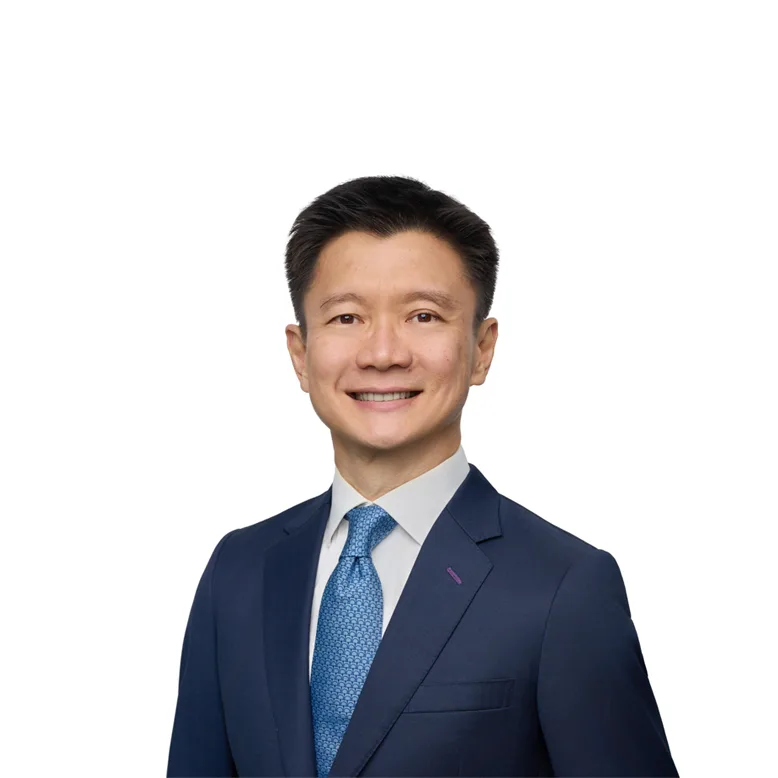
Raymond Ngai
Leading beyond the playbook
About your journey
Can you share your career journey to date and the key moments that shaped your progression into leadership?
My career spans over 20 years across five global banks, covering sales, implementation, commercialisation strategy, and now product lifecycle methodology. Each move was deliberate, I was drawn to roles that sat at the intersection of client impact and organisational complexity. The through-line across my journey has been a willingness to take on mandates that didn’t have a clear playbook.
Early in my career, leading client implementation and onboarding work taught me that execution is where strategy either proves itself or falls apart. That shaped how I think about leadership, not as direction-setting alone, but as accountability for outcomes.
Joining Standard Chartered in January 2026 as Group Lead for Product Lifecycle Methodology represents the culmination of that journey, bringing together governance, product excellence, and disciplined execution at a global scale.
Was there a point in your career where you questioned whether senior leadership was possible for you? What changed?
There were some real obstacles I had to navigate. Moving across organisations and banking cultures meant repeatedly starting from a position where I had to earn credibility rather than assume it. Each transition brought a new environment, new stakeholders, and new expectations, and the instinct to prove your value quickly can work against you if it leads to shortcuts.
What I learned is that credibility isn’t claimed. It’s built through consistency, through showing up with rigour, and through delivering results that speak for themselves. Every transition made me more deliberate about how I lead and more attuned to the cultures I was entering.
Who played an important role in sponsoring or advocating for you along the way?
My progression has been shaped less by a single sponsor and more by the quality of teams and environments I was fortunate to be part of. The leaders who had the greatest impact on me were those who created space and trusted me with real responsibility before I had fully proven myself in a new context, and who challenged me to think beyond my immediate remit. I’ve also been shaped by peers who pushed back hard and colleagues who brought perspectives I didn’t have.
In my experience, it is rarely one person opening one door, it’s an accumulation of environments where you are seen, stretched, and supported.
Building a global career
What opportunities at the bank enabled you to grow beyond your original role or function? Is there anything the Bank did to support you?
The mandate I was given at Standard Chartered is one I hadn’t held in quite this form before: a global remit to build and embed a Product Lifecycle Methodology across the entire Cash Management Products organisation. That level of trust, extended from day one, is significant.
Within the first 90 days, we brought the programme to life, running immersion sessions across Singapore with over 120 Product Management colleagues and more than 80 partners across Sales, Technology, Operations, Implementation, Client Service and Risk, followed by close to 100 colleagues across Mumbai and Chennai. The US and Europe are next.
The bank didn’t just give me a role. They gave me organisational backing, cross-functional access, and the space to shape something with genuine global impact.
Have you made any lateral moves, international moves, or role changes that accelerated your development?
My entire career has been built on lateral moves as much as upward ones. Moving from implementation into sales, then into commercialisation, and now into methodology and strategy, each shift required me to rebuild credibility in a new domain and learn the language of a different function.
Those moves across four banks before this role gave me something that a vertical path within a single function rarely provides. The ability to see how organisations work, where the friction lives, and how to bring different disciplines into genuine alignment. That breadth is what the PLC mandate demands, and it’s what I was able to bring to it.
What challenges did you face as you progressed, and how did you overcome them?
The most consistent challenge across my career has been entering new organisations or markets and needing to establish credibility from scratch. There’s no shortcut to that.
What I have learned is to resist the temptation to assert yourself before you have earned the right, and instead to focus relentlessly on delivering results that make the case for you.
The same principle applied when I joined Standard Chartered. New organisation, new team, new mandate.
The approach was the same: understand the landscape quickly, engage deeply with stakeholders, and let the work speak. Ninety days in, with a global programme already in motion across three markets, I feel that foundation is being built the right way.
Leadership and impact
What does inclusive leadership mean to you in practice, and how do you role model it in your team?
Inclusive leadership, to me, is about creating the conditions for the best thinking to surface regardless of where it comes from. In practice, that means designing our PLC immersion sessions not as presentations but as working sessions, where Product colleagues sit alongside Sales, Technology, Operations, Implementation, Client Service and Risk, and where challenge is not just welcomed but expected.
What stood out most in Singapore and India was not the scale of participation, but the quality of the conversation. People disagreed; people pushed back, and we were better for it. Inclusive leadership isn’t a value statement. It shows up in how you structure a meeting, who you invite into a decision, and whether the people in the room feel genuinely safe to speak.
What advice would you give to someone who feels there may be limits to how far they can progress?
Three things I would share:
- Set a goal that genuinely stretches you.
Not a comfortable next step, but something that requires you to grow into it. The stretch is where development happens. - Show up with consistency, even when it’s inconvenient.
Credibility is built in the moments when it would be easier to coast. - Let your results do the talking.
Early in a new role or organisation, the most powerful thing you can do is deliver — visibly, repeatedly, and with rigour. That builds trust faster than any conversation about potential.
Looking back, what do you think people misunderstand about career progression at the bank?
Coming in from outside, with experience across four other global banks, one thing I’ve observed is that the opportunity here is real, but it goes to those who raise their hand for it. The bank creates space for people who take ownership, volunteer for stretch assignments, and bring initiative rather than waiting to be directed.
Progression here is also less about tenure than people may assume. What matters is impact and mindset, the willingness to take on hard problems, work across boundaries, and demonstrate results.
I’m a strong believer that you prove your value through what you deliver, not through how long you’ve been in a seat. That’s as true here as anywhere I’ve worked.
What keeps you here, and what excites you about the next stage of your leadership journey?
What keeps me here is the scale of what we’re building and the genuine belief that it matters. A disciplined, globally consistent approach to product lifecycle management enables us to strengthen how we serve clients, how we make decisions, and how we build products that create sustained value.
What excites me is that we are still early. Taking the PLC programme across every market the bank operates in, embedding it as a shared discipline rather than a one-time initiative, that’s a multi-year journey. And I’m energised to be at the start of it, with a team and an organisation that has both the capability and the commitment to see it through.
“My progression has been shaped less by a single sponsor and more by the quality of teams and environments I was fortunate to be part of.” Raymond NgaiLead – Product Lifecycle Methodology