Employee Stories
Danielle Chee
How AI is Transforming Database Engineering
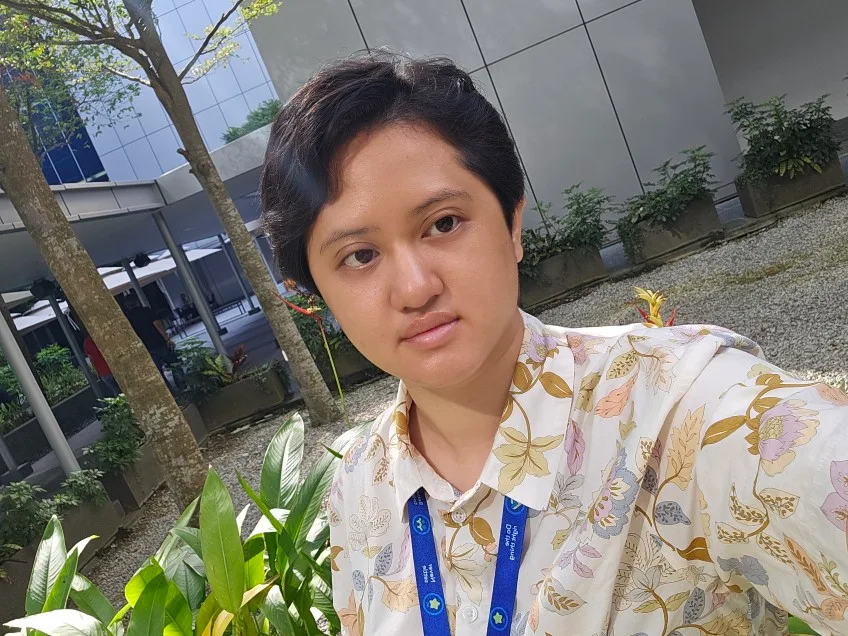
What attracted you to applying for a role in Standard Chartered – was there anything unique or different that stood out?
It was the reputation SC has as a multinational bank and the great work-life benefits that really stood out.
What do you think SC does different to other Banks in the AI space?
I would say that SC is fast to adopt AI into our spaces. After our in-house AI solution was released, tools like Copilot were quickly rolled out into many tools we work with like Teams, Outlook and even Visual Studio Code. It is not a careless procedure too; the rollout was done with good security measures and an active team of engineers supporting it.
What developments are you most excited for in AI – both professionally and personally?
The most exciting developments for me would be cheaper and less resource-intensive AI usage, and these two come in hand-in-hand too. Once it becomes less heavy on the resources, not only would widespread usage and development may be possible to transform even small projects and businesses of today, it also improves environmental sustainability of its usage.
What advice would you give to someone applying for a role at the Bank?
Especially towards graduates as someone also early in their career, be brave and take on tasks outside your comfort zone! Sometimes this is how you also explore on what you like, what you want to gravitate towards—but also be flexible to keep changing.
As a software engineer for a bank, what does the bulk of your daily work include?
As an on-premises engineer at Standard Chartered, my role is focused on database engineering, where we explore ways to improve the overall global database structure supporting the bank. The bank processes a lot of data, and a lot of it are confidential and needs to be accessed on a daily basis. I help ensure the structure is secure, resilient as well as flexible so more data can be added safely and swiftly. As an international bank operating across multiple jurisdictions, our databases need to be geo-resilient to ensure high-availability, so I support improvements in that aspect as well.
What are some of the skills you are looking to learn from the course that will be particularly helpful in your day to day work?
On top of build improvements, I also test builds and debug them, which involves identifying and resolving errors in database systems. Sometimes this whole process could take me around one to two days. With this course, I’m especially excited to learn more about prompt engineering, which to put it simply is debugging with natural language, to reduce the bug detection time to hours and not days. There are also other aspects of AI in the course, such as AI Agent Development, which I’m keen to learn more about. As I work with colleagues from software development, this knowledge would help me understand how they help the bank to build and improve AI tools to better serve our clients across the world.
With the focus of storytelling showcasing impact this year, could you share 1-2 work/projects you’ve participated in during your time at Standard Chartered that has contributed positive outcomes for the Bank?
There have been multiple projects both big and small that I have been given a chance to help with. One of my most memorable big projects to be part of was also my first big project – helping with a database migration. It was a personal great hands-on learning experience and moreover, improved geo-resiliency for the bank as many databases was migrated away from older servers to new, replicated ones. Another more recent big project that I am proud of was to onboard a new build of database software for the bank. From that project, I had the chance to learn and tweak build our current builds. This helps improve on security and flexibility in usage for our database platform for all app teams to use.