Employee Stories
Roger Wang
Behind the models: Making the invisible work visible
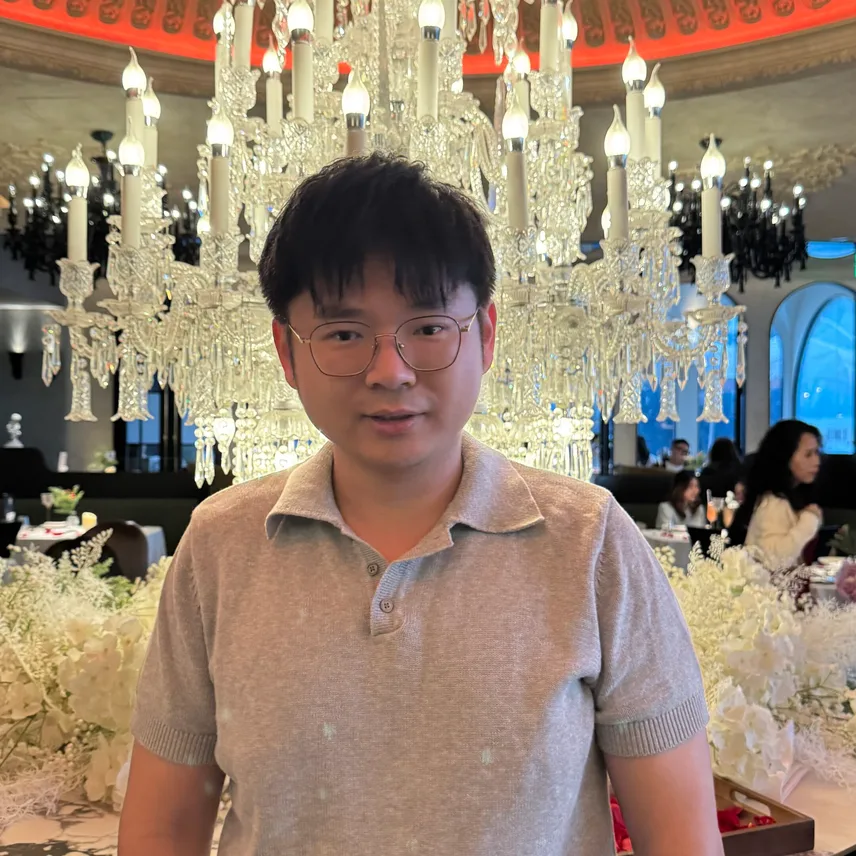
A career built one skill at a time
“I’ve never really thought of my career as jumping from one role to another,” Roger reflects. “It’s felt more like stacking skills on top of each other.”
Roger joined the Bank in 2025 and now works as an AI Engineer in Wealth Management. Before that, he has had roles in business intelligence, as a Data Analyst, and a Data Scientist. Analytics gave him rigour, business intelligence taught him how to turn data into stories, and data science helped him develop strong modelling skills. AI engineering is where it all came together.
“People often think moving into AI engineering was a pivot,” he says. “For me it was the natural next chapter. The most valuable work had shifted from building individual models to building systems that can use those models intelligently.”
The Bank’s focus on skills over job titles made that move possible. “What mattered here wasn’t whether my job title used to be ‘AI Engineer’” he shares. “What mattered was whether I had the skills and could learn.”
He sums up his relationship with AI simply: “AI isn’t a tool I use — it’s a collaborator I build with.”
Making the invisible work visible
When friends and family ask what he does, Roger keeps it simple. “I tell them I build AI Conversational Banking that help bankers make better investment decisions for their clients” he says. “Imagine a wealth advisor who needs to understand thousands of funds and follow hundreds of research reports. No one can keep all of that in their head. I build an AI system that can do that research in seconds – but more importantly, one that knows what it doesn’t know and never makes things up.”
His days are spent talking to Relationship Managers and Investment Advisors about how they prepare for meetings, where they lose time and what makes them nervous about using AI in front of clients. “They’re not asking for ‘AI’” he points out. “They’re asking, ‘Can I trust this answer in a live conversation?’”
He also works with the MyWealth app team and business leaders who define what good advice looks like. “We sit between the back office and the front office,” he says. “On one side you have all the data, research and policies. On the other, you have real clients with real goals. My job is to translate that institutional knowledge into something advisors can access instantly and safely.”
From the outside, it might look like “just another chatbot.” Inside, it is hours of work on how the system should behave under pressure, where it should say no, and how it can support human judgment rather than replace it. “The technology is only half the story. The other half is understanding people,” he says.
What responsible AI looks like day to day
Responsible AI, for Roger, is measured by the decisions you’re willing to make. During testing, he once noticed answers where the AI was giving fund performance numbers that looked perfectly reasonable and were tied to real funds – but those numbers hadn’t come from any approved source.
“The structure was right, the wording was professional, the logic was sound,” he says. “But the numbers were plausible, not factual.”
He immediately stopped all new feature work, brought the issue to the team, and traced it back to a change that had weakened the constraints on how the AI should behave. They fixed the prompts and strengthened the evaluation so it would catch this behaviour in future.
“A fabricated 12% return on a real fund isn’t just a bug” he says. “It could influence a real investment decision. That’s someone’s savings, someone’s retirement.”
To him, this is what responsible AI feels like in practice: constant questioning, saying “not good enough yet” and protecting advisors and clients even when it slows things down.
Growing in a Skill-Based organisation – And what comes next
Looking back, Roger sees his journey as proof that careers aren’t defined by job titles, but by the skills you build along the way. In his experience, curiosity, continuous learning and collaboration have been just as important as technical expertise.
If Roger’s story resonates with you, explore our latest opportunities to discover how your skills could help shape the future of banking.