Capital allocation: making the next dollar work harder
With liquidity high and balance sheets strong, corporates can assess how they invest, return capital and retain flexibility to support long-term value creation.

Capital allocation remains an important priority for corporates. For many, the starting position is quite strong now. Liquidity remains high, balance sheets have capacity and cash generation is robust. This creates choices around how best to deploy capital.
Corporates can invest for growth, organically or through M&A. They can return capital through dividends or share buybacks. Alternatively, they can retain balance-sheet headroom for future opportunities and periods of volatility. The right balance will vary by company, but whatever corporates decide, there is an active choice.
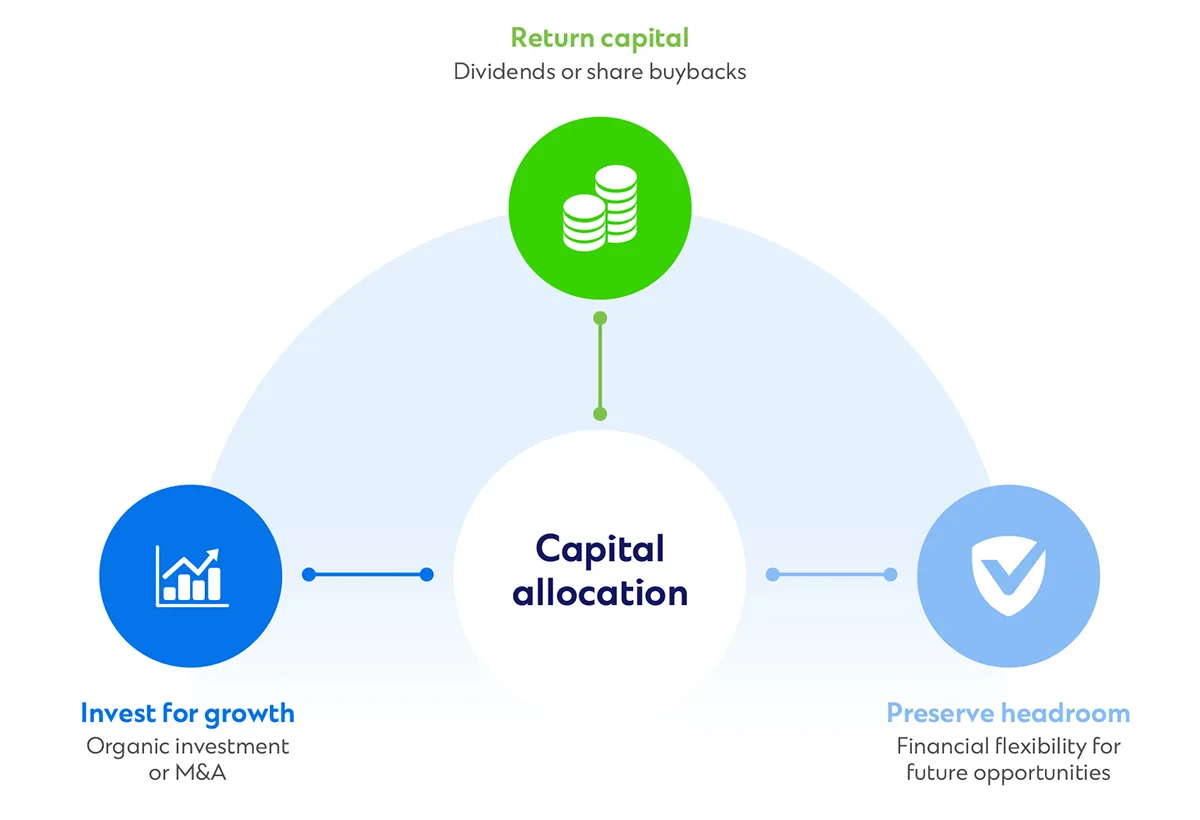
The objective is long-term value creation
In some sectors, investment restraint over recent years may need to be addressed. Increasing investment could support growth and strengthen competitive positioning where returns exceed the relevant hurdle rates.
For others, valuation may make share buybacks attractive. Or even if that is not the case, management may use buybacks to rerate valuations. Repurchasing shares can create value where management believes the company is undervalued and the expected return compares favourably with other uses of capital.
There is usually a trade-off. Capital allocated to shareholder distributions is no longer available for investment. Equally, preserving excessive balance-sheet capacity may carry an opportunity cost. The focus should remain on long-term value creation.
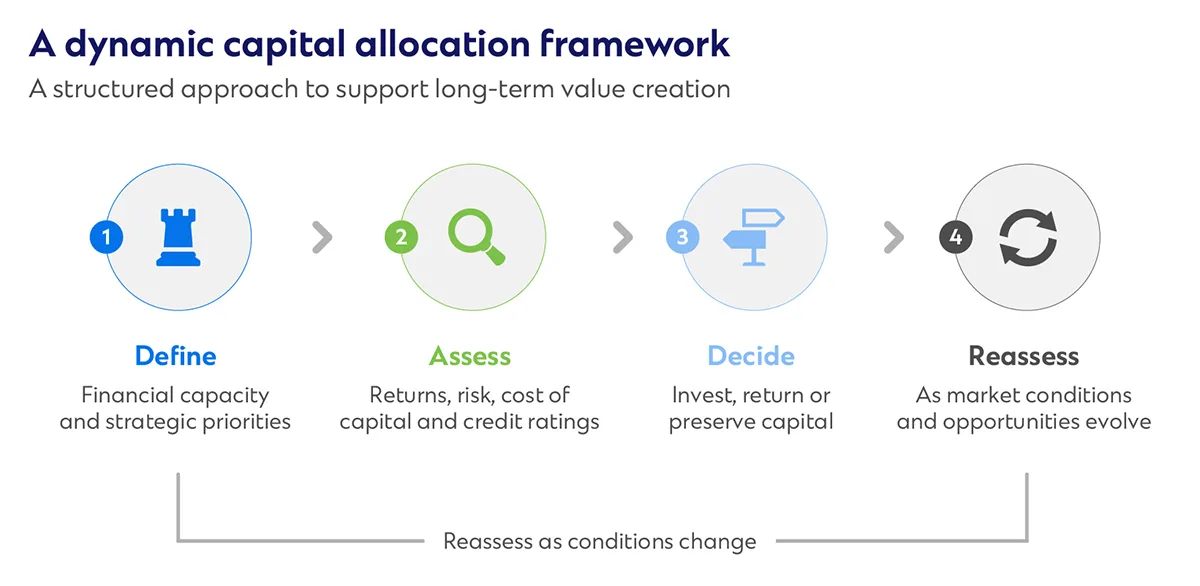
This requires a dynamic framework that considers returns, cost of capital, credit ratings, financial flexibility and the strength of the investment pipeline. The relative attractiveness of each option will change as market valuations, funding conditions and strategic opportunities evolve.
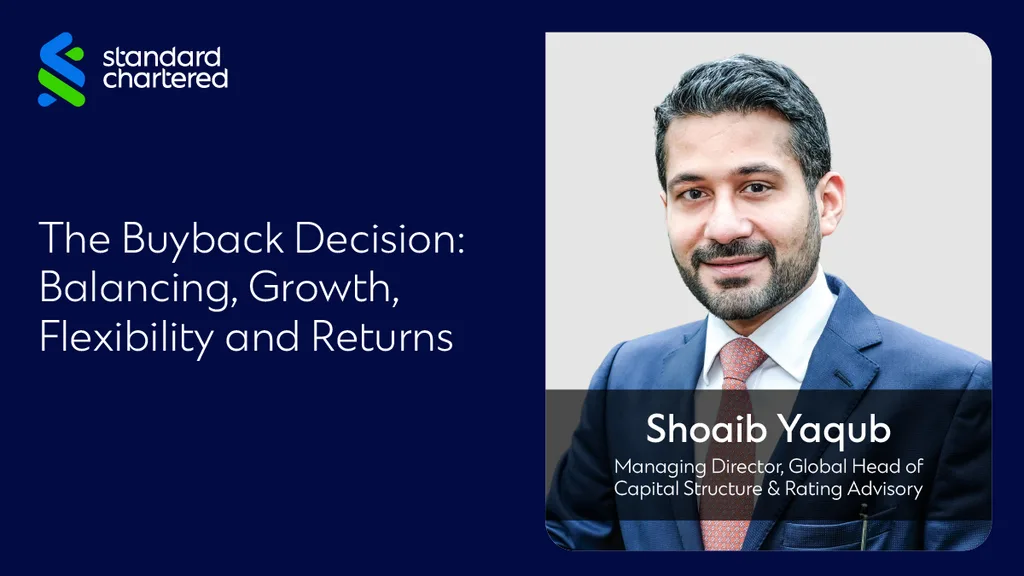
Watch Shoaib Yaqub, MD, Global Head of CSRA, share how effective capital allocation can make the next dollar work harder.
Positioning for growth
As companies prepare for the next growth cycle, there is an opportunity to revisit existing capital allocation frameworks.
Our Capital Structure & Rating Advisory team can help clients assess the trade-offs across investment, shareholder distributions and balance-sheet capacity. We can also help companies reposition their balance sheets and align their investor-marketing strategy with their financial and strategic priorities.
Strong balance sheets create opportunity. The challenge is deploying that capacity in a way that supports sustainable long-term value.
Contact us for a deeper analysis.
Related insights
Sub-Saharan Africa’s shift to market financing
As African sovereigns move up income groups, concessional funding declines, prompting a shift towards diversifie…