From digital assets experimentation to execution
Across Greater China and North Asia, regulation, tokenisation and digital money are moving digital assets towards institutional adoption.

This article is written by Pierre Mengal, Managing Director, Interim Regional Head – Greater China and North Asia, Securities Services, Standard Chartered.
The digital asset conversation in Greater China and North Asia is changing. The question is no longer whether the technology has potential, but where it can solve real business problems, operate within regulated financial markets and deliver value at institutional scale.
In discussions with clients, policymakers and the media, the focus has been increasingly on tangible outcomes: faster and more transparent settlement, better liquidity management, new investment and distribution channels, and more efficient use of collateral.
A region moving at different speeds
Across the Greater China and North Asia (GCNA) region, markets are advancing along distinct but increasingly purposeful paths. Hong Kong is among the region’s more mature markets, with a broad regulatory ecosystem spanning digital asset custody, tokenised funds, digital money and real-world asset applications. Its phased approach shows how policy clarity, institutional participation and market infrastructure can reinforce one another to support sustainable growth.
Taiwan is approaching an important inflection point. The passage of its Virtual Asset Services Act establishes a more comprehensive framework for licensing, custody, cybersecurity, asset segregation and internal controls. As implementation rules take shape, greater clarity on tokenised securities and stablecoins – including ownership, settlement, accounting and taxation – will be critical to turning its strong capital-market infrastructure into a platform for institutional innovation.
Elsewhere, the direction of travel is equally significant, even as market models diverge. Mainland China continues to prioritise controlled, policy-led applications of distributed ledger technology and digital currency while maintaining clear boundaries around virtual assets. South Korea and Japan are further developing their frameworks for custody, trading and investor protection. There is no single regional template. This makes connectivity, interoperability and sustained regulatory dialogue all the more important.
Three forces driving institutional adoption and commercialisation
Against this backdrop, three forces are increasingly important in moving digital assets from experimentation towards institutional adoption and commercial scale: regulation, tokenisation and digital money.
1. Regulation as an enabler
Regulatory clarity within each market will be essential, even as frameworks differ across jurisdictions. Each market will develop rules that reflect its own policy priorities, financial system and risk appetite, so there is unlikely to be a single regional model. What institutions need is a clear understanding of the requirements in each jurisdiction, including the treatment of asset classification, custody, settlement, disclosure and investor protection. Continued supervisory engagement through sandboxes and structured industry dialogue can also help institutions test risks early and move viable use cases towards commercial deployment. Legal certainty around ownership, settlement finality, insolvency and enforceability will be particularly important in giving institutions confidence that digital transactions will hold up in practice.
2. Tokenisation as a driver of value
Tokenisation can create value by changing how financial assets are issued, distributed, transferred and serviced. The most compelling use cases will be those that address clear market friction, such as lengthy settlement cycles, fragmented records, limited distribution or inefficient collateral mobility. By connecting data and processes across the asset lifecycle, tokenisation can reduce manual intervention, duplicate processing and reconciliation while improving transparency and operational efficiency. It can also introduce new functionality through automation and programmability, including more efficient corporate actions, distributions and servicing.
3. Digital money as market infrastructure
Digital money can provide the cash infrastructure needed to support the settlement and servicing of digital assets. Different forms of digital money, including stablecoins, tokenised deposits and central bank digital currencies, are likely to serve different purposes depending on the market, use case and regulatory framework. When digital assets and cash are connected, transactions such as subscriptions, redemptions and delivery-versus-payment settlement can be completed more efficiently, with the potential to reduce settlement risk and trapped liquidity. Programmability may also enable automated treasury movements, collateral calls and conditional payments. For digital money to support activity at scale, it will need to connect with existing bank accounts, foreign-exchange markets, payment rails and liquidity infrastructure rather than operate as a separate pool of value.
Across all three forces, trust remains fundamental to achieving institutional scale.
Digital assets do not remove the need for trusted financial infrastructure; they expand what that infrastructure must support.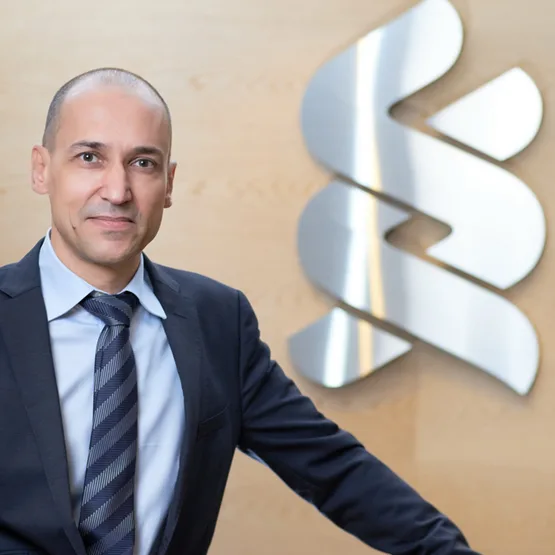 Pierre MengalInterim Regional Head, GCNA, Securities Services, Standard Chartered
From concept to reality
Experiments and pilots in digital assets have now evolved into commercial use cases with the potential to scale. Tokenised bank deposits can help corporate liquidity move to where it is needed, when it is needed. Hong Kong provides a useful illustration of how this shift from experimentation to practical application is taking place: a leading corporate worked with Standard Chartered to tokenise HKD, CNH and USD account balances on the blockchain-based Whale treasury platform, enabling near-real-time, 24/7 liquidity transfers between the corporate’s entities.
Standard Chartered also supported AXG in Hong Kong’s first institutional crypto-asset custody arrangement offered by a global systemically important bank. Secure safekeeping, asset segregation, governance and operational resilience show how established banking controls can build institutional confidence in digital assets.
Digital money is also moving into practical use. As the first authorised bank distributor of HKDAP (“HKD At Par”), Standard Chartered supports applications including tokenised money market fund settlement, intragroup liquidity management and cross-border payments. Together with the aforementioned tokenised deposit work, this shows the value of connecting trusted custody and digital settlement with treasury, liquidity and collateral workflows.
Beyond the region, the Bank’s regulated capabilities in the UAE and Luxembourg give GCNA clients trusted cross-border access to the wider digital asset ecosystem. Common institutional infrastructure helps clients enter new markets while maintaining consistent governance, risk and servicing standards.
Building the next chapter
The next phase of digital asset development will be shaped not by technology alone, but by the ability to apply it to clear market needs.Pierre MengalInterim Regional Head, GCNA, Securities Services, Standard Chartered
Progress will depend on use cases that deliver measurable improvements in settlement, liquidity, distribution or collateral efficiency, supported by regulatory clarity and robust operating models.
No institution or market can deliver this transformation in isolation. Banks, asset managers, market infrastructures, technology providers and regulators will each have a role in connecting platforms, payment rails and established financial systems. Across GCNA, individual markets will continue to develop according to their own priorities and frameworks, but greater connectivity and interoperability will be important in enabling assets, payments and collateral to move safely across participants and borders.
At Standard Chartered, we continue to help clients navigate this evolving landscape by bridging traditional and digital finance, connecting markets across our footprint and providing the regulated infrastructure needed to support practical use cases. The next chapter for digital assets will be defined by their ability to deliver real utility through a trusted, connected and scalable financial ecosystem.
Related insights
Treasury’s future: mobility and liquidity
As digital money evolves, the priority is enabling liquidity to move seamlessly across borders, networks and mar…