Finding Buoyancy: A CFO’s perspective on finance leadership
Chelsea Cheng, CFO, Sunway Healthcare Group, reflects on growth, risk and the evolving role of finance leaders as strategic navigators.

Sunway Healthcare Group is one of the leading integrated healthcare providers in ASEAN and a key business of Sunway Group. It operates a network of quaternary and tertiary hospitals across Malaysia, including its flagship Sunway Medical Centre in Sunway City Kuala Lumpur, Malaysia’s largest private quaternary hospital. The group delivers a full spectrum of healthcare services and serves over a million patients annually. Sunway Medical Centre has been recognised by Newsweek among the world’s best hospitals and ranked as the top hospital in Malaysia. In March 2026, Sunway Healthcare Holdings Berhad was listed on Bursa Malaysia.
We recently sat down with Chelsea Cheng, Chief Financial Officer of Sunway Healthcare Group, to explore her journey from Big Four audit and banking into the C-suite, her perspective on risk, capital markets, and the evolving role of the CFO – and the experiences that have shaped her approach to finance leadership.
Tell us a little bit about yourself
Like many CFOs, I started as an auditor at a Big Four firm, specialising in banking and financial services clients. I’d always wanted to be a banker – even in high school I could see that banks had a deep societal purpose, channelling capital between those with savings and the businesses that needed it to grow. So, I did a double degree in accounting and banking & finance at Monash University in Melbourne, and after six years in audit I moved into banking, where I spent about thirteen years across compliance and control, treasury and markets, corporate services, and eventually investor relations. Then, during the pandemic, I made a leap – joining Sunway Healthcare as CFO in January 2021. When I joined, we had two hospitals. Five and a half years later, we have five, and in March 2026 we listed on Bursa Malaysia – one of the largest IPOs on the exchange in nine years, with a market capitalisation of circa 20 billion ringgit.
How has the CFO role evolved over the course of your career?
There is a long-standing stereotype that CFOs are bookkeepers – closing books, reporting the numbers, a rear-view mirror kind of function. And another that they are boring and cannot tell a story. Technology has dismantled both. When I started in audit, my seniors competed over who could punch numbers fastest on a calculator. By my time, Excel had made that irrelevant. Now my team asks why teams still use Excel when Power BI and live dashboards do it better. The pace of change has been phenomenal.
In my view the CFO has evolved through three clear phases – bookkeeper, then operator focused on systems and automation, and now strategic navigator: a trusted partner to the CEO who can steer the organisation through uncertainty and translate financial complexity into direction.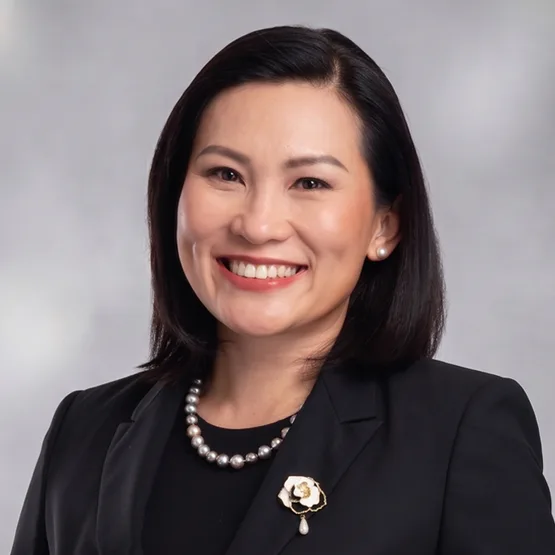 Chelsea ChengCFO, Sunway Healthcare Group
Chelsea also highlighted that the CFO roles are now far more demanding, and far more meaningful.
How do you think about risk and decision-making in uncertain conditions?
I joined Sunway Healthcare during the pandemic, so risk was immediately real rather than theoretical. Every week we were asking: what is our stockpile of Personal Protective Equipment (PPE), where are the ventilators coming from? More recently, the conflict in the Middle East raised the same questions around nitrile gloves shortages.
What I have learned is that senior leaders are frequently forced to make decisions without complete information. You will not always have a crystal ball. What anchors me is returning to first principles: objectives, priorities, and what confidence level we need before committing. Managing risk is about protecting the organisation and building resilience – not avoiding hard decisions. People may not always have certainty, but they need clarity. That is what leadership has to provide.
Can you share a strategic decision that has been particularly meaningful to you?
The IPO is the obvious answer – but something that happened before it, matters just as much to me personally. In April 2024, we completed Sunway Healthcare’s first publicly rated sukuk issuance: a 400 million ringgit Islamic medium-term note, and the first public market rated deal in the entire Sunway Group’s history.
Previously, the group had always worked with unrated or bilateral arrangements. I challenged that. Why were we limiting ourselves to a handful of counterparties when there was a far wider pool of investors who would welcome a high-quality credit with a strong balance sheet and a visible growth pipeline? There was some internal resistance – a public issuance requires lawyers, a prospectus, investor roadshows, significant preparation. But we proceeded.
We planned for 300 million ringgit. Demand was so strong we upsized to 400 million. The final order book exceeded two billion ringgit. We achieved a credit spread of 23 to 25 basis points above government bond yield – the tightest ever for an AA-rated bond in Malaysia – delivering a material reduction in our funding cost that year. Every other Sunway Group entity followed our lead. Sometimes the most meaningful decisions are the ones where you take a path no one has taken before, simply because it is fundamentally right for the organisation.
Having worked on both the banking and corporate sides, what has that taught you about building effective partnerships with financial institutions?
Banking gave me a deep understanding of how lenders think – risk-weighted assets and risk-adjusted returns, the Basel discipline – and I carry that with me on the corporate side. But what I look for in a banking partner has shifted. I look for bankers who understand our sector. Healthcare has long gestation periods and long payback cycles – and financial structures must be built around that reality. Banks also have the network to connect businesses across borders – in a world of supply chain disruption, that intermediary role is very valuable and often underutilised.
What is one finance innovation or tool you wish had existed five years ago?
Without question – AI-powered analytical tools. When we were commissioning our hospitals, our procurement team spent hours manually extracting quotations, tabulating data, mapping gaps. AI can handle that in minutes today, freeing time for identifying better vendors, expanding sourcing networks, and negotiation. If we also had dynamic, AI-driven planning dashboards, we might have built even more future-proof, modular facilities – better adapted to the shifts in patient demand we can only see clearly in hindsight.
What leadership traits do you believe are essential for the next generation of finance professionals?
Three things. First, adaptability and curiosity. The profession is being reshaped in real time, and you cannot follow standard operating procedures and remain relevant. Ask why, constantly. Second, ethics and empathy – know your true north. Governance, sustainability, and humanity are the foundation of trust. Third, storytelling. Finance leaders can no longer stay behind a desk. You are meeting investors, briefing boards, speaking to media. The ability to translate complex financial data into a compelling narrative is what separates those who influence outcomes from those who merely report on them.
Finance leaders can no longer stay behind a desk. Managing risk is about protecting the organisation and building resilience – not avoiding hard decisions.Chelsea ChengCFO, Sunway Healthcare Group
How do you stay informed and balanced outside of the day-to-day role?
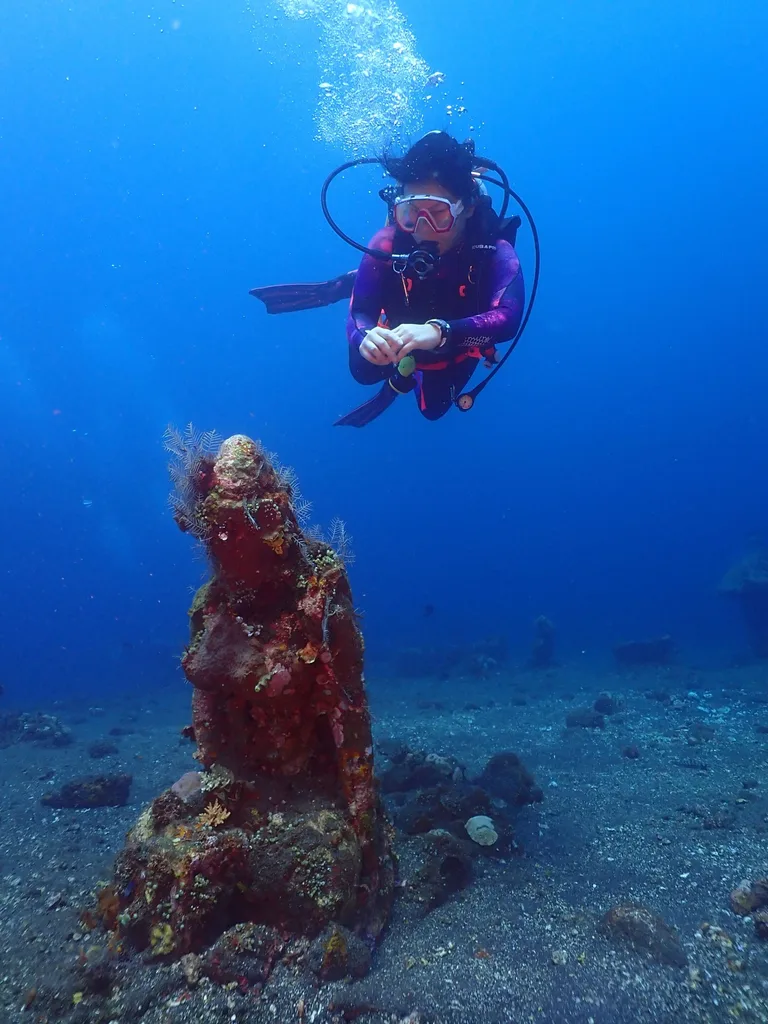
I am a mother of four – two teenagers and two in primary school – they keep me grounded. I love scuba diving and have recently taken up underwater photography. There is something about being beneath the surface, completely unreachable, that allows you to slow down. Returning to the same dive sites each year and watching the coral erosion worsen has made climate change viscerally real in a way no report ever could.
For staying informed, my routine is deliberate: Business radio on the commute in; a tightly curated CEO brief at my desk; podcasts on the way home – Think Fast Talk Smart by Stanford’s Matt Abrahams on leadership, and Storytelling That Sticks by Doug Stevenson on narrative craft. In the evenings, LinkedIn and Xiaohongshu, where practical content on tools like Copilot and Canva often outpaces traditional manuals.
What advice would you give to your younger self starting out in finance?
Five things. Build a strong technical foundation – do not take shortcuts. Invest in your ability to communicate and influence – as you rise, this matters far more than technical skill. Understand the business, not just the numbers – leave your desk, talk to colleagues, understand what your customers actually experience. Step outside your comfort zone. And finally, stay curious. I still come back to Steve Jobs’ 2005 Stanford commencement speech. Stay hungry. Stay foolish. If you ever feel lost in your career, go and watch it.
And finally, what advice would you give to women in finance on how they can chart their own path?
As a mother of four and a Group CFO, my advice is simple: let go of the myth of perfection and step fully into who you are. Don’t let the industry define your pace, your priorities, or your worth. To do so own your definition of success, be comfortable being uncomfortable and most importantly trust yourself.
Find your buoyancy.
Just like in underwater photography, leadership requires balance under pressure. Invest in activities that calm you down and steady you. These moments are not distractions from success – they are what allow you to stay buoyant, resilient, and clear‑headed when it matters most.
Related insights
Corridors in focus: Egypt-Japan
Industrial expansion, supply chain integration and clean energy are transforming economic ties between Egypt and…