‘I wouldn’t bet against the Gulf region ever’
Roberto Hoornweg shares his thoughts on why Dubai and the Gulf remain important centres for finance and investment, despite the conflict with Iran.

This article was originally published in The Banker.
As head of Corporate & Investment Banking at Standard Chartered, Roberto Hoornweg is well placed to understand shifts in cross-border trade and investment flows cross Asia, Africa and the Middle East, and how they are being reshaped by geopolitics and conflict.
Based out of Dubai, which has been in the eye of the storm following the US and Israel’s recent war with Iran, Hoornweg says the conflict has given the UAE a better understanding of the need for greater operational resiliency, which he expects will see it pivot slightly away from a reliance on tourism as an engine of economic growth to focus on investment in infrastructure – oil and gas pipelines, airports and defence.
He points to UAE state-owned energy giant Adnoc’s recent announcement of a large investment programme to build new supply routes for its oil and gas exports following disruptions to the Strait of Hormuz caused by the conflict with Iran.
Despite Gulf financial centres such as Dubai coming under sustained attack from Iranian missiles during the recent conflict, Hoornweg remains bullish about the emirate’s future prospects as a major financial hub in the region. The reason for his confidence: none of the large number of expat employees in the bank’s Dubai office asked to relocate due to the hostilities.
I am convinced [trade] corridors that have certainty of delivery are more important than price. That is a permanent change.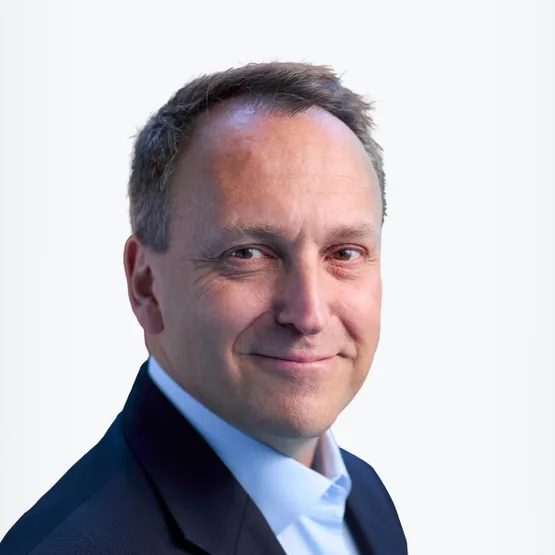 Roberto HoornwebCEO, Corporate & Investment Banking, Standard Chartered
“It’s an interesting signal,” he says, one that contrasts starkly with the bank’s experience during the Covid-19 pandemic, when many expats working for the bank in Hong Kong or Singapore asked to relocate to Europe to be closer to their families.
From a business perspective, he says the UAE is well positioned in terms of its location and timezone. “There’s nothing between Hong Kong, Singapore, and London or Frankfurt.”
Secondly, the UAE also acts as an important “bridge” for financing between the Middle East and African countries. And thirdly, Hoornweg says the amount of capital on the ground in Gulf economies such as the UAE and Saudi is “extraordinary”.
While Gulf financial centres may not rival financial hubs such as New York, London or Tokyo as intermediary markets, Hoornweg says they are arguably among the world’s most important centres for deploying and investing capital.
As the world becomes increasingly fragmented and polarised, he says Saudi Arabia and the UAE have maintained a degree of political independence, enabling them to navigate growing divisions among the US, Russia and China.
But what he is most impressed by, he adds, is the quality of leadership by Gulf governments and their attention to detail when it comes to doing business – executing major investment decisions in the midst of a war.
“They have been extraordinary at both communicating, and defending through this period,” he says, referring to Gulf leaders’ ability to launch major road and transport improvement projects while defending the country against drone and missile strikes from Iran.
“I wouldn’t bet against this region ever,” he says. Given the urgent need for governments in the Gulf to quickly shore up greater operational resiliency, he says deal flow in the region is likely to “accelerate” rather than slow.
In many respects, he says, Standard Chartered is well positioned to benefit from increased infrastructure and construction investment flowing into the region from outside, including China, Korea, and possibly the US and Germany.
“Companies, sovereigns, corporates need to invest, they need to sell, they need to transact across borders – often across new borders – and we [as a bank] have what I consider a competitive barrier to entry advantage: banking licences, regulatory experience and jurisdictional risk appetite in countries that are complex and large, like China and India, and all through south-east Asia, and the Gulf. We bring that financing back to investors in the west.”
New trade corridors
As a result of disruptions to maritime traffic in the Strait of Hormuz, and the enduring threat of US trade tariffs, Hoornweg says Standard Chartered is also seeing the redrawing of major trading routes and supply chains across the regions it operates in as companies look to ensure continuity of supply.
“The problem is not so much the tariff, but the uncertainty of how they keep morphing,” says Hoornweg, adding that it is forcing new trading corridors to emerge.
“We are seeing a pick-up in trade between China and South Asia, India into the Gulf, between Europe and China and Europe and India. The US is trailing off a little bit in favour of these other corridors,” he says.
Hoornweg doesn’t anticipate a return to a world any time soon characterised by low tariffs and an abundance of free trade. “That is why I am convinced [trade] corridors that have certainty of delivery are more important than price. That is a permanent change,” he adds.
In addition to operational resiliency and countries ability to withstand supply shocks, Asian, Middle Eastern and African economies severely impacted by oil supply disruptions caused by the conflict with Iran, are increasingly focused on energy security.
Here too, Hoornweg says Standard Chartered has an advantage compared to its competitors.
While the zeitgeist on climate and clean energy has clearly shifted, he says the lender’s stance on the importance of financing low-carbon alternatives hasn’t changed.
“We’re not doing it because it’s box ticking; it’s actually really good business,” he explains, adding that the current crisis in global energy markets caused by the conflict with Iran has accelerated the importance of financing the low-carbon energy transition.
‘Sticking to its guns’ on climate
But how can the bank have sometimes difficult conversations with clients and governments in the Middle East, Asia and Africa that remain largely fossil fuel dependent?
Hoornweg insists Standard Chartered is “not shy” about telling very valuable clients it can’t help them if a transaction does not fit its values.
However, the conversation has shifted beyond energy, to questions around resilience, particularly regarding data centres.
This trend is being driven by growing energy demand, due to the proliferation of data centres to power artificial intelligence, which presents an interesting business opportunity for banks that can get in “the network and follow clients that go cross-border with financing, cash payments, and risk transformation”, he says.
On the topic of AI itself, Standard Chartered’s chief Bill Winters recently came under fire for describing employees whose jobs were vulnerable to being replaced by AI as “lower-value human capital”. Winters later apologised for his remarks.
Hoornweg believes AI will be a “huge productivity enhancer” helping banks analyse information on clients more quickly so they can have more valuable conversations.
He says the bank is now fulfilling almost half of all job vacancies internally, by better matching employees’ skills with job descriptions using AI.
“It’s a revolution… what AI is doing, but it will have to be regulated with very clear safeguards in finance,” he says, adding that when you have AI and quantum computing coming at the same time, that’s obviously potential for a “step change”.
Related insights
Beyond trade: The renminbi’s next act in ASEAN
Firms are increasingly evaluating the Chinese currency on tangible economics according to Karen Ng, Standard Cha…