How do we make clean cooking an investable opportunity?
Find out how we helped the World Bank unlock affordable capital for clean energy projects in Ghana.

Through an innovative structure that repackaged the underlying risks, Standard Chartered supported the World Bank to issue a USD200 million outcome bond, raising USD30.5 million to finance cleaner cooking devices in Ghana. The emissions saved were quantified to create high-integrity carbon credits that will be purchased to support Switzerland to meet its emissions targets under the Paris Agreement.
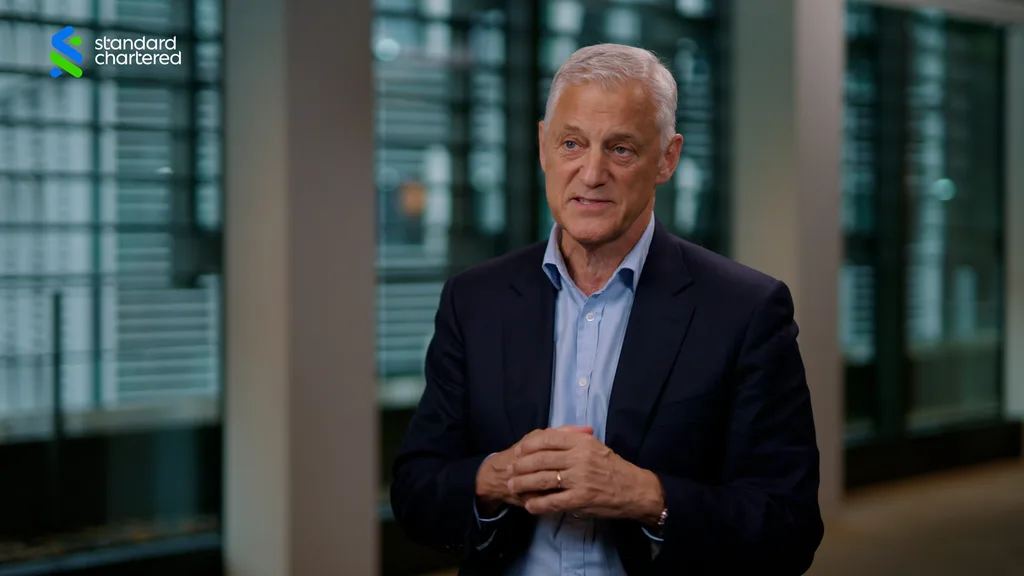
Watch the video to learn more from Jorge Familiar, Vice President and Treasurer, World Bank Group and Bill Winters, Group Chief Executive, Standard Chartered.
The challenge
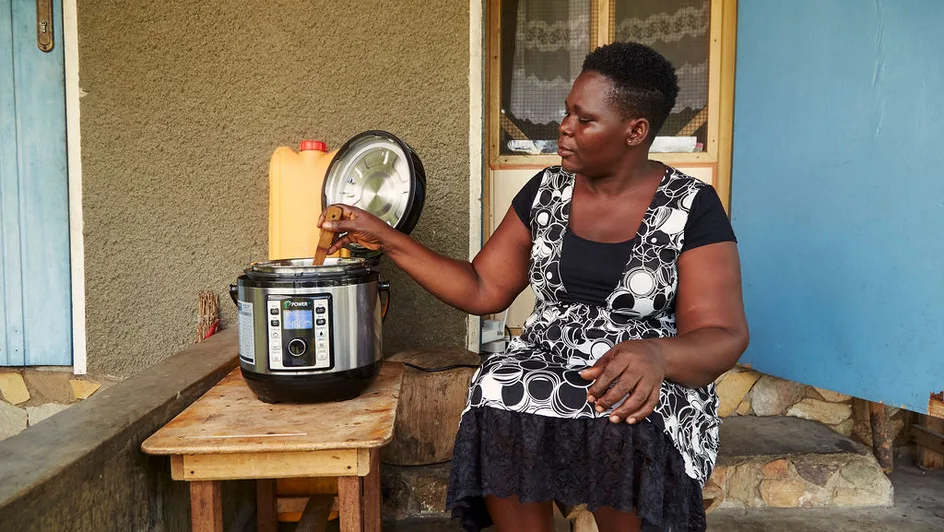
More than two billion people around the world still lack access to clean cooking fuels and technologies – many of them in Sub‑Saharan Africa. This has huge implications for health, with air pollution believed to be the third highest risk factor for mortality and morbidity in the region, as well as for the environment.
The case for deploying clean cooking stoves at scale is clear but traditional financing solutions have often been a challenge given their relatively low financial returns.
An innovative solution
The Clean Cooking Outcome Bond was designed to address this, unlocking affordable capital for high-impact projects at scale. Issued in December 2025, the six-year bond is expected to deliver:
$30.5mn
Low-cost funding for clean cooking solutions
415,000
Cleaner cooking devices deployed in Ghana
1.8mn
Tonnes of CO2 emissions avoided
The deal structure
- A proportion of what would otherwise have been paid to investors in a regular World Bank bond is frontloaded to support the carbon project developer, UpEnergy, to distribute clean cooking systems across Ghana, helping the country to meet specific targets for reducing biomass reliance and lowering emissions from households.
- The resulting emissions reductions are quantified to generate high-integrity carbon credits, which an offtaker, KIiK foundation, has committed to purchase. This allows the upfront financing channelled to UpEnergy to be repaid, with the bond investors earning a coupon linked to the monetisation of ITMOs.
- These carbon credits are referred to as Internationally Transferred Mitigation Outcomes (ITMOs) and are issued to the Klik foundation under Article 6.2 of the Paris agreement. They will be used by the KliK Foundation to fulfil its obligation under the Swiss CO₂ Act, which means it is responsible for implementing Switzerland’s legal mandate to offset carbon emissions from the Swiss fuel industry.
- Switzerland can retire these ITMOs to help meet its emissions targets under the Paris Agreement.
- Through this structure, the various risks of long-term carbon pricing, project performance and credit risk are allocated to parties best placed with requisite risk appetite, overcoming the challenges faced by traditional financing. The principal protected outcome bond structure creates the means for wider institutional participation in similar projects.
A transaction of firsts


Why this matters
Innovative structures like these are complex, requiring strong stakeholder alignment and deep expertise across a range of key financing disciplines. This landmark outcome bond shows what can be achieved when global institutions, commercial banks and expert partners work together, unlocking impact for sustainable development and the energy transition at speed and scale.
Related insights

Solar energy: Sub-Saharan Africa
Expanding solar energy access across Sub-Saharan Africa

Nature debt conversion: The Bahamas
Reducing debt service payments and freeing up capital to support sovereigns’ sustainability goals