


Table of Contents
In a rush? Read this summary:
- Crypto custodians secure the private keys necessary to authorize transactions and manage digital assets on the blockchain.
- Users can choose between self-custody for total control or institutional custody for third-party oversight; both have their own drawbacks and benefits.
- Crypto custody services offer enhanced security, professional management, and peace of mind to users.
With the rapid growth of cryptocurrency adoption, securing cryptocurrencies has become as important as buying and trading them. This has led to the emergence of crypto custody solutions designed to protect digital assets from unauthorized access.
What is crypto custody?
Crypto custody is a type of storage that helps with the security and management of cryptocurrencies such as Bitcoin, Polygon, and Ethereum. Custodians are specialized institutions that safeguard stored assets through cutting-edge security measures. Protecting private keys, which are essential for accessing and managing digital assets, is the primary objective of crypto custody services.
How does crypto custody work?
Crypto custodians safeguard digital assets, such as private keys, that allow users to access their cryptocurrencies. The assets are irretrievable without these keys (it exists as a long string of random digits). The holder of the private keys controls the digital assets. If users lose their private keys, they lose control of their assets as well.
Hot wallet vs. cold wallet
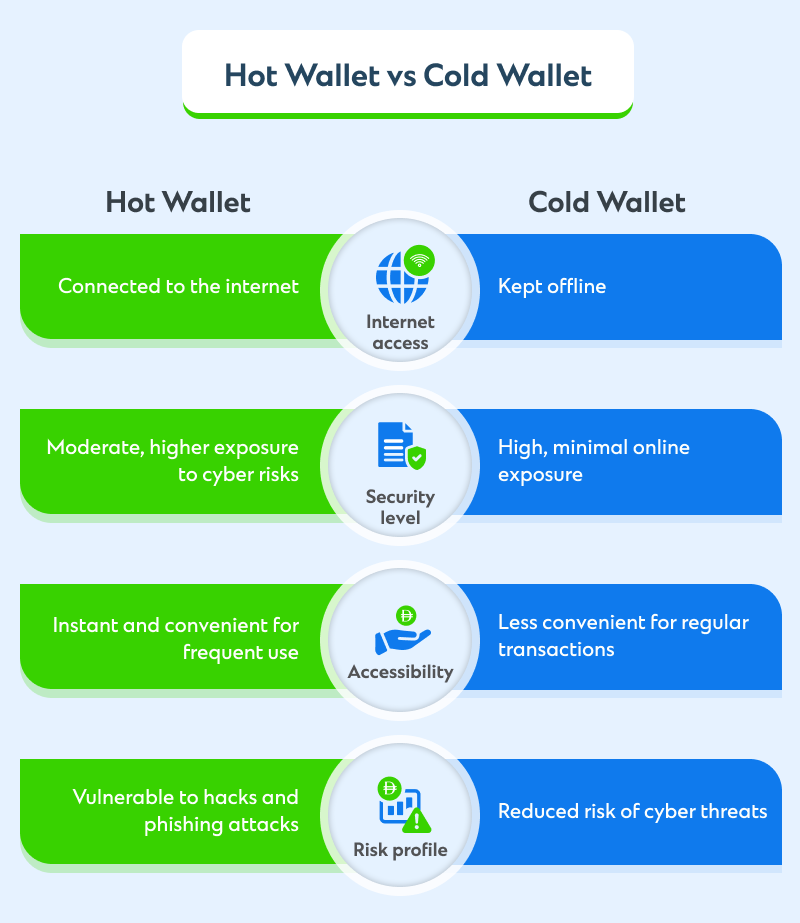
Crypto custody solutions are divided into three parts. The practice of storing keys online is known as hot storage while offline storage is known as cold storage.
While hot storage provides faster access to users, it also comes with greater security risks. Cold storage, on the other hand, is disconnected from the internet and less convenient for people seeking frequent access to the assets. On the other hand, warm wallets offer an additional level of security just like cold wallets while offering the transaction speed of hot wallets.
Types of crypto custody services
There are two primary ways to safeguard private keys through crypto custody services. Each approach offers different levels of security and control based on user needs.
Self-custody
The use of a non-custodial wallet to manage digital assets without third-party assistance. While it requires a basic understanding of security protocols, self-custody is an option for any investor who prefers direct control over their assets. They can control their own private key and assets.
Benefits of self-custody
- Since users are responsible for managing the private key and all assets stored in the wallet, there is no reliance on a third-party agency. As a result, the users will have complete control over the assets.
- The risk of a centralized data breach is lower because sensitive information remains with the user.
- Users with self-custody do not have to wait for the verification process to be approved by the crypto exchange company. The transaction process is autonomous, as users do not require third-party approval for transfers.
Drawbacks of a self-custody wallet
- New users may take some time to adjust to the user interface of the wallet.
- Users are accountable for storing and managing all the assets, private keys, user information, and other sensitive credentials.
Institutional custody
It refers to the delegation of responsibility for private keys to a centralized entity. Users are required to log in to their user account and provide the address input to make any cryptocurrency transaction.
Benefits of institutional custody
- Some institutional platforms offer zero-fee internal transfers, though network fees for on-chain transactions may still apply.
- Users can also invest in exchange-traded funds (ETFs) through this account (applicable for platforms that offers crypto ETFs).
- It also offers a backup facility that helps users with their transaction reports. They may assist with account recovery; however, blockchain transactions remain irreversible.
Drawbacks of institutional custody
- The centralized wallet service provider usually holds authority over the users’ assets. They can freeze the account to stop the user from using the asset as well.
- Along with the private key, all the data is stored in the wallet. Therefore, users should keep in mind that they could lose all their assets in the event of a data breach.
Why choose crypto custody services
- Enhanced security: Users can protect their digital assets from loss, unauthorized access, and theft.
- Professional management: Auditing, asset management, and reporting are done with advanced tools. Therefore, investors can enjoy efficient management experience.
- Compliance: Customers can ensure regulatory requirements are met.
- Private keys security: The risk of self-custody is mitigated as private keys are safeguarded by trusted custodians.
- Peace of mind: Users can ensure that their assets are secure and safeguarded with trusted custodians, allowing them to focus on their investment strategy.
While digital assets continue gaining prominence in the UAE, it’s important to trade crypto through licensed and regulated platforms. To mitigate risks and better protect one’s digital assets, it is important to consider the benefits of securing and professionally managing the digital asset ecosystem through a crypto custody service.
Start exploring cryptocurrencies easily and securely on the Standard Chartered mobile app or reach out to your Relationship Manager to learn how cryptocurrencies can complement your portfolio.