



Table of Contents
In a rush? Read the summary:
- Fixed-income mutual funds primarily invest in debt instruments (like bonds, treasury bills, and corporate debt)
- It provides investors with a consistent income stream (interest payments) while aiming for capital preservation.
- These funds offer lower volatility compared to equity funds and provide portfolio diversification by spreading investments across different debt types.
Fixed income vs mutual funds: While mutual funds can help achieve various financial goals depending on one’s risk tolerance, fixed-income mutual funds primarily invest in debt instruments, such as treasury bills, bonds , and other fixed-income assets, to provide income to investors while preserving investment safety.
How do fixed-income mutual funds work?
A significant portion of a debt mutual fund scheme invests in fixed-income securities, including corporate bonds, Government Securities, debentures, and other money-market instruments. Investors with diverse investment objectives, risk appetites, and financial situations can invest in debt funds that aim to reduce investment risk. While equity funds aim to increase capital through stock investments, fixed-income mutual funds offer returns through interest payments and help investors diversify their portfolios.
Types of fixed-income mutual funds
- Money market funds: These are a type of mutual fund that investors use for relatively low-risk holdings in their portfolio. They typically invest in short-term debt instruments and pay dividends.
- Short- or medium-duration Bond funds: Both short- and medium-duration funds are open-ended funds that invest in debt and money market instruments, with investment portfolio durations of 1 to 3 years and 3 to 4 years, respectively.
- Corporate bonds: These are fixed-income securities that offer a predictable income stream and fixed coupon payments. They invest in corporate debt securities that offer higher yields, but investors should keep in mind that they also carry greater credit risk.
- Sukuk: This fixed-income instrument is compliant with Shariah law and prohibits investing in industries not permitted under Islamic law, such as alcohol, gambling, etc.
Fixed-income mutual fund features
- Consistent income: Investors seeking a dependable source of income can invest in fixed-income mutual funds, which typically pay regular interest from the bonds they hold.
- Lower volatility: Fixed-income mutual funds exhibit lower price volatility and more stable investment returns, thereby decreasing overall portfolio risk.
- Diversification: Fixed-income mutual funds offer diversification by investing in different types of bonds and other debt instruments, which reduces the potential impact of losses from investing in any single security.
- Expert management: Fixed-income mutual funds are managed by skilled fund managers. Investors do not have to spend time managing the funds directly.
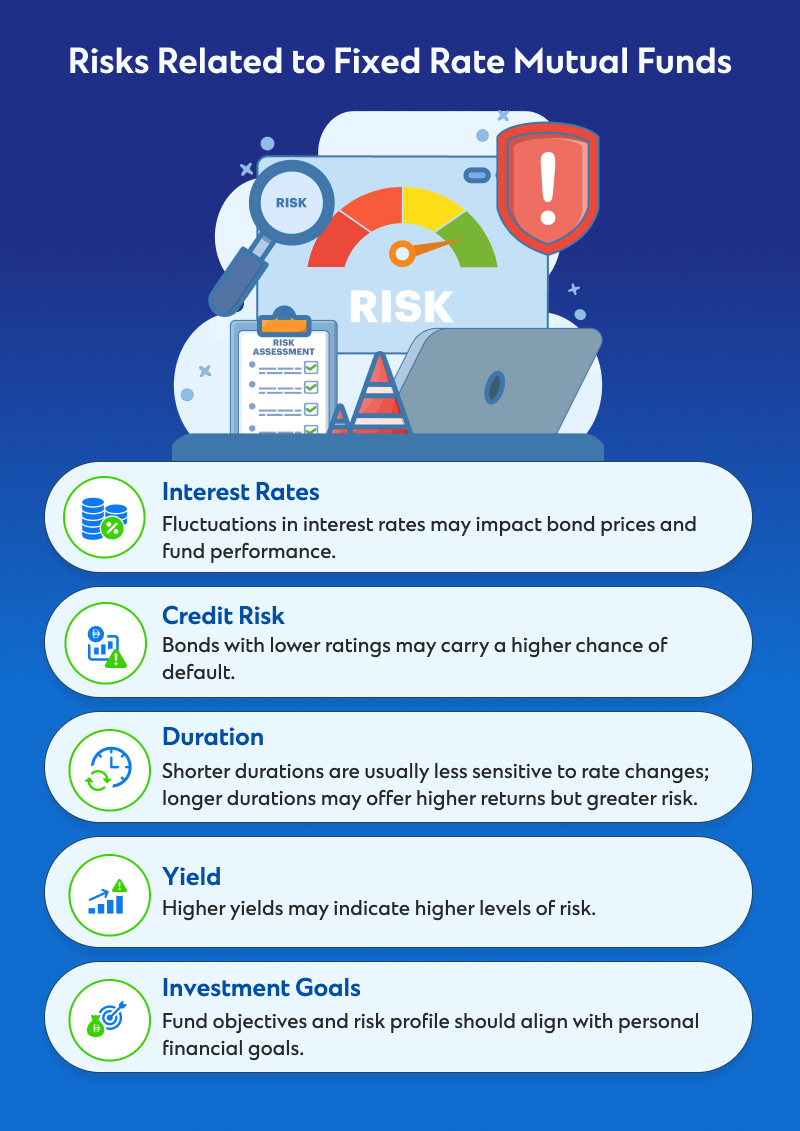
Benefits of investing in fixed-income funds
- Stable returns: Investors seeking consistent returns over time can consider fixed-income mutual funds as a suitable option.
- Lower risk: fixed-income mutual funds, such as corporate bonds and Government bonds, are lower risk than equity funds.
- Flexibility: These investment tools are more flexible than other savings options. Investors with long-term financial goals can invest in a fixed frequency. This creates investment discipline.
- No lock-in period: Debt funds often lack a mandatory lock-in period, allowing investors to withdraw their investments at any time. However, this may be subject to exit loads or other expenses.
Investors seeking income and capital protection may find fixed-income mutual funds a dependable investment avenue. With various fund options available, one can select the one that suits their risk tolerance and investment timeline. But remember, investors should understand the tax implications, risks and advantages before making investment choices.
Speak to Standard Chartered’s relationship manager or contact us to learn more about investing in fixed income mutual funds in the UAE.