Is fiat still the backbone of global finance?
Why modernised fiat remains central in a multi-rail treasury world

The global financial system is undergoing one of its most consequential periods of change. Blockchain-based settlement models, tokenisation and digital assets are reshaping expectations around speed, automation, and transparency. For corporate treasurers, this raises a fundamental question: is fiat still the backbone of global finance?
The answer is yes, but not because the system has stood still. Fiat rails have undergone significant, and often invisible, modernisation over the past decade. What many still perceive as “traditional” infrastructure has evolved into a faster, more data-rich and more connected ecosystem. In many cases, outcomes treasurers associate with newer digital money rails – improved visibility, automation, and predictability – are already being delivered through enhanced fiat infrastructure.
At the same time, new digital money settlement models that introduce additional capabilities, particularly around programmability and synchronisation, are emerging. The result is not a choice between old and new, but a treasury environment that increasingly operates across multiple rails and platforms. This article explores how fiat has evolved, why it remains strategically central, how blockchain-based rails fit alongside it, and why orchestration across both is becoming a defining capability for modern treasury.
The modernisation of fiat
Treasury operations today look vastly different from those of a decade ago. Liquidity visibility is sharper, settlement is faster, data is richer, and automation is more achievable. These improvements reflect sustained investment in modernising fiat rails across standards, connectivity, and operating models.
A cornerstone of this evolution has been the adoption of ISO 20022, enabling richer, structured payment data. For treasurers, this supports cleaner reconciliation, improved compliance screening and fewer manual exceptions, while also enabling more reliable reporting across Enterprise Resource Planning (ERP) and treasury management system (TMS) environments.
The expansion of real-time payment systems has further transformed liquidity management. With instant clearing now available in more than 70 markets, treasurers can manage cash positions with greater precision and confidence. As interoperability between domestic instant-payment schemes improves, these benefits are increasingly extending across borders.
Application Programming Interface (API) connectivity has also played a critical role. APIs allow treasury systems to interact with banks in near real-time – retrieving balances, initiating payments, tracking status and accessing FX rates directly from core systems. This shifts treasury away from batch-based processing toward a more continuous, responsive operating model.
Security and authentication frameworks have evolved in parallel, strengthening fraud prevention while maintaining efficient approval workflows. Together, these changes mean fiat rails today are modern, integrated and increasingly intelligent.
For treasurers, the practical benefits are clear:
- Faster, more predictable settlement and liquidity visibility
- Improved reconciliation, control, and governance
- Lower operational effort and cost
What many still see as traditional infrastructure is, in reality, one of the most modernised systems in global finance.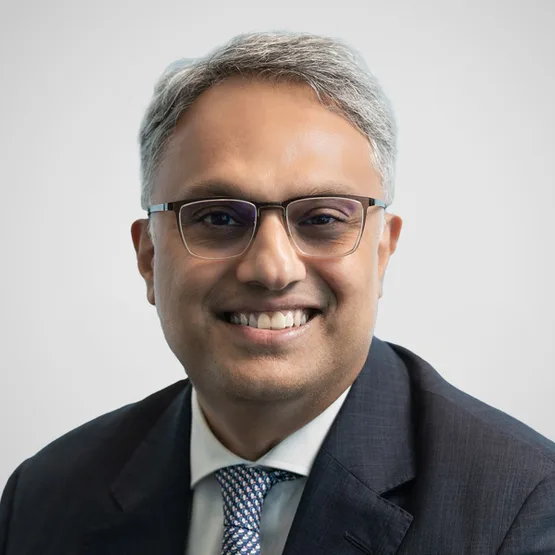 Mahesh KiniGlobal Head of Cash Management, Standard Chartered
The emergence of blockchain-based settlement rails
Alongside the modernisation of fiat infrastructure, blockchain-based settlement rails are increasingly entering the treasury conversation. These rails introduce capabilities that differ from traditional payment systems, particularly around programmability and synchronisation, and real-time, 24×7 settlement.
Programmable settlement allows payments to execute automatically when predefined conditions are met, while synchronised ledgers enable multiple parties to operate from a shared transaction state. For certain use cases, such as complex supply chains, multi-party trade flows or cross-border fund transfers, these features can reduce friction and improve efficiency. Our strategic investments in blockchain-based settlement rails, such as Partior and tokenised deposits, underscore the transformative potential of these applications across institutions and corporates.
However, adoption is shaped by more than technology alone. Corporate treasury operates within economic and institutional frameworks that define how value is measured, regulated, and financed. Balance sheets, liquidity pools, funding strategies and risk management remain overwhelmingly fiat-based, as do accounting standards, tax regimes and legal definitions of settlement finality. Global liquidity, deep and continuously available, is also concentrated in fiat systems.
These structural realities mean blockchain-based settlement is not emerging as a wholesale replacement for fiat rails, but as a complementary capability applied selectively where its characteristics add value, while fiat continues to anchor liquidity management and regulatory compliance. The emerging model is one of parallel settlement rails, used together within the same treasury environment.
As treasurers begin to operate across these parallel settlement rails, attention is increasingly shifting from the rails themselves to how execution, control and visibility are delivered consistently across both.
Blockchain-based settlement is opening possibilities and extending what treasury can do alongside fiat.Mahesh KiniGlobal Head of Cash Management, Standard Chartered
Orchestration: Platforms, execution and control
As treasurers operate across modernised fiat and emerging digital money rails, the challenge is no longer which to use, but how multiple platforms and rails are coordinated and governed in practice. Orchestration has therefore become central to modern treasury operations.
In practice, treasurers typically access orchestration through two complementary paths. Some may prefer using a digital banking ecosystem to initiate, approve and monitor activity across accounts and markets. Others adopt an embedded model, integrating orchestration capabilities within their own ERP or TMS while using banks as execution partners. In both cases, the requirement is consistent: real-time visibility and control across payment and liquidity flows.
Standard Chartered’s Straight2Bank reflects this reality by providing a single, cohesive ecosystem spanning online web portal, mobile application, host-to-host connectivity, and APIs. This allows treasurers to interact with modernised fiat infrastructure – such as instant payments, cross-border clearing systems and liquidity management tools – through the channels that best fit their operating model, while maintaining consistent governance, security, and reporting standards.
Treasurers can securely access, govern and monitor both traditional and blockchain-based settlement models across web, mobile, host-to-host and API channels. By abstracting the underlying complexity and embedding consistent controls, Straight2Bank enables the safe and incremental adoption of new settlement rails, reinforcing instead of diminishing fiat’s role as the backbone of a multi-rail global treasury environment.
At the execution layer, modern processing platforms like SCPay underpins orchestration across both fiat rails and regulated blockchain settlement rails. SCPay is our cloud-native, API-enabled payments capability that supports cross-border execution across modernised fiat infrastructures and newer blockchain-based settlement models. The platform is involved in multi-central-bank initiatives such as mBridge, which explores the use of CBDCs to enable atomic, near real-time cross-border settlement within a regulated framework.
Crucially, SCPay is channel-agnostic. Its execution capabilities can be accessed through Straight2Bank or consumed directly via APIs, embedding multi-rail payment and settlement execution – and associated FX workflows – within their own ERP or TMS environments. While host-to-host connectivity remains common today, API-based connectivity is increasingly becoming the strategic path forward as treasury models expand to incorporate multiple rails and require greater real-time interaction.
Treasury will not choose a rail. It will orchestrate across all of them: One treasury, multiple rails, fully orchestrated for value.
One Treasury. Multiple rails. Fully orchestrated for maximum value.Mahesh KiniGlobal Head of Cash Management, Standard Chartered
The future of fiat: Faster, smarter and more connected
Looking ahead, the evolution of fiat infrastructure is set to continue, not as a defensive response to digital innovation, but as an active effort towards modernisation. Over the next few years, treasurers can expect further progress across speed, connectivity, intelligence, and integration.
Greater interoperability between instant payment systems will improve settlement speed and liquidity precision, while ongoing enhancements in real-time cross-border clearing will increase transparency and predictability for international flows. Fiat itself is also evolving in form, with tokenised fiat and deposit-based models emerging as ways to combine regulatory certainty with the benefits of blockchain technology.
Beyond settlement, AI-driven reconciliation, anomaly detection and fraud prevention are becoming integral to modern fiat-based treasury operations, helping treasurers manage scale, complexity, and risk more effectively. At the same time, continued digitalisation of trade, supply chain and documentation flows is tightening the link between commercial and financial events. In today’s operating environment, this integration is still anchored primarily in fiat-based systems, even as new blockchain-based settlement rails begin to assume a growing role in specific use cases.
Together, these developments reinforce a critical point: fiat is not static. It is continuing to modernise and integrate, providing a resilient foundation that can operate alongside emerging digital money rails.
Conclusion: A hybrid future for modern treasury
Treasury teams are entering an era in which they will operate across multiple rails – modernised fiat systems for most flows, and blockchain-based digital money settlement models where programmability or synchronisation deliver additional value.
Fiat will remain dominant due to its liquidity depth, regulatory clarity, and central role in corporate finance. Blockchain-based digital money rails will complement this foundation, not replace it. The future of treasury is therefore unmistakably hybrid, with different rails applied where they create the most value.
The differentiator will be how effectively banks and treasurers orchestrate across them.
Fiat remains the backbone of global finance. For treasury, the blueprint for tomorrow is hybrid, and orchestration across rails will be the real differentiator.Mahesh KiniGlobal Head of Cash Management, Standard Chartered
Related insights
Rethinking controls for institutional stablecoin adoption
Standard Chartered's Minli Ng on building stablecoin controls around use cases, risk context and governance.