CORSIA compliance: a strategic window for airlines
CORSIA has moved from future obligation to current cost. Easing supply constraints may offer airlines a window to secure credits at favourable prices.

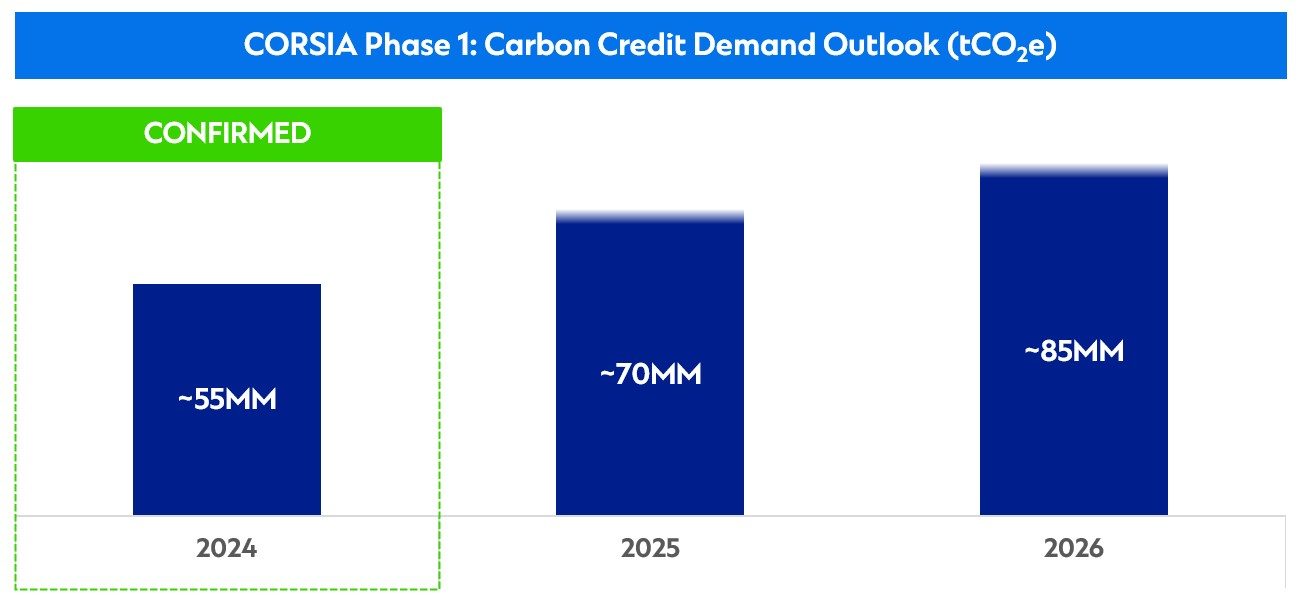
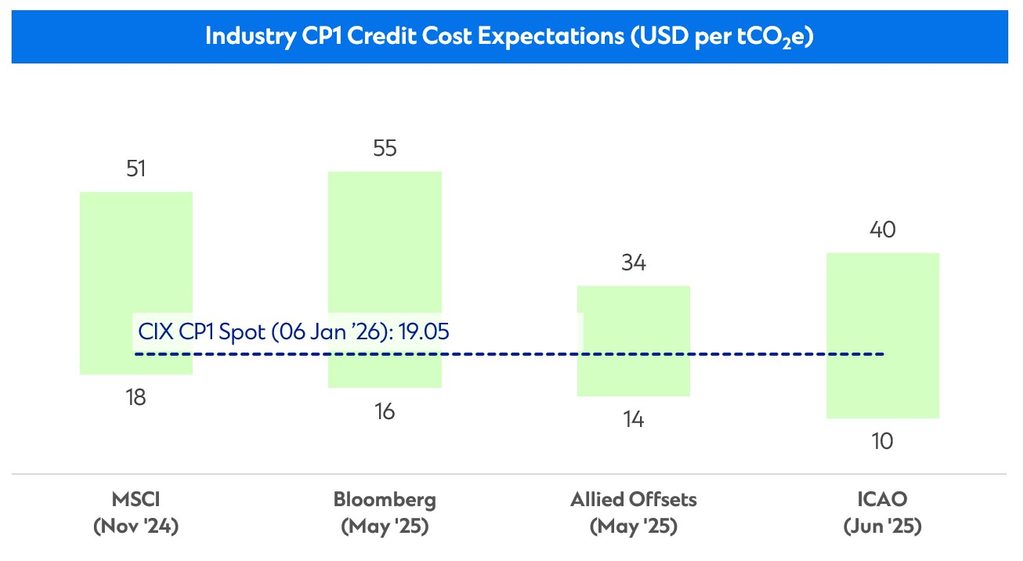
The Carbon Offsetting and Reduction Scheme for International Aviation (CORSIA) has shifted from a future planning item to a real financial liability for airlines worldwide. Following the release of ICAO’s 2024 Sector Growth Factor, CORSIA obligations have now crystallised into tangible costs: airlines have already accrued an estimated USD2.5 billion of carbon credit retirement liabilities for 2024–2025, which could increase to USD4 billion by the end of 2026, at the current spot rate.
With CORSIA-eligible demand for Phase 1 forecast at 200–215 million tons, the compliance landscape is entering a new phase – one that demands early planning, disciplined procurement, effective risk management, and strategic market engagement.
A changing market: early barriers are beginning to ease
To date, airlines have been restricted in their abilities to manage their CORSIA liabilities due to:
- Constrained supply of CORSIA-eligible carbon credits, and
- A high degree of uncertainty in how CORSIA implementation will vary across jurisdictions.
Today, however, we see signs that these barriers are beginning to dissipate.
Growing supply of eligible credits
Since early Q4 2025, a rising number of carbon projects have successfully met CORSIA eligibility requirements. In particular, a significant portion of new supply is coming from African markets, where we have a long-standing footprint, extensive supplier relationships and deep market expertise.
This growing pipeline is beginning to loosen the supply constraints that characterised earlier stages of CORSIA implementation.
But regulatory clarity still lags
Two significant uncertainties persist:
- EU implementation guidance for CORSIA compliance has yet to be finalised.
- The US administration has not confirmed its compliance enforcement mechanisms, fueling speculation of a possible withdrawal from CORSIA. This is despite US airlines preferring to face CORSIA exposure than the EU ETS were the EU to decide that CORSIA lacks effectiveness.
This creates a temporary disconnect between supply availability and buyers’ ability to act – particularly for Western airlines.
H1 2026: a potential opportunity window
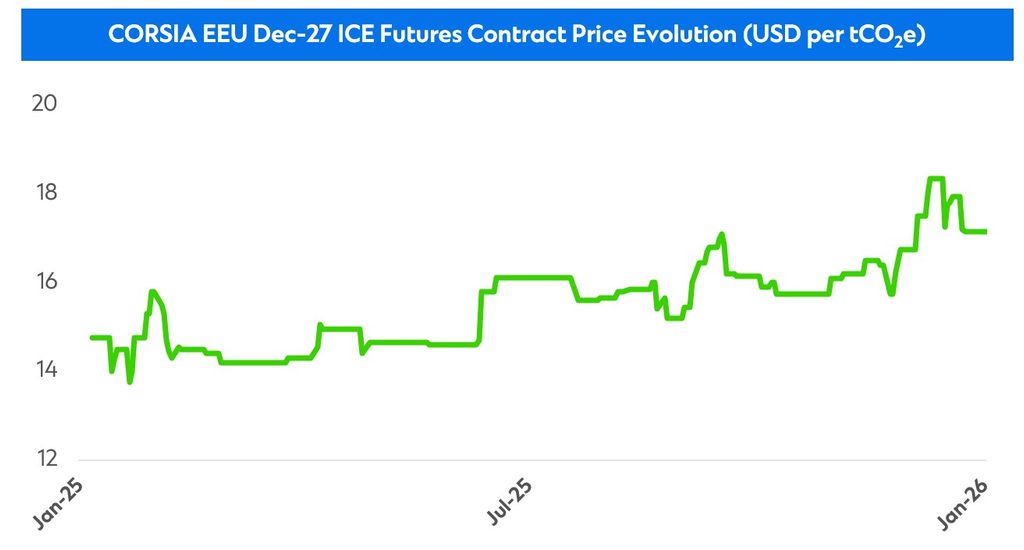
Given the shift in supply dynamics and the uneven pace of regulatory clarity, H1 2026 may offer a unique opportunity for airlines committed to CORSIA compliance to procure eligible carbon credits at favourable prices. Working with a trusted counterparty to who can help to reduce credit quality and supplier risks will be key.
As more eligible carbon credits enter the market, prices may remain favourable while many Western carriers stay on the sidelines due to policy uncertainty. This imbalance could benefit proactive airlines who move early. Being able to fix costs now will help manage growing retirement liabilities.
In short, early movers may be able to access cost-efficient supply before demand accelerates as guidance from the EU and US becomes clearer.
How Standard Chartered supports airlines on CORSIA strategy
As airlines consider their options for managing their CORSIA exposure, Standard Chartered provides end-to-end support in developing and executing a cost-efficient compliance strategy
Our capabilities include:
- Capital structure advisory on CORSIA cost management, procurement pathways, as well as analytics and insights to support price discovery, budget planning, and long-term sustainability alignment.
- Access to spot, forward, and structured market solutions allowing management of both carbon credit quality and price risks.
- Project-linked carbon credit origination – with strong access in emerging markets such as Africa.
With our global presence and deep expertise across carbon markets, we help airlines navigate evolving regulations, diversify supply sources, and manage compliance costs efficiently.
Speak to us
To explore how we can support you, please contact your FM Salesperson or Relationship Manager, or leave your email address below for us to get back to you.
"*" indicates required fields
Explore more insights
The strategic impact of tariffs on the US renewables value c…
Explore how US tariffs and policy uncertainty are impacting the renewables value chain.