Orchestration takes centre stage: Six forces shaping Treasury in 2026
Explore the six forces shaping transaction banking’s transition from digital adoption to digital orchestration.

In this article
- 1: Real-time comes of age as the operating system for treasury
- 2: Liquidity becomes programmable across a multi-rail and multi-asset ecosystem
- 3: Artificial intelligence (AI) establishes itself as a continuous embedded intelligence layer
- 4: Tokenisation enters its commercial proving ground for mobility and settlement
- 5: Structured payment data moves from compliance to corporate value
- 6: Resilience becomes a strategic competitive benchmark
Transaction banking has seen steady technological modernisation over the past several years. Organisations have digitised manual workflows, expanded real-time payment capabilities, adopted APIs, explored tokenisation, and begun integrating artificial intelligence. Each advancement has delivered meaningful benefit, but often within discrete functions and product lines rather than transforming the end-to-end operating environment.
In 2026, we believe the story meaningfully shifts.
Rather than developing capabilities in isolation, the industry begins orchestrating them. Treasury, liquidity, payments, trade and supply chain finance increasingly operate through connected workflows. Data moves more fluidly, decision-making becomes immediate, and operational performance becomes more predictable.
This shift benefits treasury teams, supply chain leaders, procurement specialists, traders and financial institutions alike. As always, progress will vary across markets depending on regulation, interoperability and available talent, but the direction is unmistakable. Transaction banking is moving from digital adoption to digital orchestration, where integration and intelligence define competitiveness and heighten resilience.
Below are the six forces shaping this transition.
01
Real-time comes of age as the operating system for treasury
Real-time capabilities accelerated rapidly between 2020 and 2025, but adoption was uneven. Many organisations still rely on batch-based reconciliation, forecasting and reporting, with settlement visibility often lagging operational activity.
In 2026, real-time shifts from a feature to the rhythm of treasury operations. Processes increasingly assume continuous data availability. Forecasting refreshes intraday, while supply chains rely on instant visibility to coordinate production, delivery and settlement. Banks refine exception handling and risk processes to operate at real-time speed.
The shift will not unfold uniformly across markets, but the mindset change is clear. Real-time is becoming the baseline assumption, not an optional enhancement.
Real-time capability is no longer an add-on. It is fast becoming the operating rhythm that gives treasury teams the visibility and confidence to anticipate and act with greater precision. Mark TroutmanGlobal Head, Corporate Sales, Transaction Banking
02
Liquidity becomes programmable across a multi-rail and multi-asset ecosystem
Historically, liquidity sat in current accounts and moved through sweeps and pooling structures. Between 2021 and 2025, virtual accounts, real-time schemes, digital wallets, tokenised deposits and embedded payment rails broadened the liquidity toolkit but largely developed in parallel.
In 2026, these sources begin functioning as one ecosystem.
Liquidity does not converge into one instrument or rail. Instead, it is managed across multiple instruments and rails, each with distinct characteristics in terms of cost, speed, finality, and control, but increasingly governed through shared visibility, rules and orchestration. Liquidity management remains rule-based, but the rules themselves evolve. Rather than operating within fixed account structures, they adapt to settlement context and transaction requirements across rails.
Unified, real-time visibility remains important, but intelligent routing becomes more common. Treasury systems increasingly determine not just when to move liquidity, but how and where to deploy it, selecting the most appropriate rail or instrument for each use case.
This shift is central to modernising treasury and unlocking working-capital efficiency, enabling organisations to redeploy liquidity with more precision and predictability.
Liquidity has evolved from sitting idle in accounts to flowing across networks and multiple rails. Organisations that can bring these sources together into a single view will make faster decisions and create new capacity for growth. Ankur KanwarHead, Transaction Banking, Singapore and ASEAN
03
AI establishes itself as a continuous embedded intelligence layer
AI pilots expanded across transaction banking between 2023 and 2025, supporting anomaly detection, document verification, and basic forecasting. Yet most deployments remained narrow and isolated.
In 2026, AI moves beyond isolated deployment and is embedded directly into day-to-day treasury and transaction banking workflows.
Banks use AI to repair payments before they fail, prioritise investigations with higher accuracy, reduce false positives in screening and anticipate intraday funding requirements. Treasury teams rely on predictive analytics that distil vast data sets into actionable insights. Supply chain platforms use AI-driven signals to detect counterparty risk earlier and support dynamic working-capital decisions.
Governance and model-risk oversight become more prominent as adoption scales, but the intent is clear. AI augments human decision-making rather than replaces it, strengthening operational clarity, resilience and speed.
AI is changing how decisions are surfaced and acted on across treasury and transaction banking. It removes noise, strengthens controls and helps make clearer, faster decisions in real time. Sunday DomingoGlobal Head, Digital Channel Solutions
04
Tokenisation enters its commercial proving ground for mobility and settlement
Tokenisation has been an industry focus since the start of the decade, with growing interest in tokenised deposits, tokenised money-market funds and digitised trade documents. By 2025, several pilots reached maturity, but most remained confined to a controlled testing environment.
In 2026, tokenisation begins to see targeted, real-world adoption in areas where it solves clear frictions.
Tokenised deposits support instant settlement in institutional ecosystems and help redesign internal liquidity processes. Tokenised money-market funds improve collateral mobility, reducing delays that constrain traditional fund transfers. Digital guarantees and tokenised bills of lading streamline trade flows, while programmable payments start to link funding and settlement directly to operational events across value chains.
Stablecoins gain parallel momentum where corporates need portability and predictable settlement across open networks. Their adoption does not replace the role of tokenised deposits. Instead, each instrument serves a distinct purpose, with stablecoins enabling movement across public infrastructure, while tokenised deposits provide regulated, bank-issued value.
Together, these developments move tokenisation from theoretical promise to practical utility.
Tokenised deposits and stablecoins each solve the 24/7 demand in the financial ecosystem, and together they will allow value to move with the speed and programmability clients are increasingly demanding. Mahesh KiniGlobal Head, Cash Management
05
Structured payment data moves from compliance to corporate value
For much of the past decade, structured payment data was largely a bank-side exercise. ISO 20022 migration focused on infrastructure readiness, regulatory timelines and operational stability, with limited immediate impact on how corporates managed cash.
As we move into 2026, that begins to change. Structured data starts delivering tangible value for corporates willing to adapt their processes and systems to use it.
Richer payment information improves reconciliation, forecasting and automation, strengthens interoperability and supports emerging settlement pathways, including tokenised settlement in select corridors. Structured data under ISO 20022 also enables digital-identity frameworks to reduce compliance friction, while real-time interlinkages increase predictability for cross-border flows.
The cumulative effect is more insight, less trapped cash and greater confidence in liquidity planning.
With banks now through the heavy lift of ISO 20022 migration, corporates can start unlocking the real value of structured data, from cleaner payment flows to more accurate forecasting. Dhiraj BajajGlobal Head, Sales for Financial Institutions
06
Resilience becomes a strategic competitive benchmark
Between 2020 and 2025, resilience rose sharply in importance as organisations navigated successive shocks across health crises, geopolitics, trade disruption, inflation and supply chain volatility. In many instances, resilience was addressed primarily through contingency planning and compliance-driven controls, rather than being embedded into operating models.
What changes over 2026 is how resilience is evaluated and operationalised.
As treasury and payment processes increasingly operate in real time and across multiple rails, the cost of outages or control failures rises sharply. Treasury, procurement, technology and operations teams increasingly evaluate partners on API performance, cyber strength, fraud prevention and continuity readiness. Reliability becomes part of the value proposition rather than a background expectation.
Resilience is also being designed deeper into corporate value chains. Supply-chain finance programmes evolve from working capital tools into stabilising mechanisms. Multi-tier supply chain finance programmes expand over 2026, extending liquidity to second and third-tier suppliers, reducing fragility in the most vulnerable parts of the value chain.
Across both dimensions, resilience becomes a defining factor in partner selection.
In a highly interconnected world shaped by real-time data, AI and tokenised value, resilience is strategy. Clients look for partners whose platforms and processes can withstand disruption by design.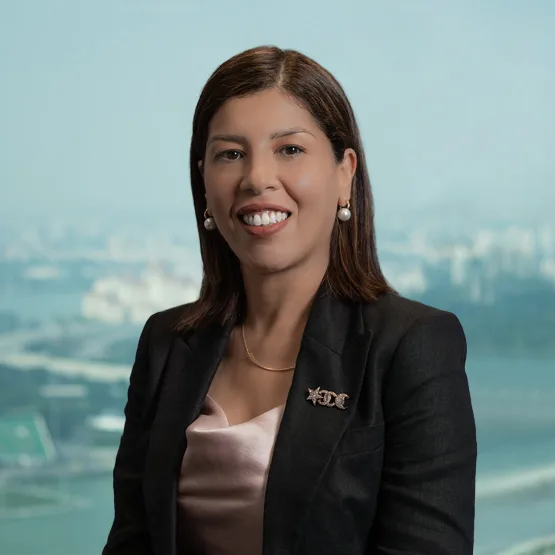 Sofia HammouchaGlobal Head, Trade and Working Capital
Orchestration takes centre stage as the operating model for 2026
For much of the past decade, progress in transaction banking came from adding new tools, rails or channels. Those advances were necessary, and they delivered real gains, but on their own they are now delivering diminishing returns.
What changes over 2026 is not the pace of innovation, but the expectation of connection.
Real-time infrastructure comes of age. Liquidity is increasingly managed across multiple rails and instruments. AI is embedded into day-to-day decision-making. Tokenisation enters a true test of commercial relevance. Structured payment data begins delivering tangible value for corporates. Resilience becomes a core design principle rather than a contingency plan.
Individually, each development matters. Collectively, they signal a deeper shift. Competitive advantage no longer lies in owning more capabilities, it rests in joining them coherently, so data, liquidity and risk move together rather than in isolation.
While 2026 is not the year everything becomes fully orchestrated, it is the year orchestration becomes essential. Treasury and supply chain leaders will increasingly favour partners that can help them run more connected, intelligent and resilient operating models, not just deliver individual products. Partners that act early will widen the performance gap, while those that delay will find their legacy operating models increasingly difficult to sustain.
Success in the new landscape requires partners that understand orchestration at both the architectural and operational levels. The companies that can connect these capabilities at scale will advance further and faster while reshaping how they run their businesses. Michael SpiegelGlobal Head, Transaction Banking
Latest insights
From wallet visibility to verifiable trust
How can financial institutions scale digital assets with confidence? Trust, identity and governance hold the key…