This is to inform that by clicking on the hyperlink, you will be
leaving
sc.com/sg
and entering a website operated by other parties.
Such links are only provided on our website for the convenience of
the Client and Standard Chartered Bank does not control or endorse
such websites, and is not responsible for their contents.
The use of such website is also subject to the terms of use and
other terms and guidelines, if any, contained within each such
website. In the event that any of the terms contained herein
conflict with the terms of use or other terms and guidelines
contained within any such website, then the terms of use and other
terms and guidelines for such website shall prevail.
In the 1998 blockbuster sci-fi movie Armageddon, Bruce Willis and his crew raced to save Earth from an incoming asteroid. In one scene, a Russian cosmonaut trying to fix a failing space shuttle exclaimed, “Components, American components, Russian components, all made in Taiwan!” He then proceeded to whack the equipment with a spanner, which fixed it (of course).
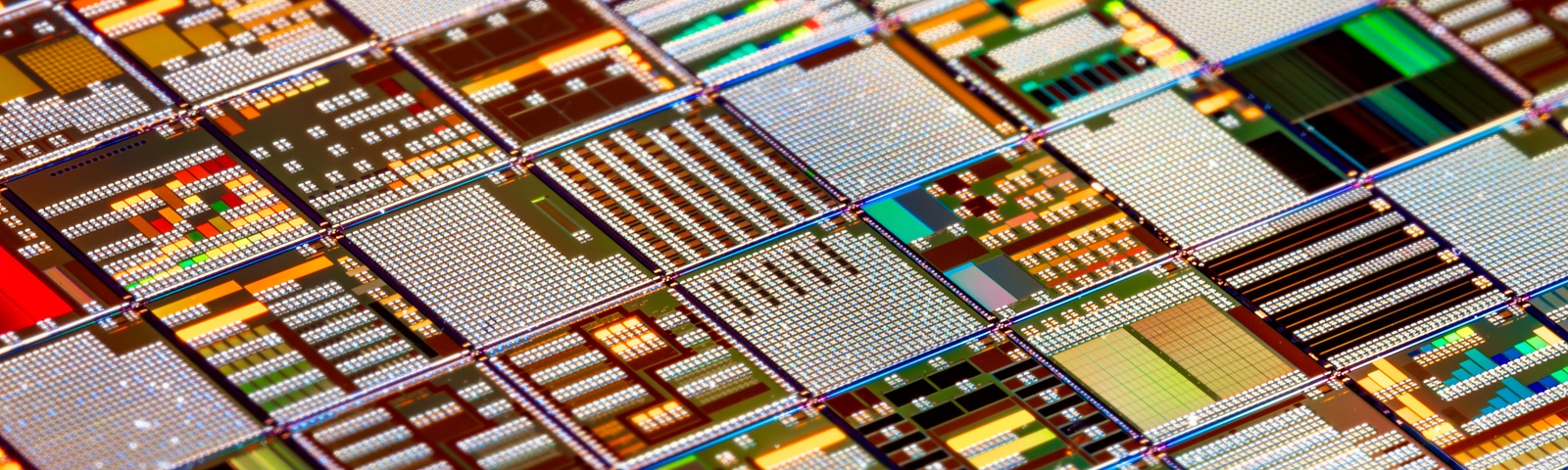
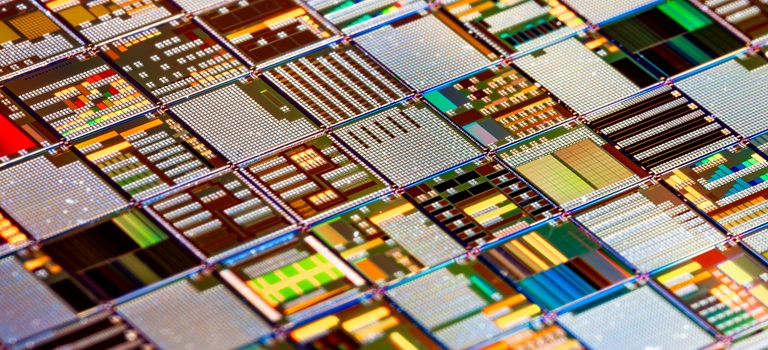
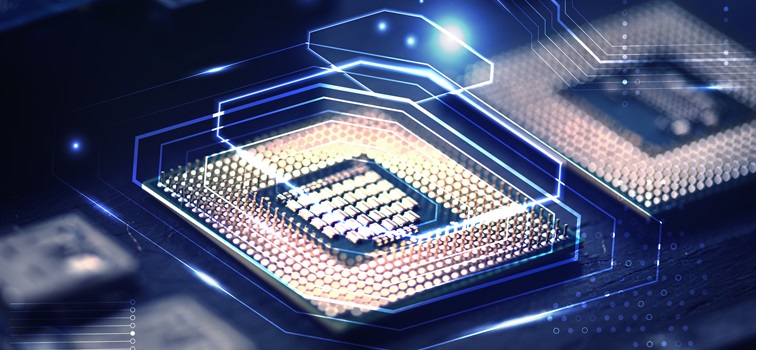
While Taiwan may not be top-of-mind when one thinks of space components today, it is certainly top-of-mind in the semiconductor industry. Taiwan produces over 90% of the world’s most advanced semiconductor chips, specifically those measuring 7 nanometres and smaller. We recently initiated an Opportunistic trade idea in Taiwan equities to capture attractive exposure in the semiconductor industry. To understand why Taiwan holds such a structural advantage today, it helps to examine how its dominant position was built.
Engineering an edge
The ‘Taiwan Miracle’ from the 1960s to the 1970s transformed Taiwan from an agrarian economy into an industrialised one. The development of the textiles, electronics and manufacturing industries fuelled the rise of its middle class. However, the true turning point came in the 1980s, when strategic research and development (R&D) planted the seeds of a technological revolution.
Leveraging its industrial capabilities, Taiwan pioneered the pure-play ‘foundry’ model, exclusively manufacturing chips designed by other companies. This unlocked a new wave of fabless chip designers – semiconductor companies that research, design and market semiconductor chips but outsource the physical manufacturing to third-party foundries, such as those in Taiwan.
The surge in fabless chip designers created a powerful flywheel effect. As Taiwanese foundries gained more customers and produced greater volumes, they achieved the economies of scale necessary to deliver better yields and lower costs. This, in turn, attracted more customers. Meanwhile, relentless R&D and capital investment continued to support the foundries.
Sustaining the edge
Building on this momentum, an irreplaceable ecosystem developed around the Hsinchu Science Park in northwestern Taiwan to support chip manufacturers. Today, this semiconductor ecosystem comprises suppliers, servicing personnel, assembly and testing companies, spare part providers and a concentrated talent pool.
These deeply integrated supply networks ensure that Taiwanese foundries’ relationships with key customers create bilateral dependencies that are difficult to unwind. The fabless chip designers and smartphone makers that have been partnering with the foundries of Taiwan for years would face prohibitively high switching costs if they look elsewhere, cementing Taiwan’s dominant position in the global market.
Future growth and opportunities
Looking ahead, Taiwan’s formidable semiconductor footprint is uniquely positioned to benefit from the global buildout of artificial intelligence (AI). As corporates and governments continue to adopt AI tools, we expect AI capital expenditure (capex) to continue to rise. We expect 32% average annual growth in AI capex from 2025 to 2030, which would benefit the semiconductor industry, particularly the advanced chipmakers.
The Taiwan equity market is dominated by the technology sector, which represents about 88% of the benchmark market index, and most of this is the semiconductor industry. The Taiwan equity market has indeed performed well in the last few years. More recently, it has corrected slightly from its peak as global equity markets digest new equity supply and concerns around potential overinvestment in AI. However, we expect the upcoming Q2 earnings season to validate a sustained growth story. Gradual progress in the reopening of the Strait of Hormuz would also benefit Taiwan, as it is an energy importer.
The broad Taiwan equity index is expected to deliver earnings growth of 51% and 28% in 2026 and 2027, respectively, according to Bloomberg consensus. Looking at its valuation, the 12-month forward price-to-earnings ratio of 21x sits at the upper end of its historical range, but is, in our view, justified by the strong growth expectations.
An AI bubble?
The elevated valuation of the Taiwan equity index inevitably raises the question of whether tech markets are overheating. Our Global Chief Investment Office’s AI Bubble Meter has recently been upgraded from a ‘Good’ to ‘Better’ risk-reward profile, driven by strong supply chain channel checks and renewed confidence in Big Tech’s AI investment ambitions amid improving signs of AI monetisation.
As such, we do not see an AI bubble currently. On the contrary, we would want to gain exposure to AI investments, and the Taiwan equity market presents an attractive opportunity at the moment.
There are risks, of course, including potential manufacturing hiccups that could pressure profitability, particularly in the development of advanced chips. Any economic slowdown that leads to a sharp slowdown in AI capex could also dim near-term growth prospects for semiconductors. The complex supply chain in semiconductor manufacturing also faces risk of disruption from geopolitical or trade tensions. However, these ever-present risks do not diminish the fact that Taiwan’s semiconductor moat is difficult to replicate and is nearly indispensable to the global AI story. For investors seeking to capitalise on the global AI and tech opportunity, Taiwan remains a compelling market.
Your feedback is valuable to us. Did you find this article helpful?
Disclaimer
This article is for general information only and it does not constitute an offer, recommendation or solicitation of an offer to enter into any transaction or adopt any hedging, trading or investment strategy, in relation to any securities or other financial instruments. This article has not been prepared for any particular person or class of persons and does not constitute and should not be construed as investment advice or an investment recommendation. It has been prepared without regard to the specific investment objectives, financial situation or particular needs of any person or class of persons. You should seek advice from a licensed or an exempt financial adviser on the suitability of a product for you, taking into account these factors before making a commitment to purchase any product or invest in an investment. In the event that you choose not to seek advice from a licensed or an exempt financial adviser, you should carefully consider whether the product or service described herein is suitable for you.
You are fully responsible for your investment decision, including whether the investment is suitable for you. The products/services involved are not principal-protected and you may lose all or part of your original investment amount.
Standard Chartered Bank (Singapore) Limited will not accept any responsibility or liability of any kind, with respect to the accuracy or completeness of information in this article.
Deposit Insurance Scheme
Singapore dollar deposits of non-bank depositors are insured by the Singapore Deposit Insurance Corporation, for up to S$100,000 in aggregate per depositor per Scheme member by law. For clarity, these investment products are not deposits and do not qualify as an insured deposit under the Singapore Deposit Insurance and Policy Owners’ Protection Schemes Act 2011. Foreign currency deposits, dual currency investments, structured deposits and other investment products are not insured.
The information stated in this article is accurate as at the date of publication.
Access the latest house views from our Chief Investment Office