
Table of Contents
The reliable opener in a lineup of six-hitters
Picture a cricket team. You’ve got explosive Twenty20 hitters who can clear the boundary on any given ball – thrilling to watch, but liable to get out cheaply if the pitch turns. Then there’s the opening batsman who grinds out runs, rotates strike, and is still standing at the end of the innings when the fireworks have fizzled.
That’s an approximate analogy of the outlook for Indian equities within an Asia ex-Japan portfolio right now. AI-centric North Asian markets are the big-hitters – riding the AI supercycle to earnings growth numbers that sound almost implausible. Indian equities, though, are the solid opener: steady, dependable, but with a run count that may fall short of top performers over the next 6-12 months.
A strengthening case as a core holding
In recent years, Indian equities lacked the one ingredient essential for returns: strong earnings growth. That is starting to change. Earnings growth expectations for 2026 and 2027 are re-accelerating to approximately 14-16%, up from below 10% in 2025. This is significant because India’s earnings downgrade cycle had stretched to an unusually long period relative to a historical average of just 9-10 months.
This comes against arguably more sensible valuations. Indian equities’ valuation versus its historical range is now more in line with the long-term average. Investor positioning also seems excessively pessimistic: recent reports suggested foreign investor ownership of Indian equities had declined to a 17-year low while the market’s relative underperformance versus Asia ex-Japan is close to extremes relative to recent decadal averages.
All of these argue that a streak of ‘less bad news’ may be all that is required to drive a turn in performance.
This isn’t the AI trade
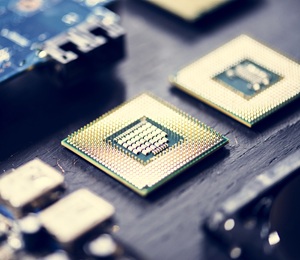
The optimistic case aside, Indian equity markets are not an AI growth story in the way Korea and Taiwan equity markets are. Those markets are riding a different earnings trajectory, with Taiwan for example set to deliver earnings growth well in excess of 40% through 2026-27, powered by dominance in semiconductors, memory, and AI infrastructure. India’s listed equity market does not yet offer a similar scale of structural exposure to the AI theme that is fuelling the current cycle.
This is likely the main challenge facing investors attempting to deliver performance relative to a regional Asia ex-Japan equity benchmark. Thus, for Indian equity market returns, the challenge is more about relative growth rather than absolute growth.
Where this leaves investors
The case for Indian equities as a core holding remains strong, in our view. For a regional or global investor, it offers genuine diversification away from the concentration risk in AI-heavy markets. These benefits come against improving fundamentals, solid domestic consumption and a reform story that isn’t dependent on continuation of the AI theme alone.
The role here is ballast, not fireworks, and that’s precisely why it belongs in my ideal cricket team.
Your feedback is valuable to us. Did you find this article helpful?
This article is for general information only and it does not constitute an offer, recommendation or solicitation of an offer to enter into any transaction or adopt any hedging, trading or investment strategy, in relation to any securities or other financial instruments. This article has not been prepared for any particular person or class of persons and does not constitute and should not be construed as investment advice or an investment recommendation. It has been prepared without regard to the specific investment objectives, financial situation or particular needs of any person or class of persons. You should seek advice from a licensed or an exempt financial adviser on the suitability of a product for you, taking into account these factors before making a commitment to purchase any product or invest in an investment. In the event that you choose not to seek advice from a licensed or an exempt financial adviser, you should carefully consider whether the product or service described herein is suitable for you.
You are fully responsible for your investment decision, including whether the investment is suitable for you. The products/services involved are not principal-protected and you may lose all or part of your original investment amount.
Standard Chartered Bank (Singapore) Limited will not accept any responsibility or liability of any kind, with respect to the accuracy or completeness of information in this article.
Deposit Insurance Scheme
Singapore dollar deposits of non-bank depositors are insured by the Singapore Deposit Insurance Corporation, for up to S$100,000 in aggregate per depositor per Scheme member by law. For clarity, these investment products are not deposits and do not qualify as an insured deposit under the Singapore Deposit Insurance and Policy Owners’ Protection Schemes Act 2011. Foreign currency deposits, dual currency investments, structured deposits and other investment products are not insured.
The information stated in this article is accurate as at the date of publication.