Recall the last time you exchanged your home currency for another currency when travelling abroad? Then you’ve already had a taste of foreign exchange (forex) markets. But you must have noticed that the exchange rate rarely stays the same, even though you may be visiting the same country the second time round. That’s because, just like the stock market, exchange rates constantly move in response to demand and supply in global markets.
The forex market is where investors and institutions buy and sell currencies, making cross-border travel, business and investment smooth and efficient. It’s the world’s largest financial marketplace, with trillions of dollars transacted every day.1 What sets these markets apart is that they operate round-the-clock on 5 days a week to cover all major time zones and include over 170 different currencies. This global marketplace connects more than 10 million participants across the world, including investment managers, hedge funds, multinational corporations and governments. Retail forex trades account for about 6% of the average daily turnover, which is now around USD 7.5trn per day.
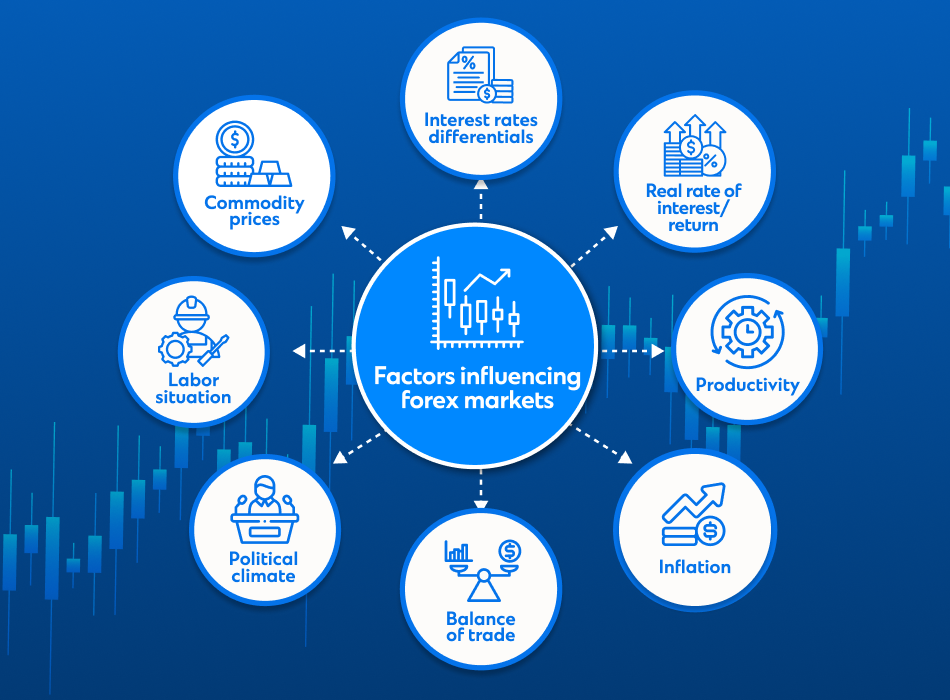
A wide range of factors influence the forex markets. So, the predictability here is far more challenging than any other market. But what makes currencies rise or fall? Let’s look at some of the prominent drivers.
It is important to approach forex with caution and realistic expectations. In the world of high-risk investments, remember to never risk more than what you can afford to lose. Your financial well-being depends on disciplined and smart choices.